Welcome!
This page was previously an extension of my exhibit 25 years of Daft Punk: An EDM History Exhibition. The physical exhibit finished it's tenure in December 2019 but this page remains useful to fans looking for a succinct yet in-depth history of Daft Punk's career. I have decided to leave this page online and continue to update it as I learn more about their career. Enjoy!
Overview
|
Daft Punk were one of the most mysterious and reclusive acts in the music world and achieved much success over their 28 year career. They were a French duo who formed in 1993 and helped bring electronic music (now primarily known as EDM) to the mainstream. They influenced several generations of artists and helped lay the foundation of today’s LED-laden live music stage productions. Each section in this page covers a significant period in their career and contains ample historical photos/videos from those periods.
|
The Beginning (1987-1993)
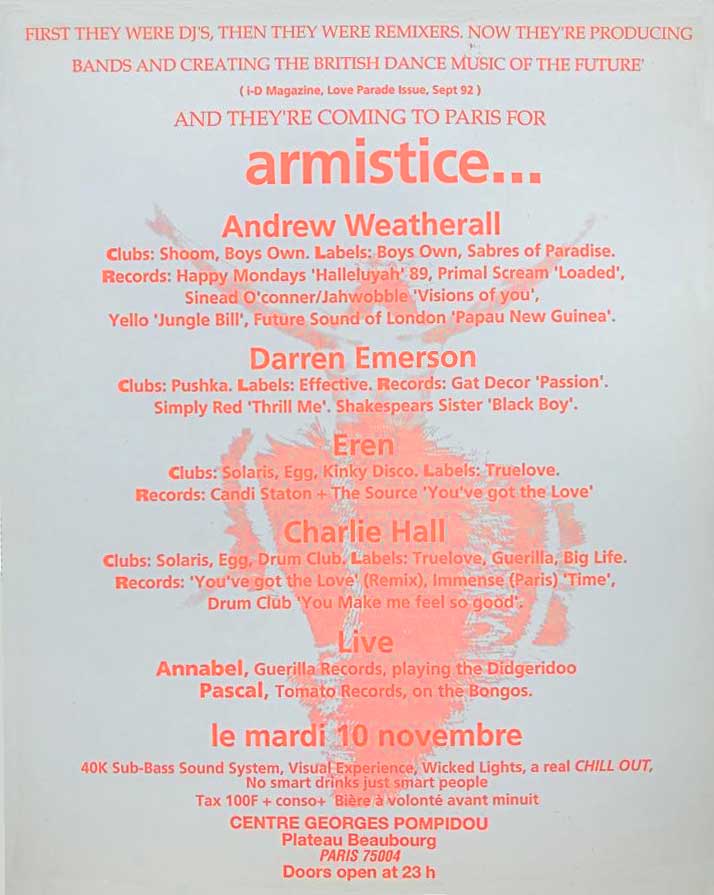
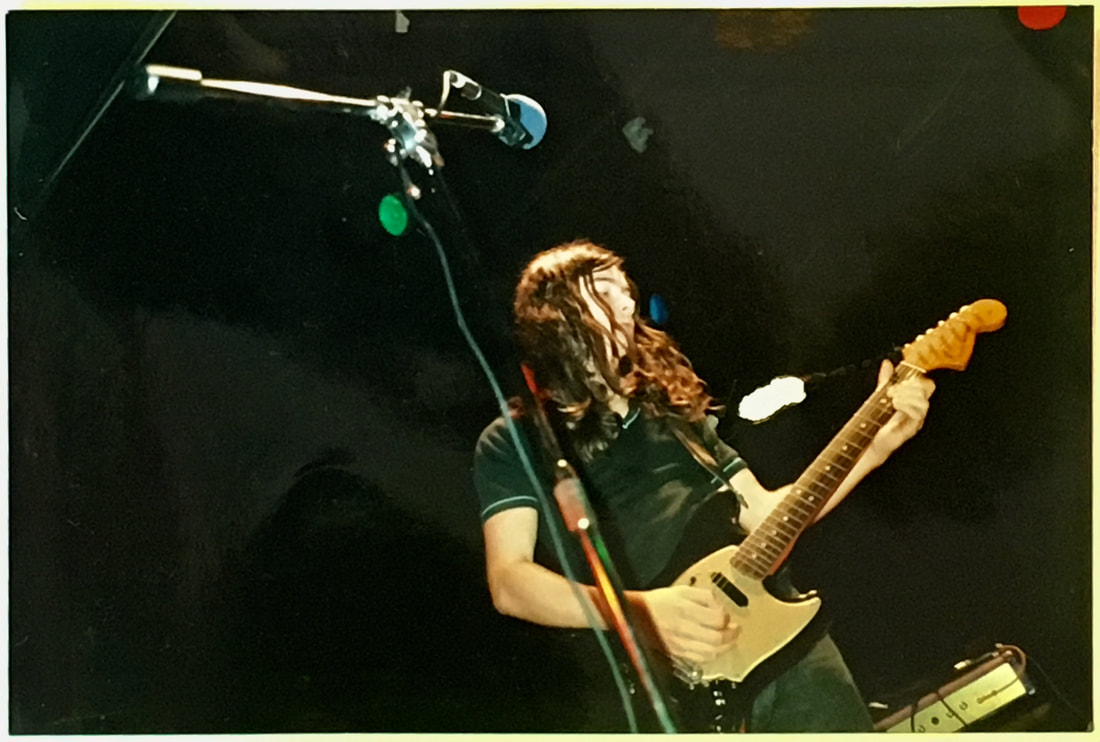
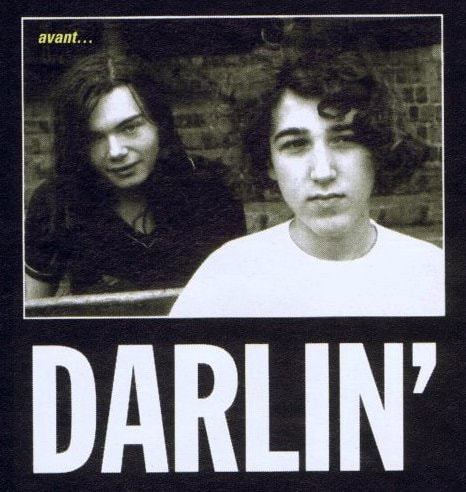
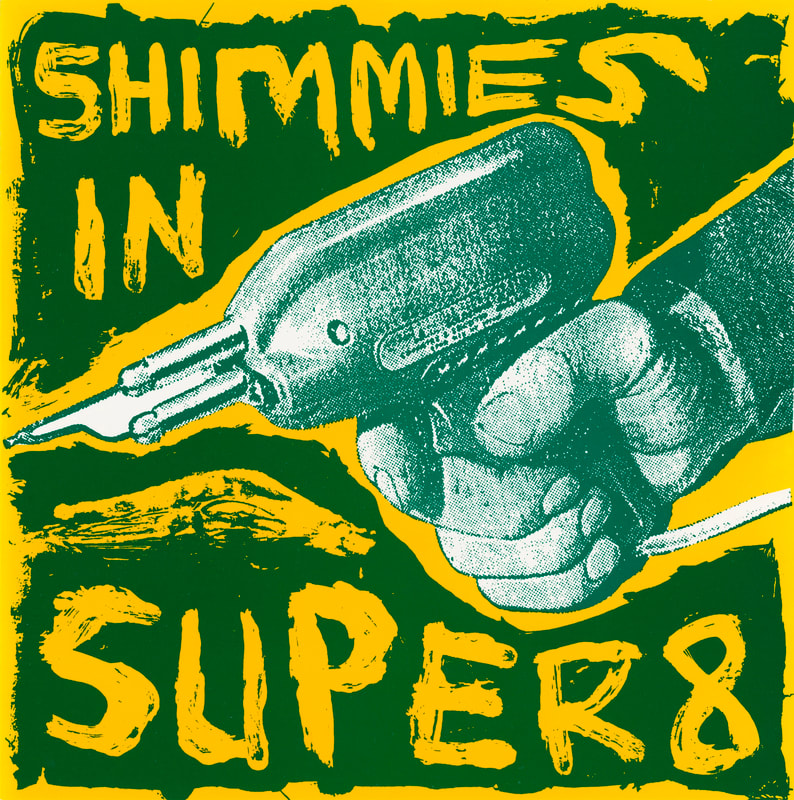
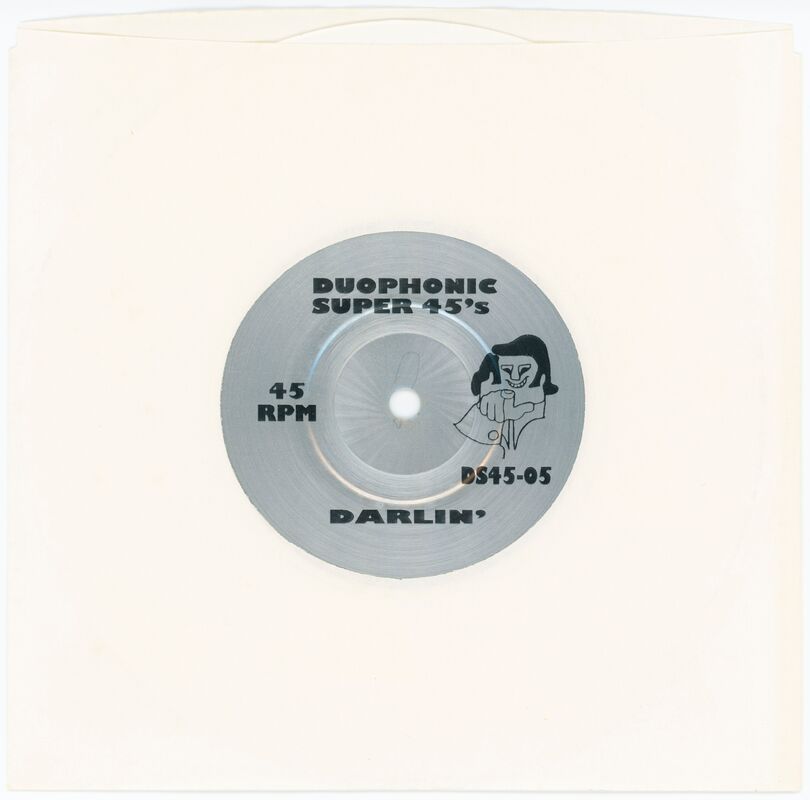
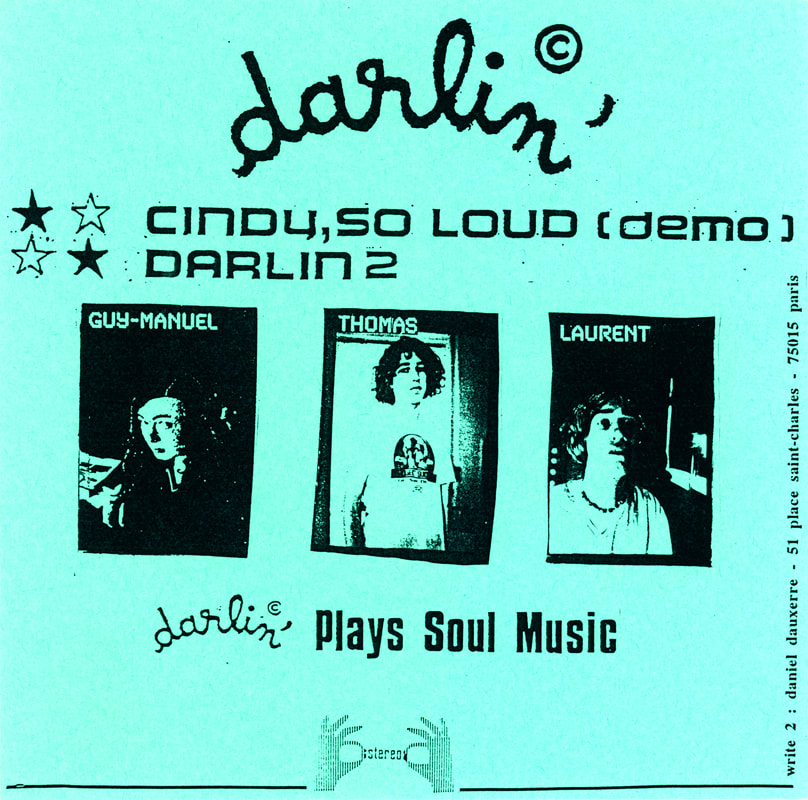
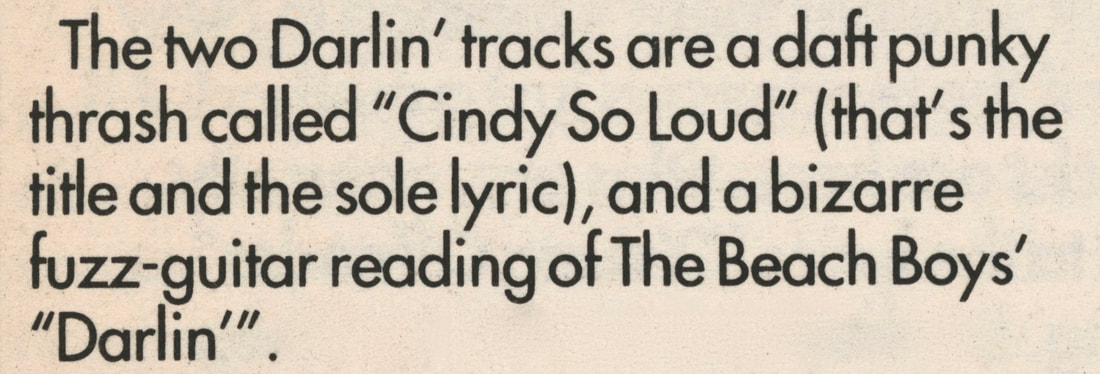
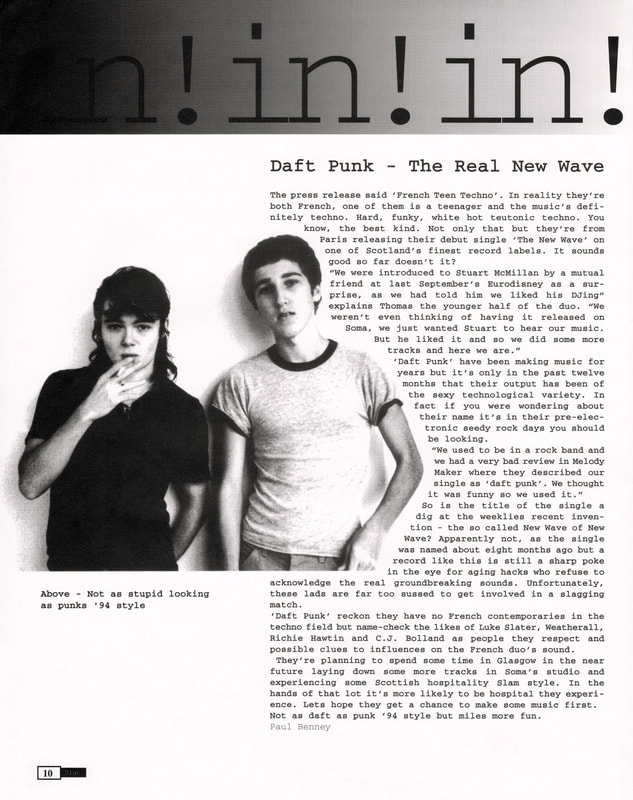
Daft Punk (Thomas Bangalter and Guy-Manuel de Homem Christo) met in Paris, France in 1987 when they were each around 12 years old. The two quickly found that they shared a similar interest in music and cinema. After a few years they wished to be in rock group so in late 1991 Guy-Manuel put up a flyer in a Paris record store called Danceteria looking for a guitarist. Laurent Brancowitz found the ad and on January 1st, 1992 he met up with Guy-Man and some time later met up with Thomas. The 3 teenagers named their indie band Darlin' after a Beach Boys track of the same name. Darlin' recorded four known tracks and played only a handful of gigs. In the Fall of 1992, Darlin' managed to convince Stereolab to put two of their recordings onto an upcoming 7" double pack compilation called "Shimmies in Super 8". The compilation would not be released until April of 1993 and, in that time, Thomas and Guy-Man became immersed in the rave scene that had begun to invade Paris. The first rave they attended was called "Armistice" and was held on the roof of the Pompidou Centre in Paris on November 10th, 1992. It was a completely different atmosphere than what Thomas and Guy-Man had ever experienced. They were in awe at how people would go to these raves and enjoy music that they had never heard before, unlike rock concerts which they found boring in comparison. A few months later in January of 1993, Thomas turned 18 and he used the money he received to buy some electronic music equipment. A few months after that, in April of 1993, "Shimmies in Super 8" was finally released. A British journalist named Dave Jennings reviewed the compilation in Melody Maker magazine where he dubbed Darlin's two tracks "daft punky thrash." By the time of the review, Thomas and Guy-Man had shifted their sights into making electronic music but Laurent (the 3rd member of Darlin') wasn't into the rave scene like them and ended up joining his brother's band which would later become Phoenix. Laurent has said that Darlin' never really broke up and there was never really an official beginning either, it was more or less just some kids hanging around playing and occasionally making music and that he eventually just wasn't a part of it any more as Thomas and Guy-Man became interested in electronic music. So as Thomas and Guy-Man decided to take on electronic music, they opted to rebrand and start fresh under the moniker given to them by the press...Daft Punk. They thought the negative review was funny and the name just stuck.
Fun fact: Daft Punk and Laurent/Phoenix all remained friends and in 2010 Daft Punk and Phoenix would share the Madison Square Garden stage.
Fun fact: Daft Punk and Laurent/Phoenix all remained friends and in 2010 Daft Punk and Phoenix would share the Madison Square Garden stage.
        |
|
Homework (1993-1998)
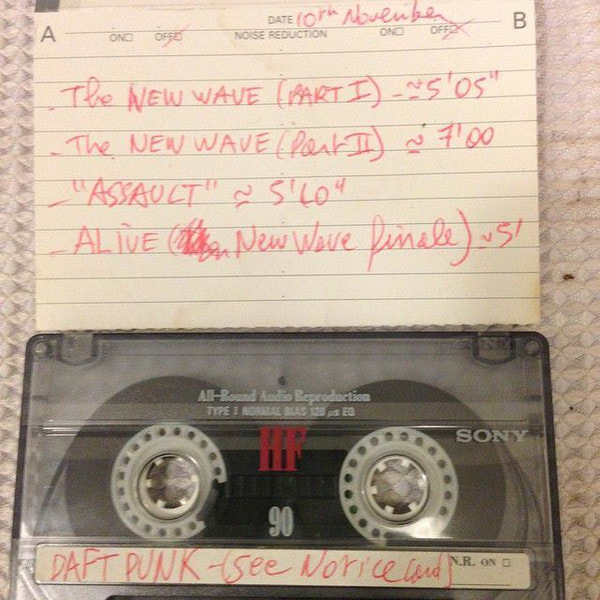
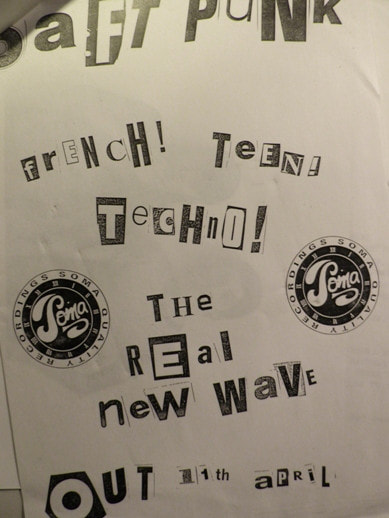
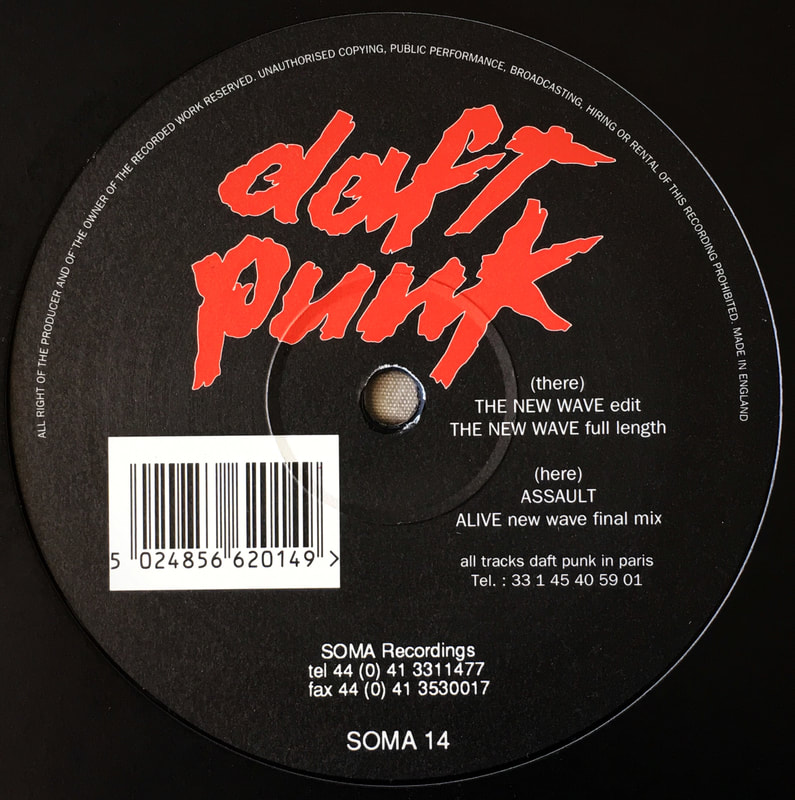
In 1993 Daft Punk recorded their first demo called "The New Wave" which was a seven minute long Techno track. In September of 1993 their friend Serge Nicolas introduced them to Slam, a Scottish duo who produced electronic music as well as ran a moderately sized record label called Soma Quality Recordings. Daft Punk played them their demo tape and immediately got an offer to sign to their label. By November 10th, 1993 Daft Punk had completed their first EP also titled "The New Wave" consisting of three tracks plus a radio edit of one of the tracks. It would not be released until April of 1994. When it did finally release, it found moderate success and was described by Soma in a future press release as a "rare groove."
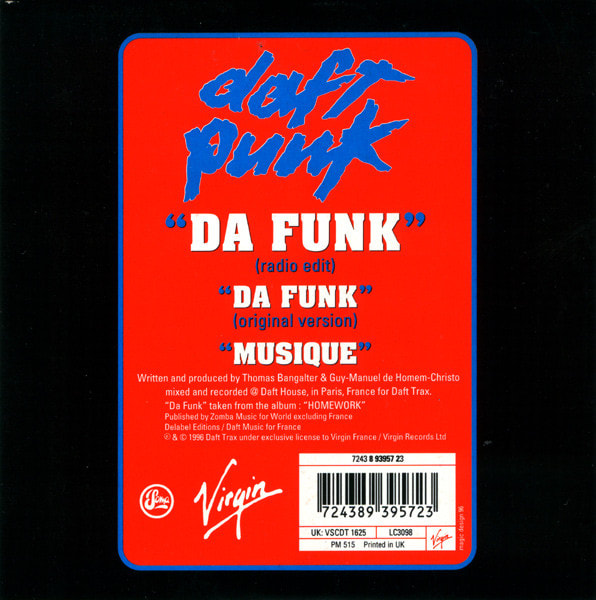
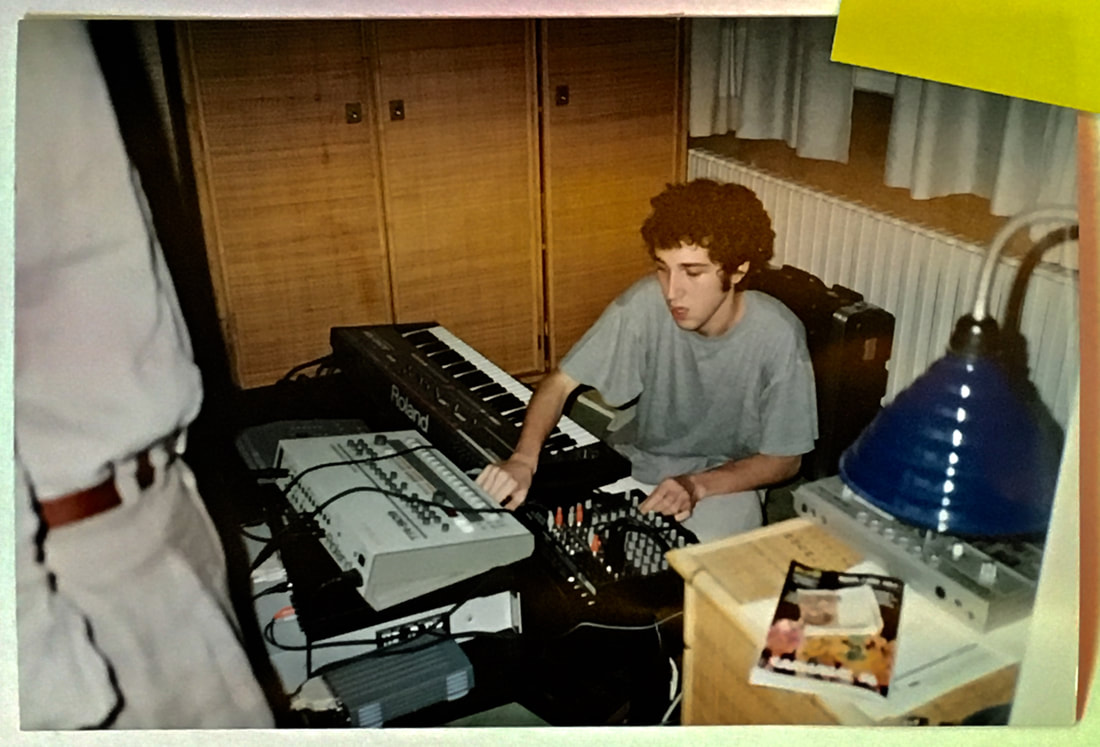
Daft Punk returned to the studio (Thomas' bedroom), and recorded a new track called "Da Funk". Daft Punk claim the track was inspired by American Hip-Hop (specifically Warren G's "Regulate") but it was perceived by many as fitting the House genre. "Rollin' & Scratchin'" (a seven minute long screeching Acid House track) was the B-side. Da Funk / Rollin' & Scratchin' would be released as a 12" single on May 8th, 1995. "Da Funk" would turn out to be Daft Punk's breakout track when they, and other more established electronic DJ's such as The Chemical Brothers, started regularly playing the track in their sets. It was also helped by the fact that in 1995 Daft Punk ramped up their DJ appearances by going on their first tour, playing around 40 gigs in France, Belgium, and the UK. The moderately sized Soma Quality Recordings was so swamped with calls from people asking about Daft Punk that they eventually just started answering the phone by saying, "Hello, Daft Punk." Daft Punk made a name for themselves in 1995 between their breakout single and impressive live sets.
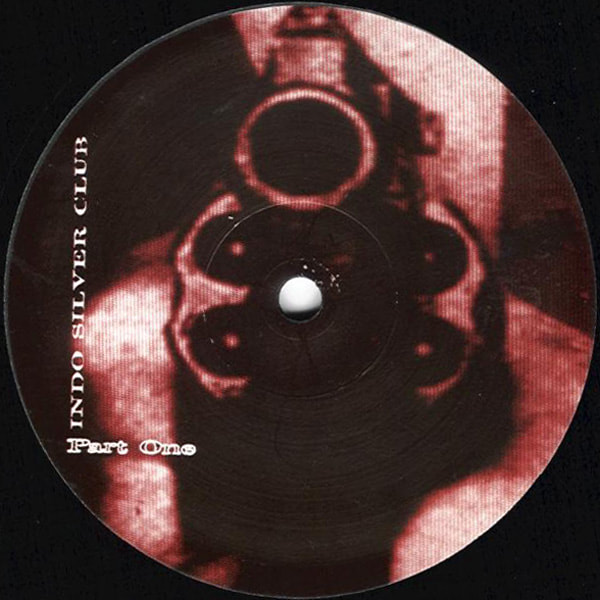
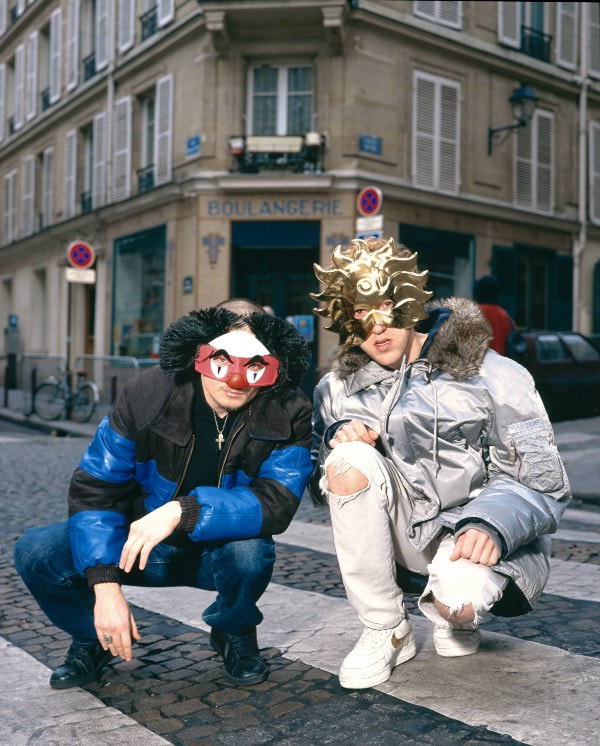
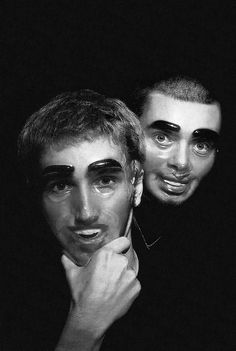
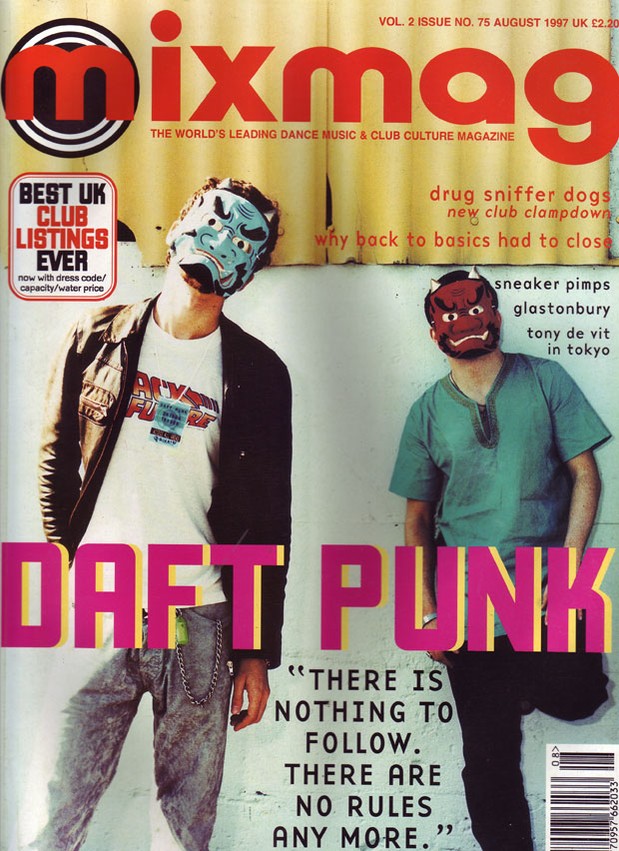
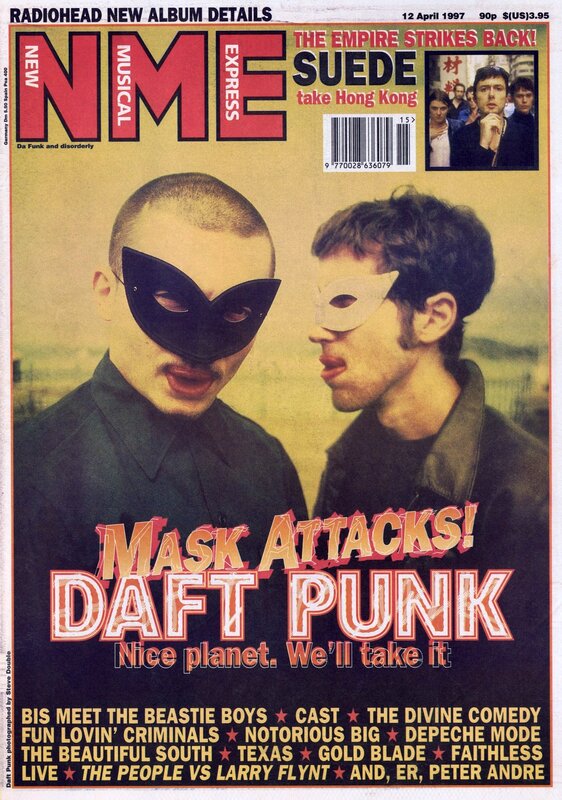
Daft Punk made such a name for themselves that by the start of 1996 they started to grow bothered by all the hype surrounding them. Because of this, their next 12" single would be released under an alias. The record was called "Part One" and consisted of two unnamed tracks by the artist "Indo Silver Club". Daft Punk wanted people to enjoy the music without being influenced by the hype of their name. Even though their name was not on the release, people still figured out it was them because no one else on Soma Quality Recordings sounded quite like them. Furthermore, one of the two tracks from the 12" single was put onto a Soma compilation album which credited Daft Punk (and in 1997 Daft Punk put that track on their debut album and just titled it "Indo Silver Club"). This, however, would be Daft Punk's third and last release on Soma Quality Recordings because in September 1996 they had finished their debut album and signed to Virgin Records after a bidding war between various record labels trying to sign them. They ultimately decided to sign with Virgin Records because they were willing to cooperate with Daft Punk owning their own master's through their label Daft Trax. Virgin Records would promote and distribute their music. They also required Virgin Records to share logo space with Soma Quality Recordings on their upcoming album and rerelease of "Da Funk". These are some of the only details made public but Virgin Records went to lengths not usually taken in order to sign Daft Punk which was certainly not the norm. Daft Punk had these requirements because Thomas' dad had been a record producer in the 70's and 80's and knew how badly record labels could take advantage of artists. So by the age of 22 Daft Punk was one of the first French electronic music acts to sign to a major record label and had done so while maintaining their autonomy. During this time Daft Punk also made it known that they no longer wished to have their faces photographed and would now start wearing various masks to photoshoots, however, they would continue to play most live shows unmasked.
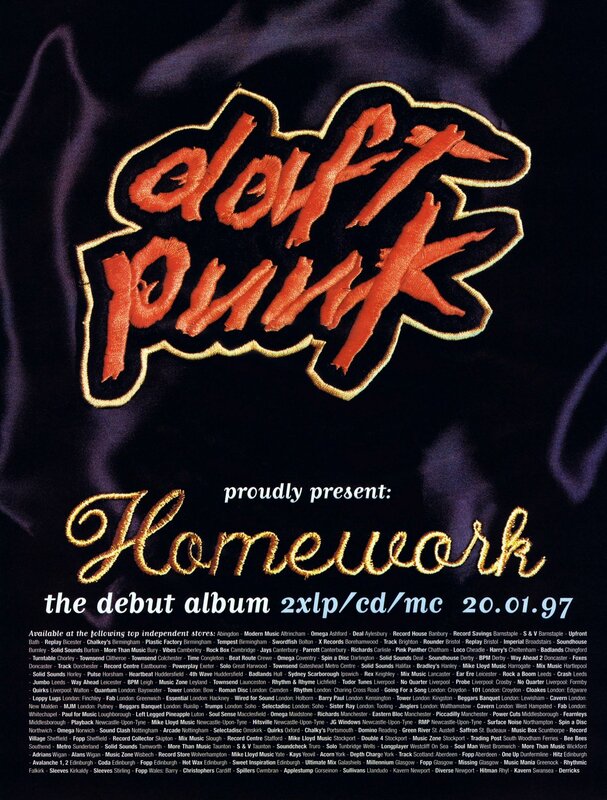
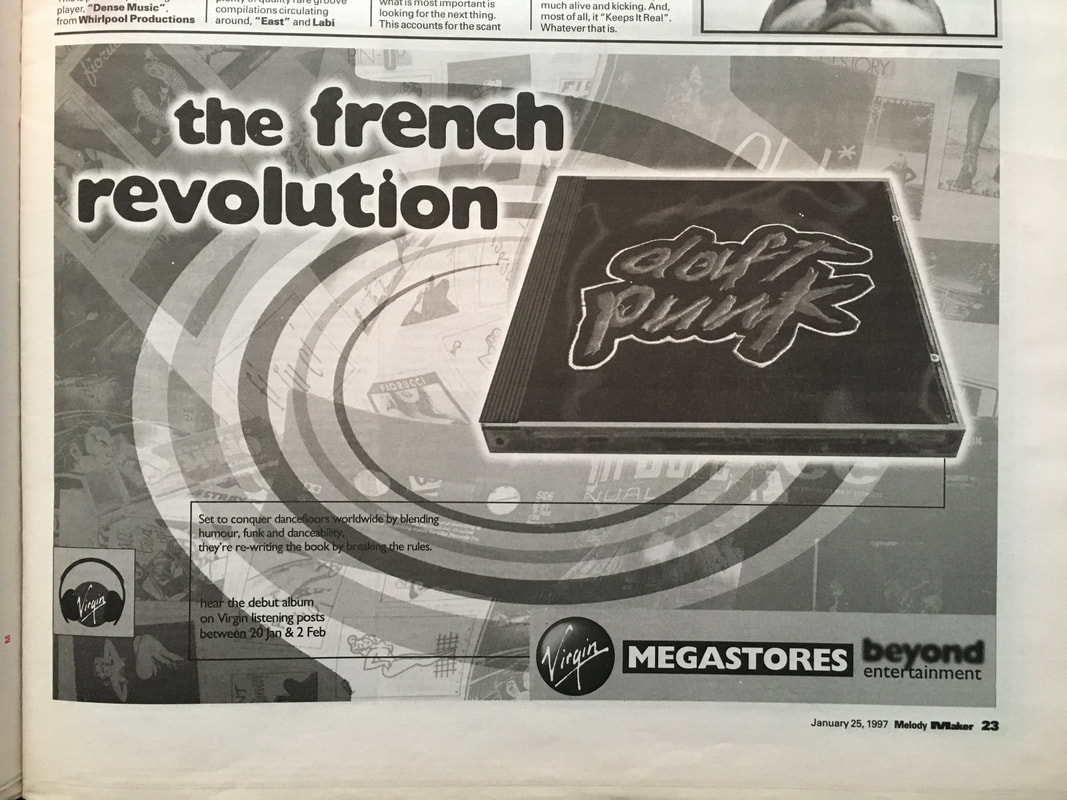
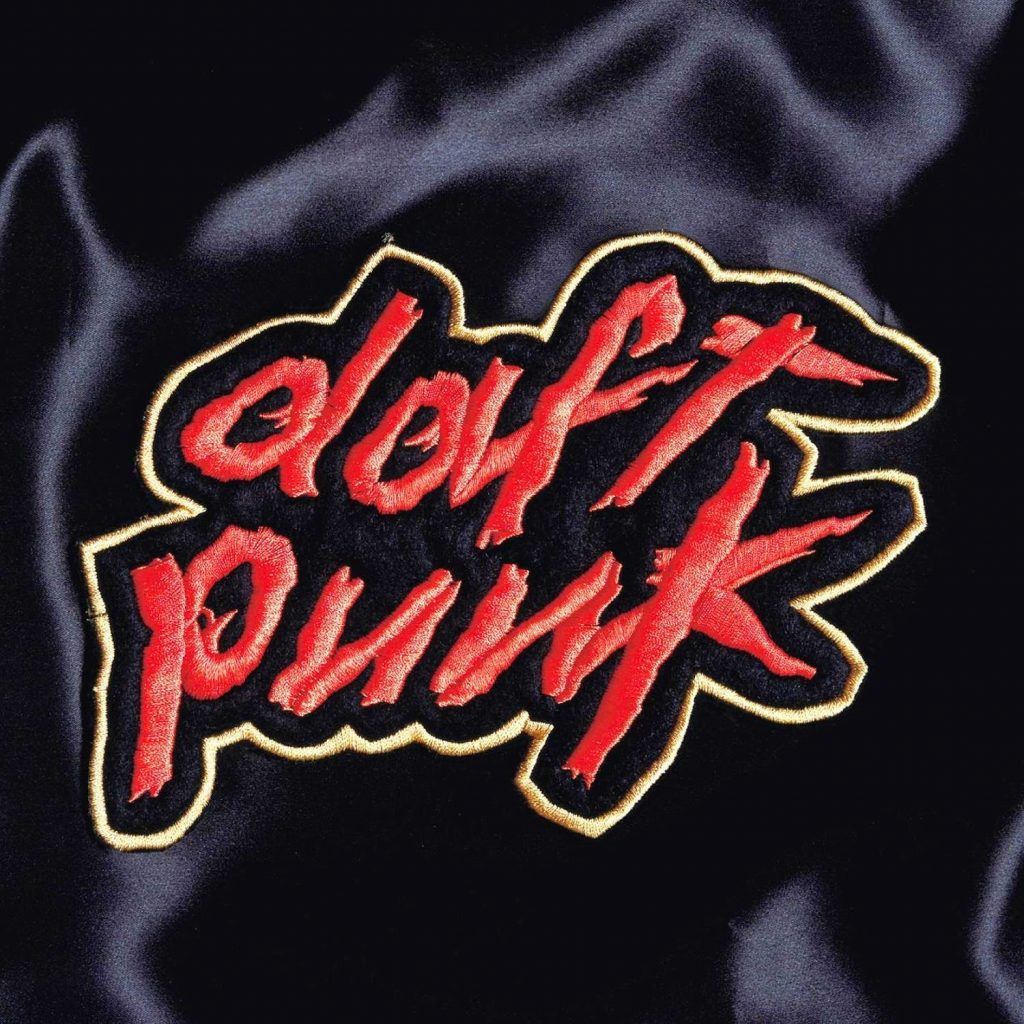
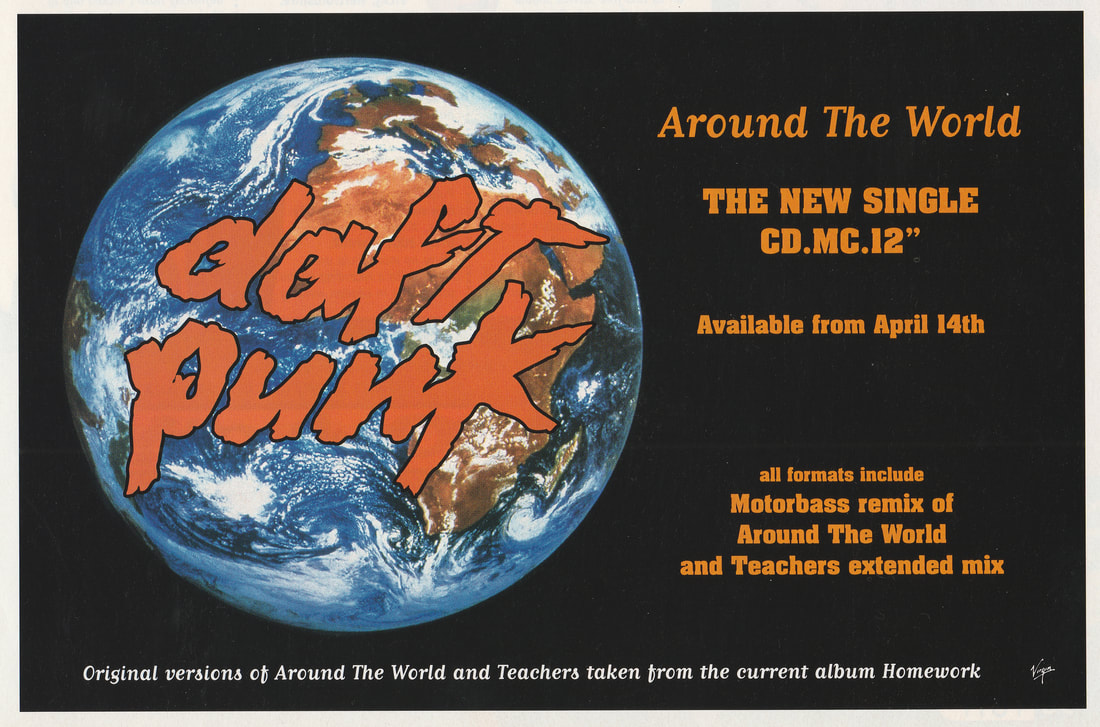
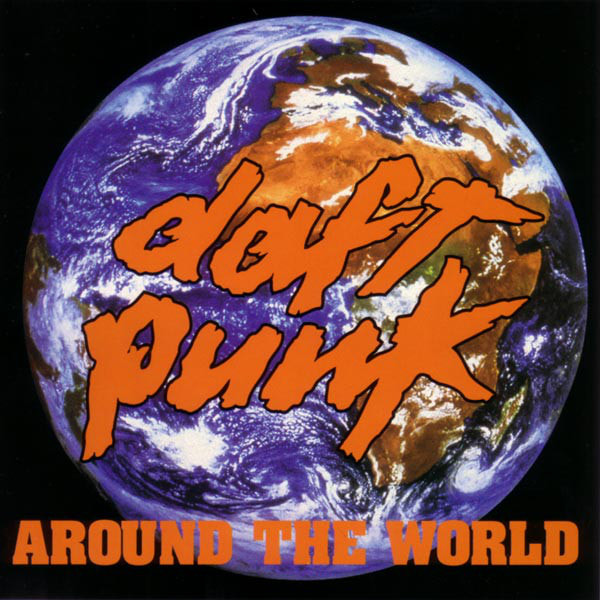
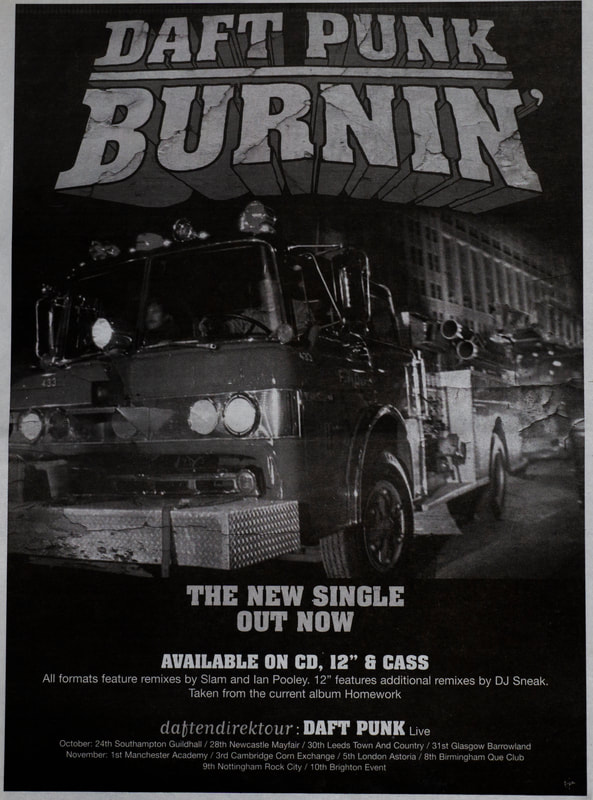
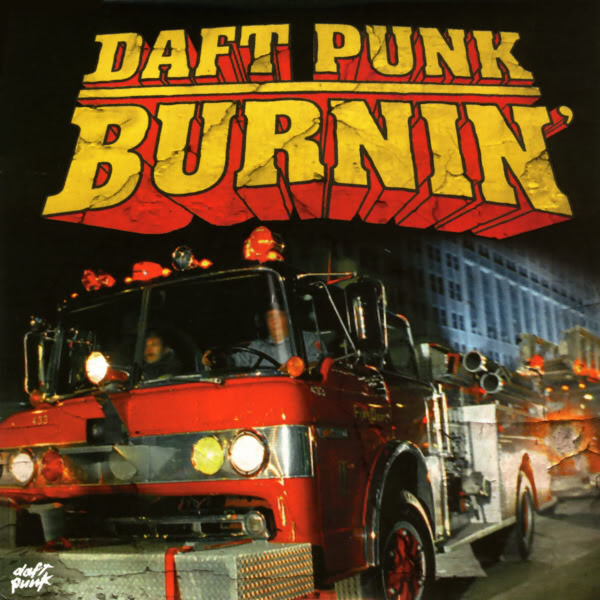
The hype that had started in 1995 never ceased and their debut album was highly anticipated by the electronic music community. Finally in January of 1997 Daft Punk's debut album Homework was released worldwide to much critical acclaim. It was a mix of House, Acid House, Techno, Disco, and Funk packaged neatly and was able to appeal to both the rave scene and home listeners. This was also the era of MTV and because they made videos for five of their tracks, Daft Punk entered the homes of many youth who might not have otherwise been introduced to this type of music. These five videos as well as an interactive direct-it-yourself music video for a segment of their live show would find themselves on D.A.F.T.: A Story About Dogs, Androids, Firemen, and Tomatoes which was a compilation DVD released by Daft Punk. The internet was also starting to gain traction during this time and Daft Punk was sure to create a website to update their fans digitally. One archived post from 1998 announces that their single "Revolution 909" will be coming out soon. Homework would go on to sell over two million units worldwide, an impressive amount for an electronic music album at the time, especially considering it was conceived by two young Parisian recording music in their bedroom and wearing Halloween masks to photoshoots.
                    |
|
"Daftendirektour" (1997)
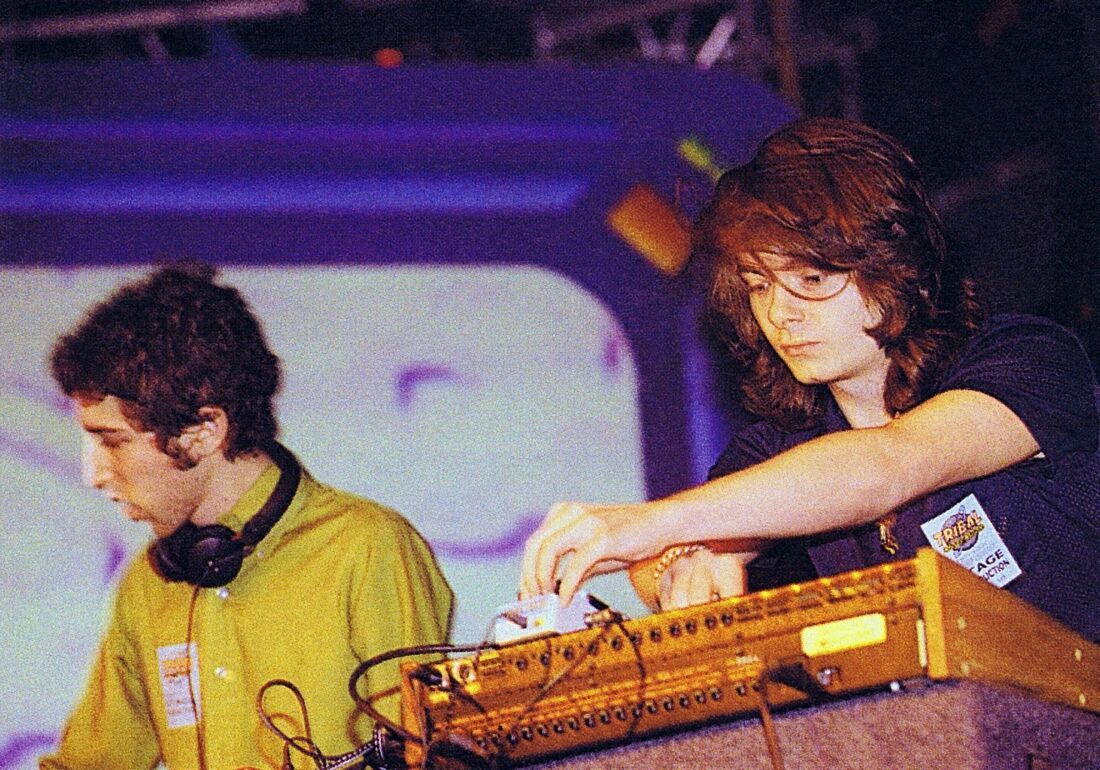
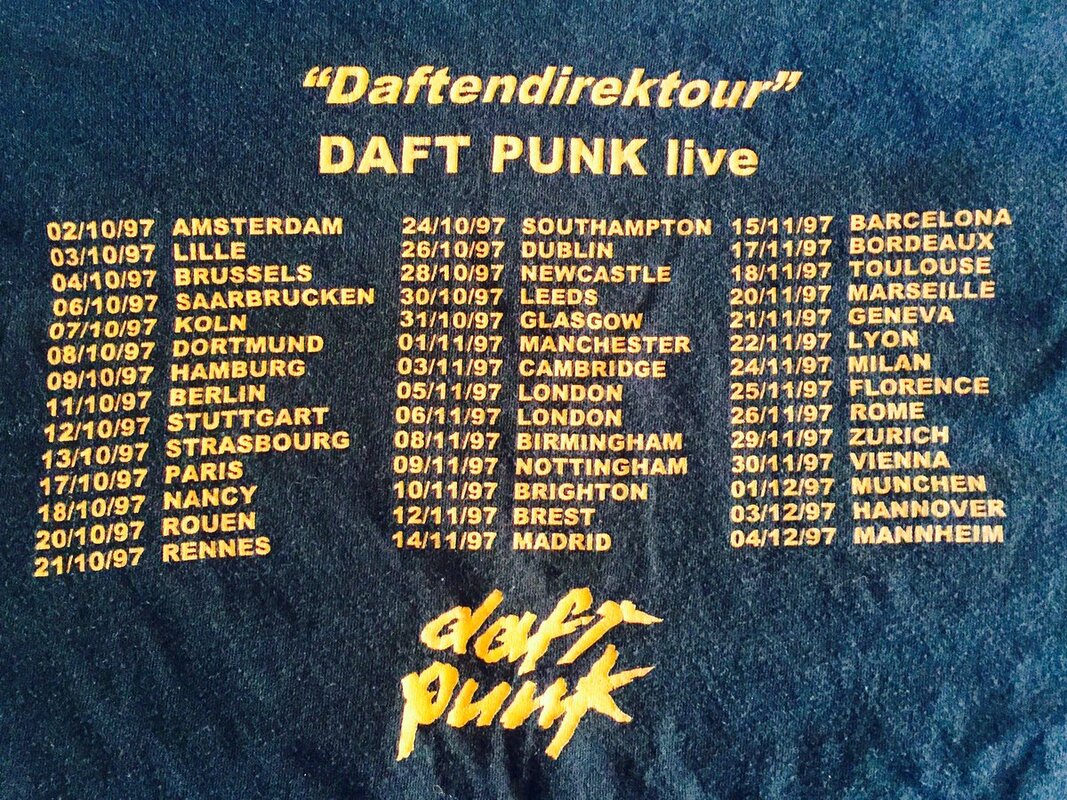
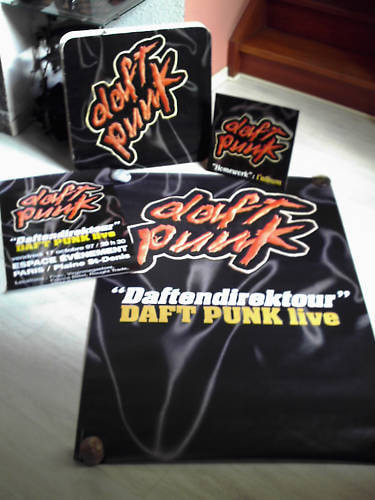
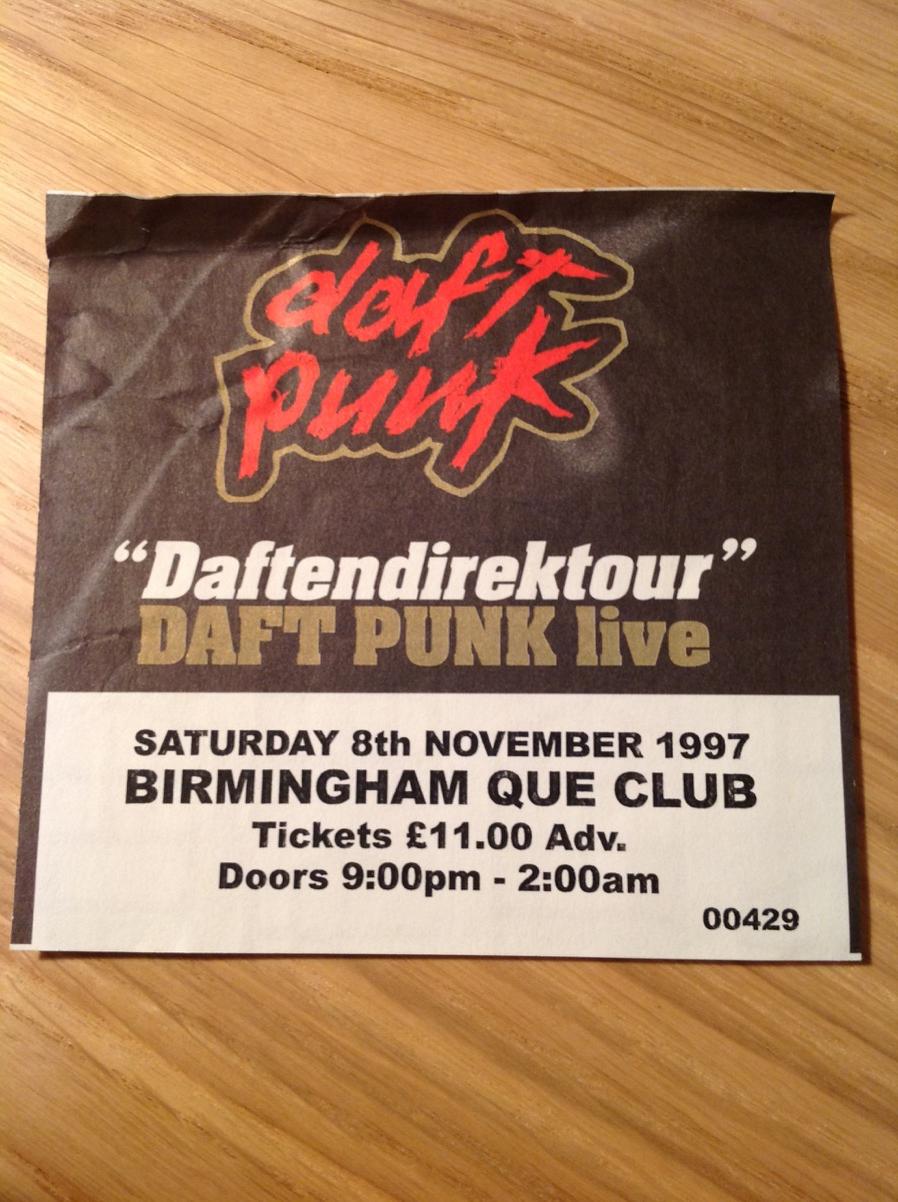
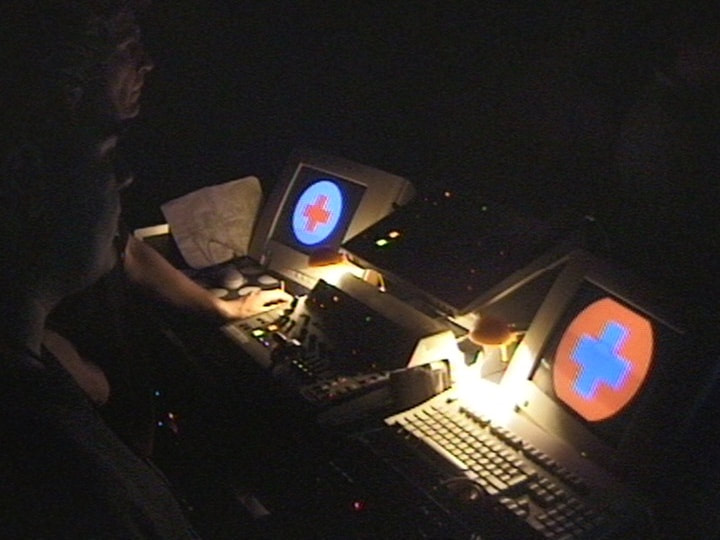
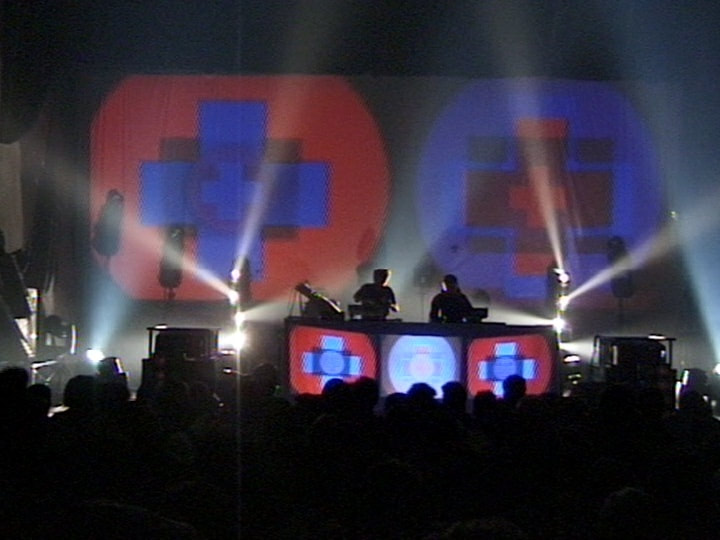
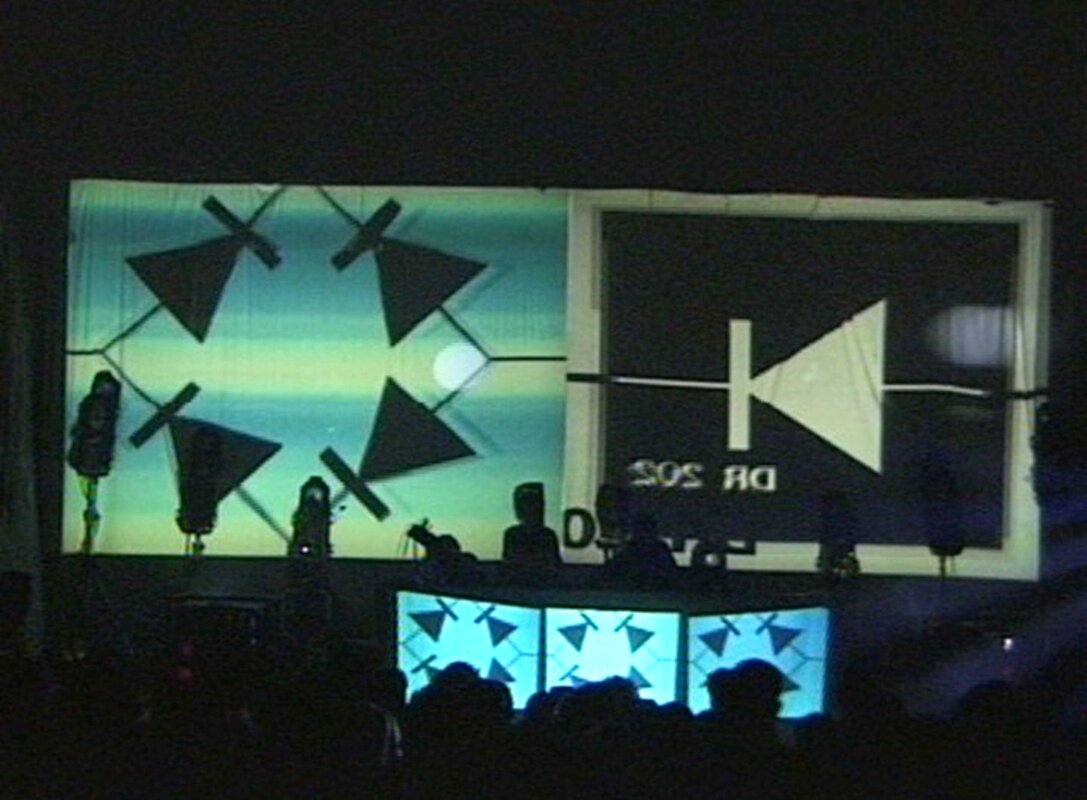
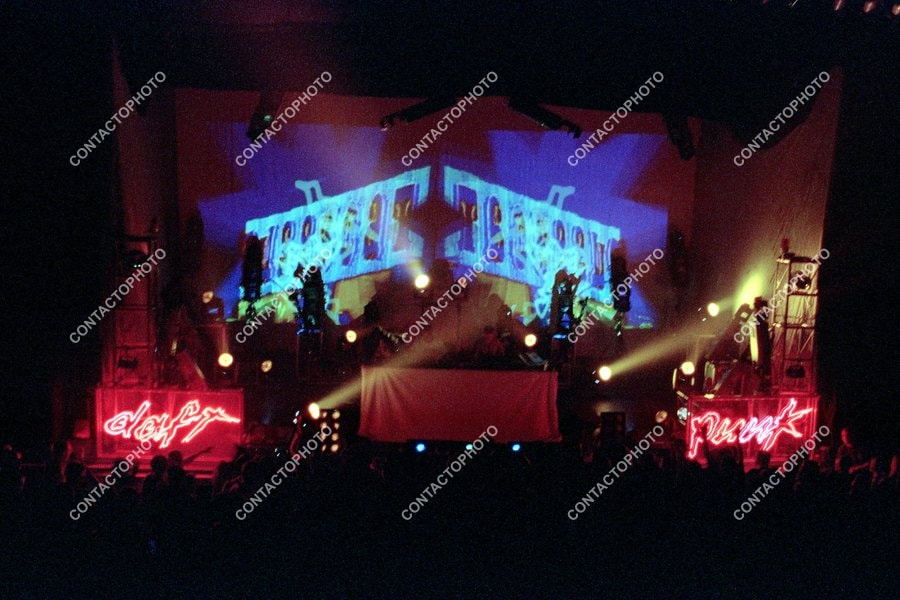
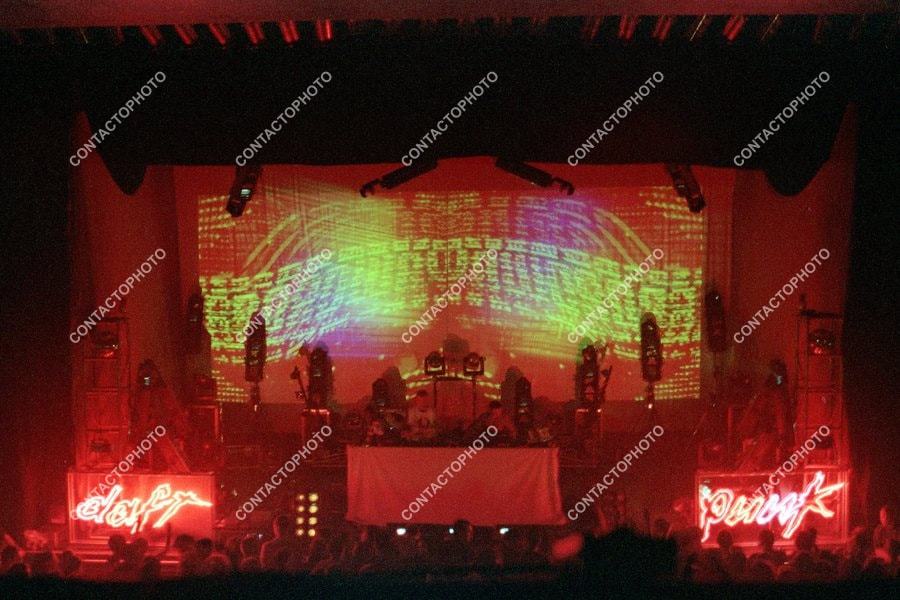
Around the time that their debut album Homework released in January 1997, Daft Punk decided to embark on a more ambitious tour than the smaller one they had done in 1995. At first the tour was less formal, Daft Punk would simply be listed on the line up of the festival or gig but by the time Fall came around, they had devised a proper live concert tour which they called the "Daftendirektour." The title was a mashup of the words "Daftendirekt" (the opening track on their debut album which means "Daft Live" when translated from French) and "tour." Therefore Daftendirektour roughly means "Daft Live Tour". Very little is documented about this tour because they discouraged the press from taking pictures or video but the tour dates are known. In total they played at least 75 shows in 1997, 42 of which were part of the Daftendirektour. They made stops all around the world including Japan, Israel, Canada, the USA, and most of Europe. The musical equipment they used for this tour was simply the same equipment from their home studio, which they had used to record Homework. "Everything was synched up—the drum machines, the bass lines. The sequencer was just sending out the tempos and controlling the beats and bars. On top of this structure we built all these layers of samples and various parts that we could bring in whenever we wanted to." Daft Punk's live performance was also aided visually by state of the art lighting technology, a theme which they would continue in 2006 and 2007.
Below are some photos relating to the Daftendirektour as well as a playlist of clips from various Daft Punk sets in the 90's.
Below are some photos relating to the Daftendirektour as well as a playlist of clips from various Daft Punk sets in the 90's.
   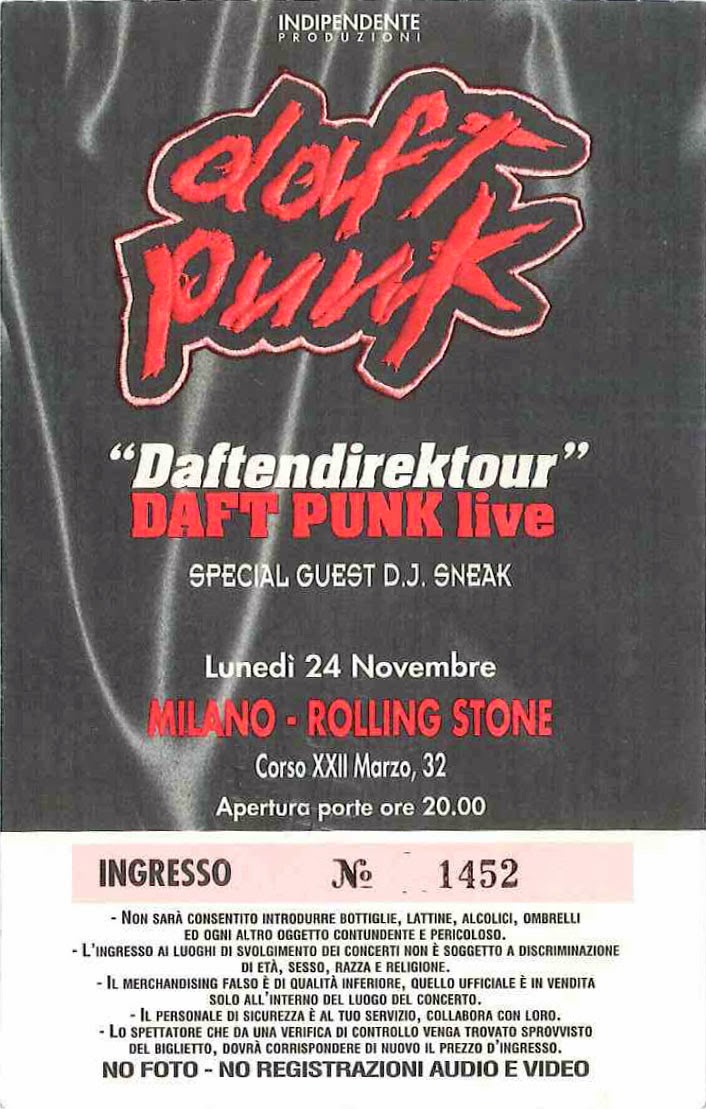 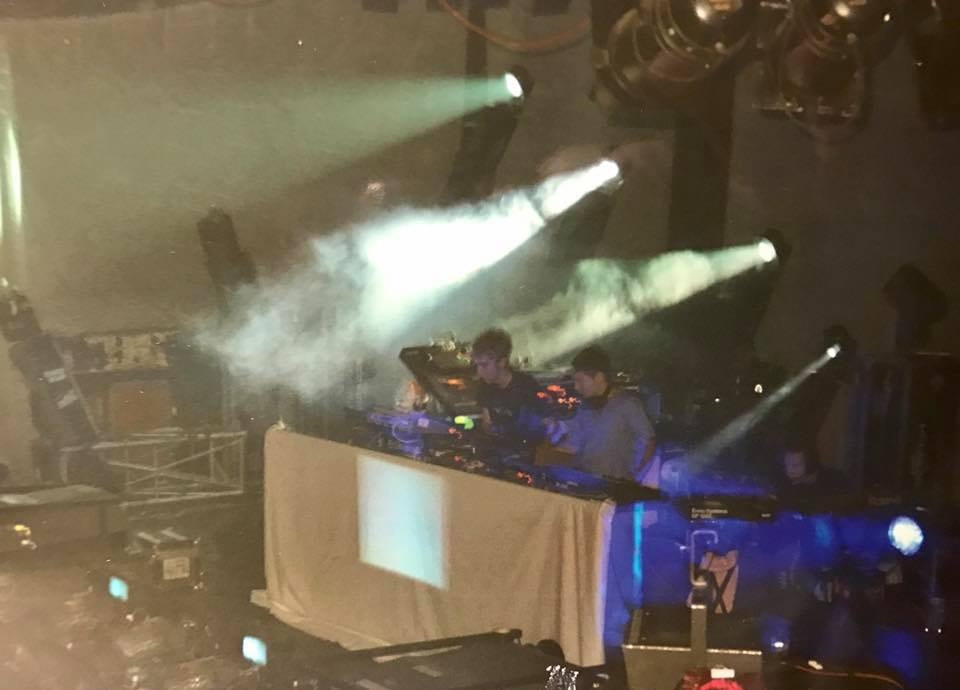 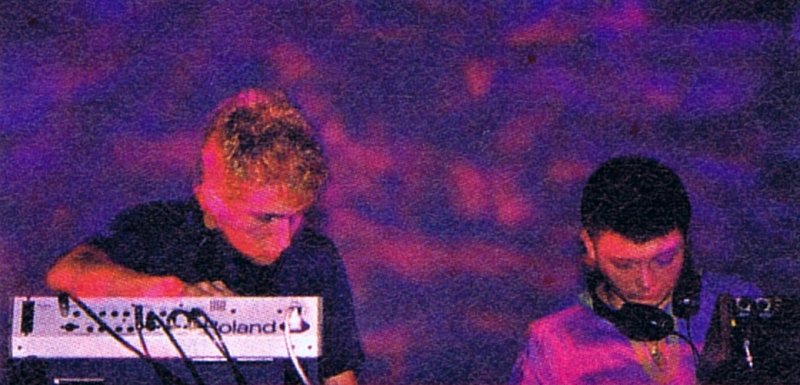 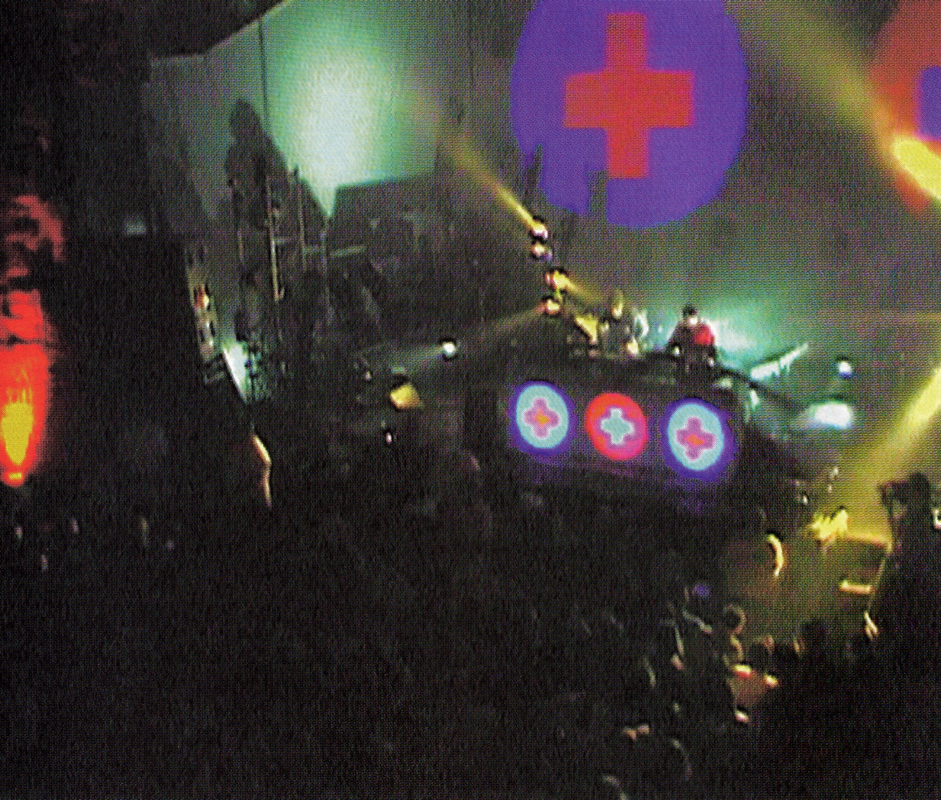      |
|
Becoming Robots
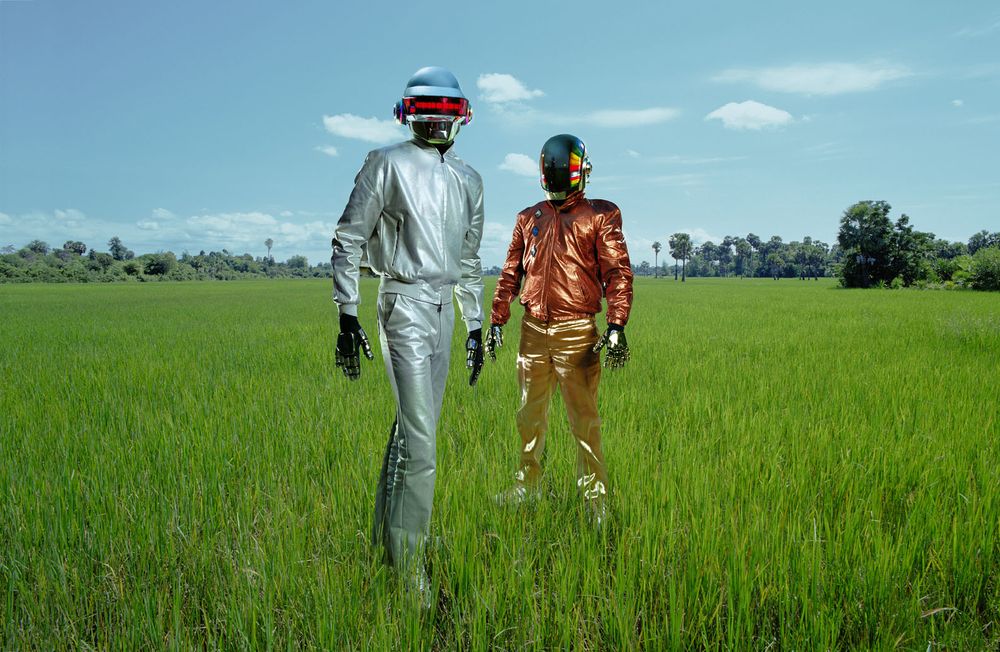
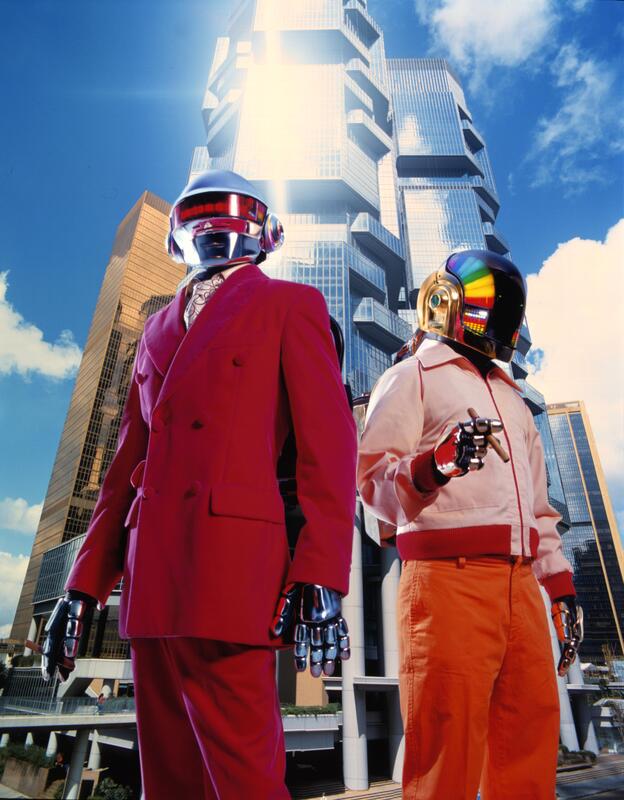
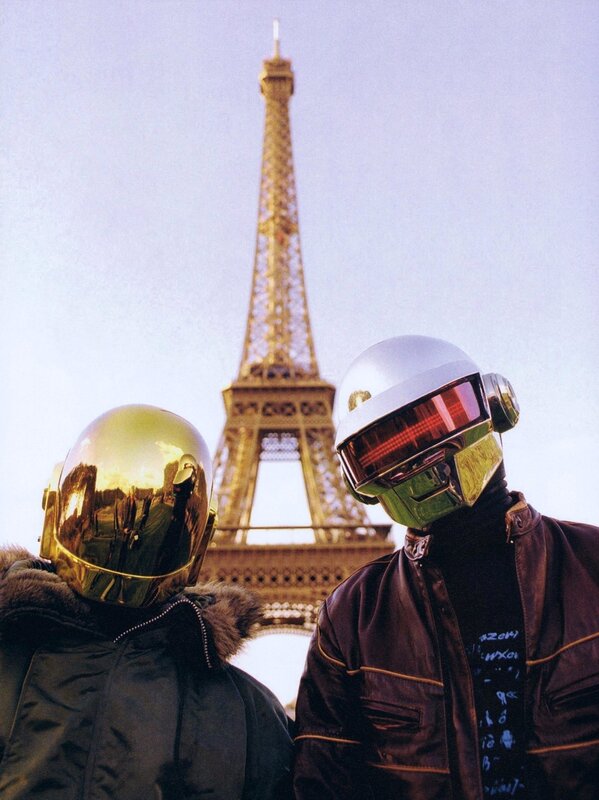
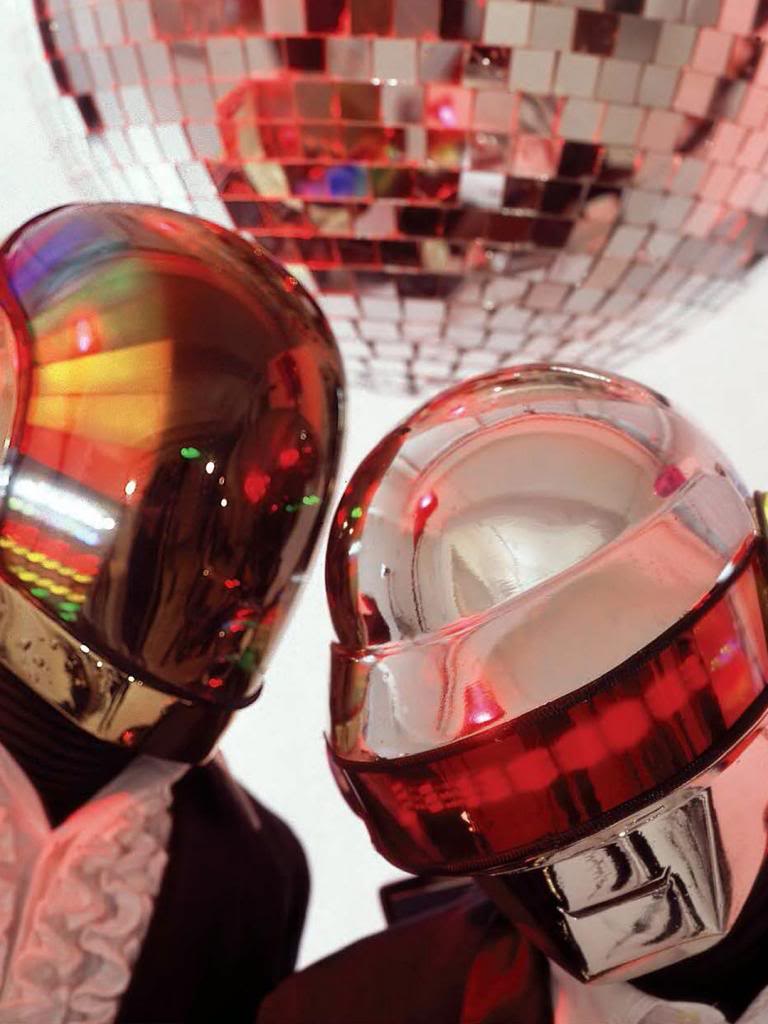
The date is September 9th 1999. You are Daft Punk and you are working in your home studio on new music for your next album. Suddenly your sampler crashes, begins to spark, and then explodes in a ball of flame and molten metal, knocking you unconscious. You awaken to find that your skin is now metal and much of your body is now inorganic. You have very little memory of your past but the doctors tell you that you are Daft Punk and you have been in an accident. They needed to perform surgery after the accident and as a result, you are now part machine. You still have your brain and your heart but the rest of your body is mechanical. You embrace this new body and continue recording your next album. This is the story that Daft Punk told the press in the early 2000's as a way to explain their sudden new robotic appearance.
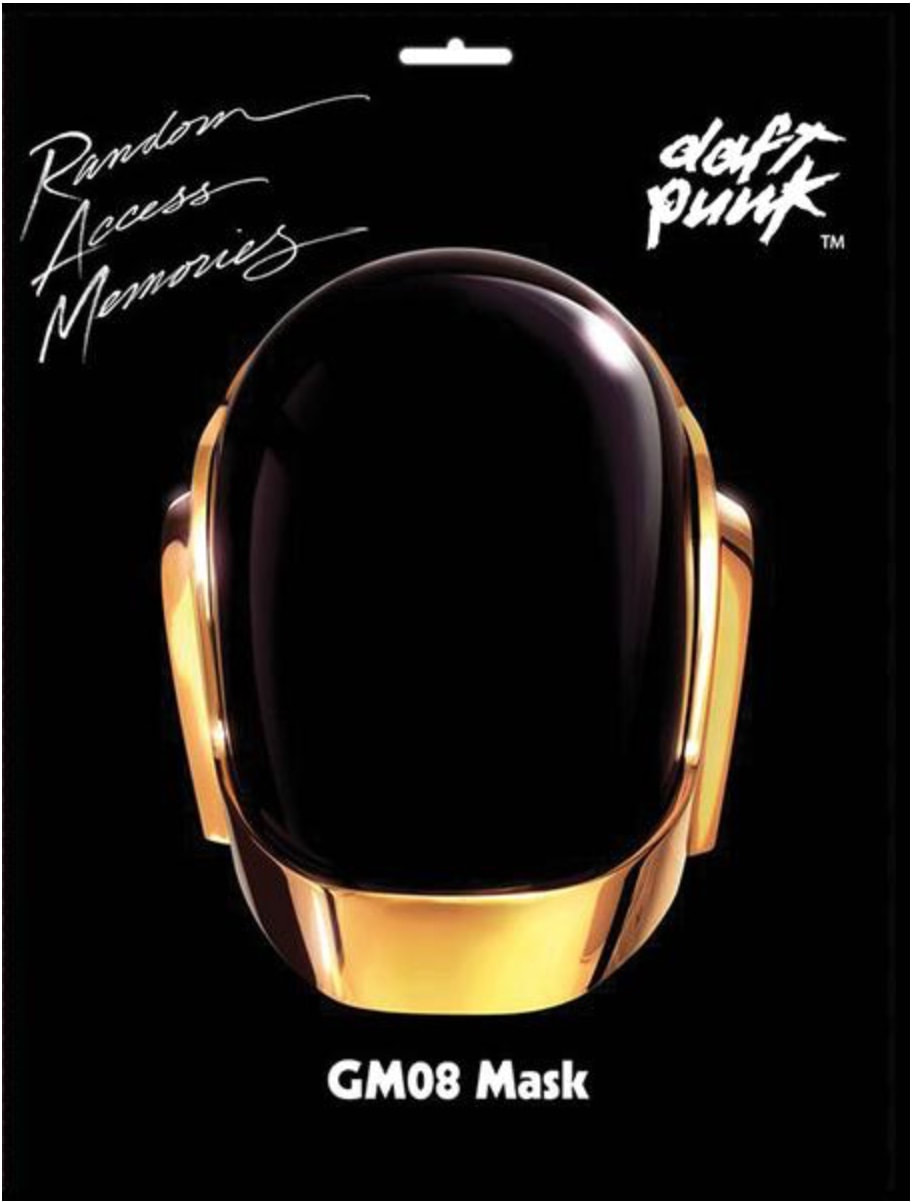
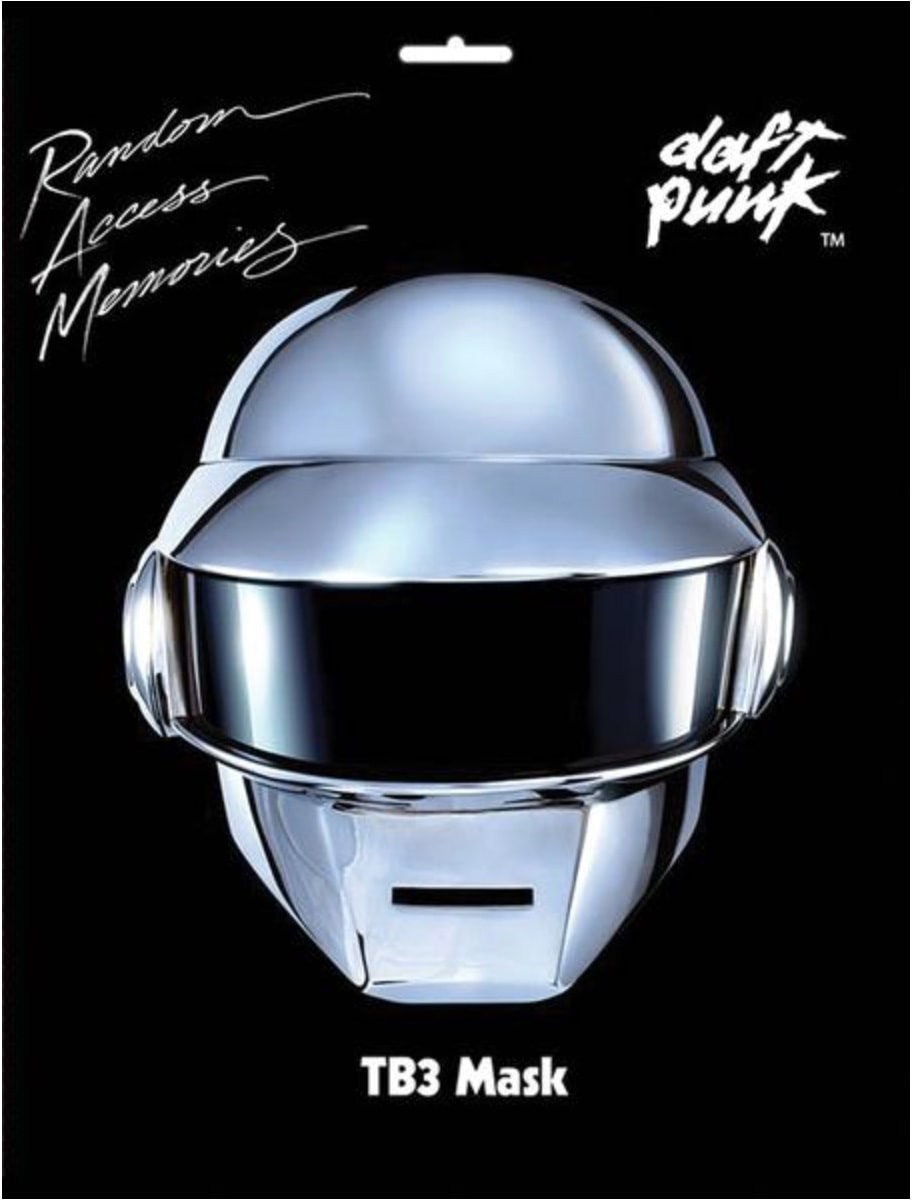
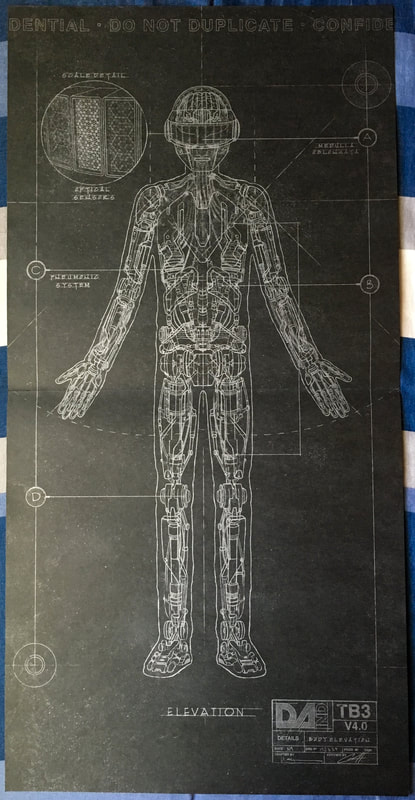
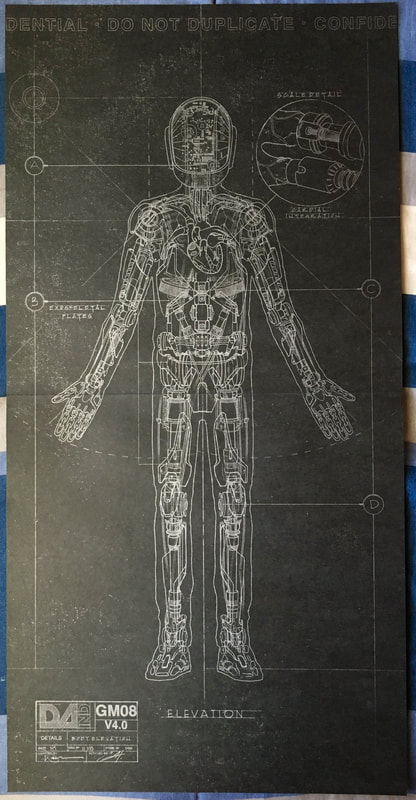
Of course we know Daft Punk are not actually robots but it is a much more fun and artistic way for them to play with the media than to grab random Halloween masks before photoshoots. The transformation into robots still containing human brains and hearts was also a very clever metaphor for the type of music that they made. Electronic music is a combination of man and machine, and when looking at house music (the sub-genre which they are most affiliated with) the metaphor makes even more sense because of the heavy use of musical samples being repurposed. In the case of the robots, the sampler is not repurposing old disco tracks, it is repurposing them. If electronic music was to be personified it would be part human and part machine and that's the direction Daft Punk chose. The nicknames for their robot characters (TB3 & GM08) are also cleverly constructed references to several things. TB3 is a reference to the Roland TB-303 Bass Line synthesizer which was heavily used in Acid-House tracks throughout the 90's. TB3 also coincidentally shares initials with it's human counterpart, Thomas Bangalter. Additionally, Thomas' birthday falls on the 3rd day of the month. GM08 contains the initials of Guy-Manuel and is a reference to the iconic Roland TR-808 Rhythm Composer commonly used in Dance and Hip-Hop tracks. It too coincides with Guy-Manuel's birthday which falls on the 8th day of the month. Whether or not all of these connections were intentional is unknown but the robot nicknames did not appear until 2013. In fact, in early interviews where they fully commit to the robot personas, they claim that they are still called Thomas and Guy-Man even though they don't really remember being human.
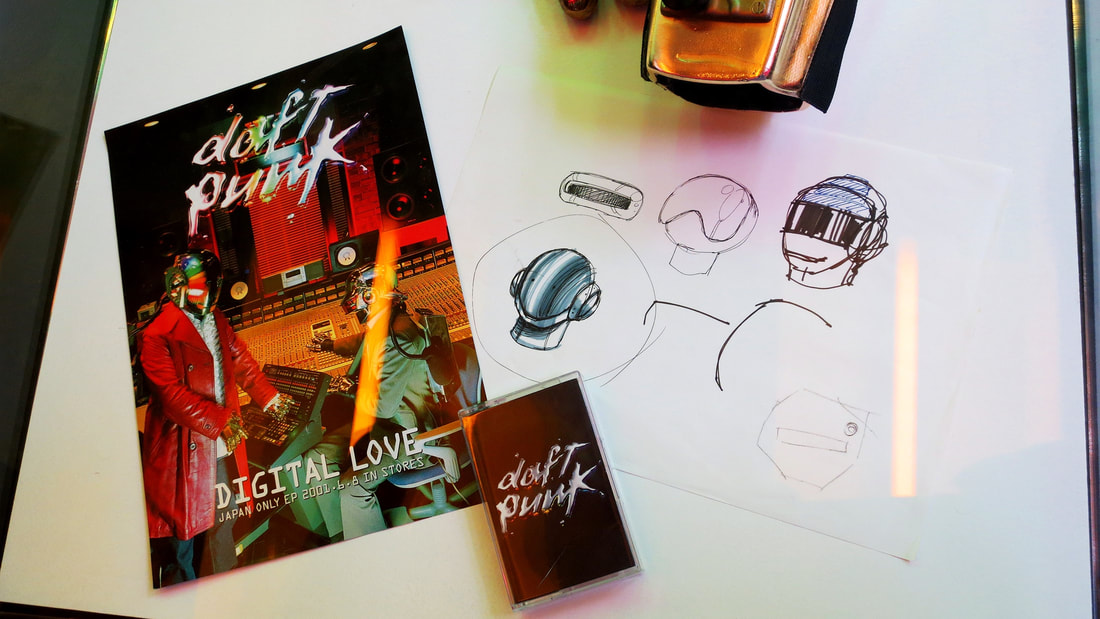
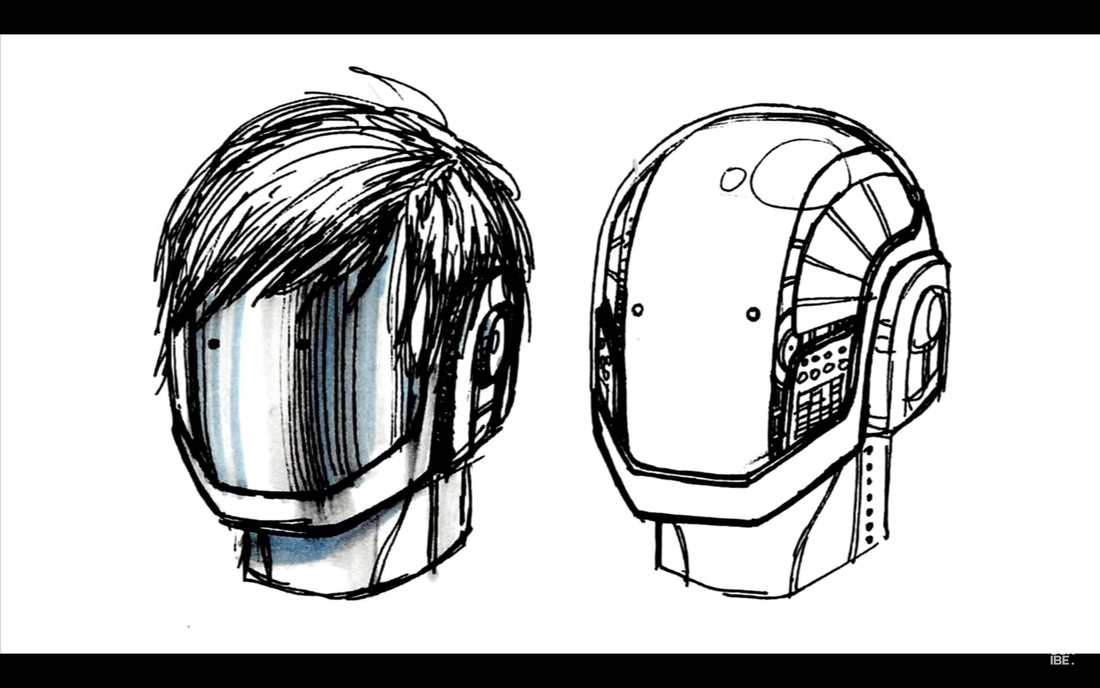
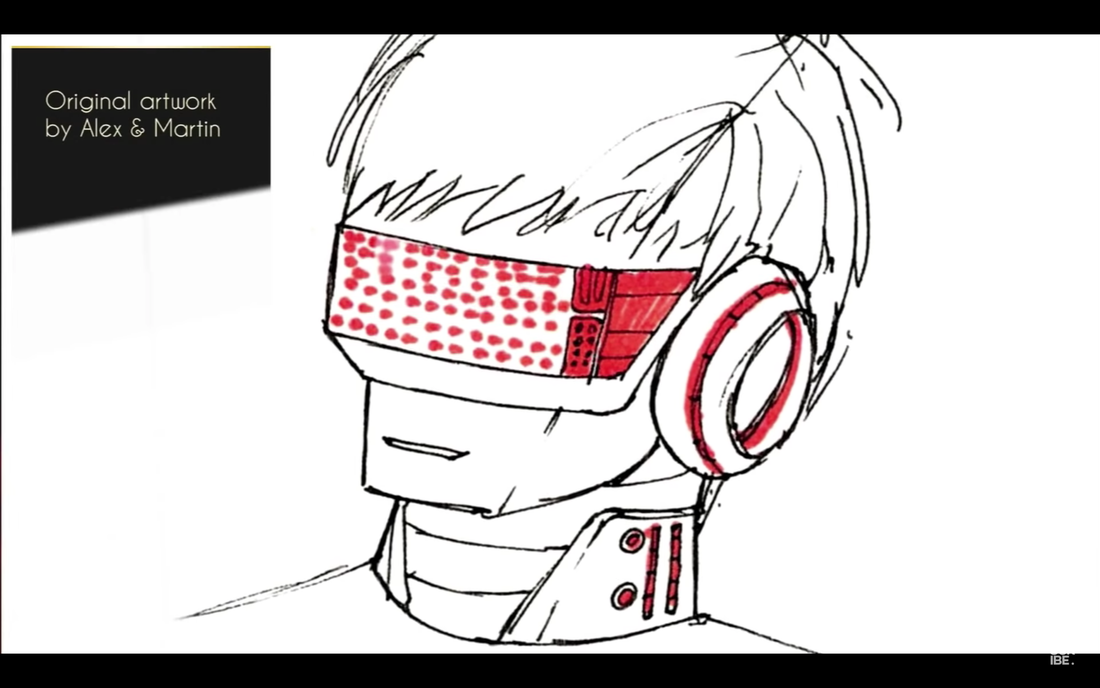
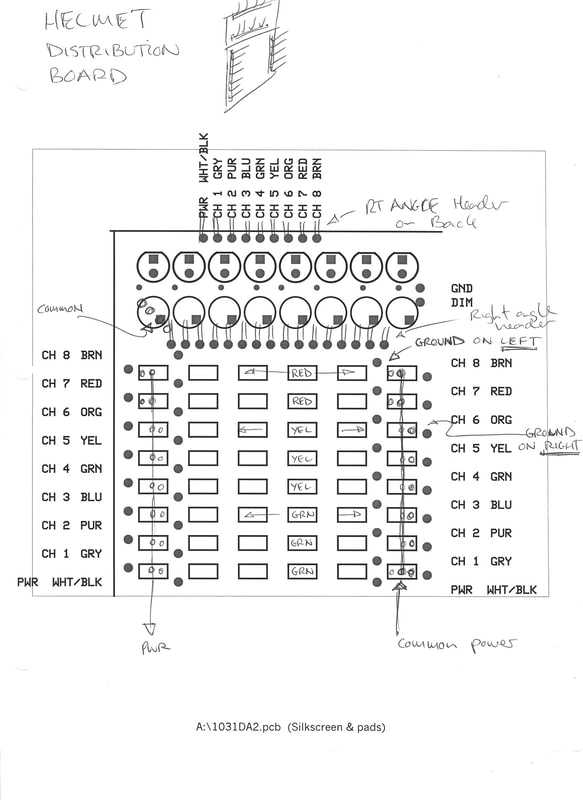
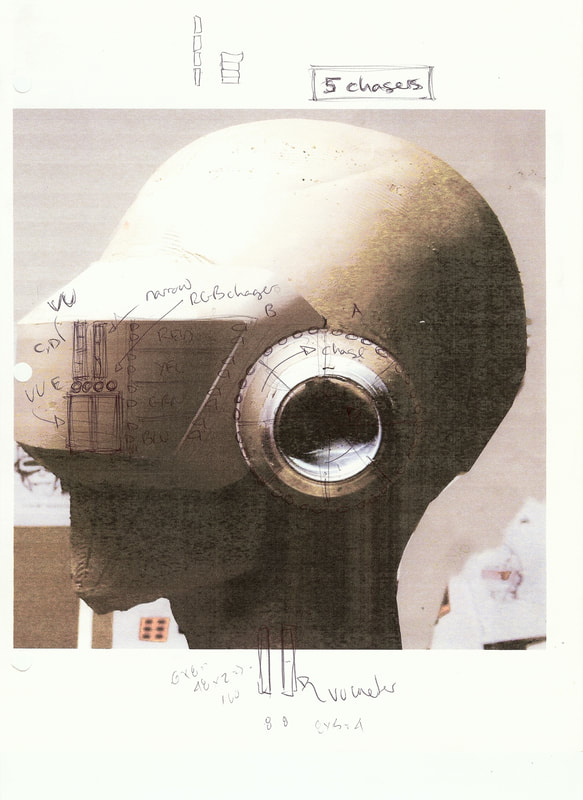
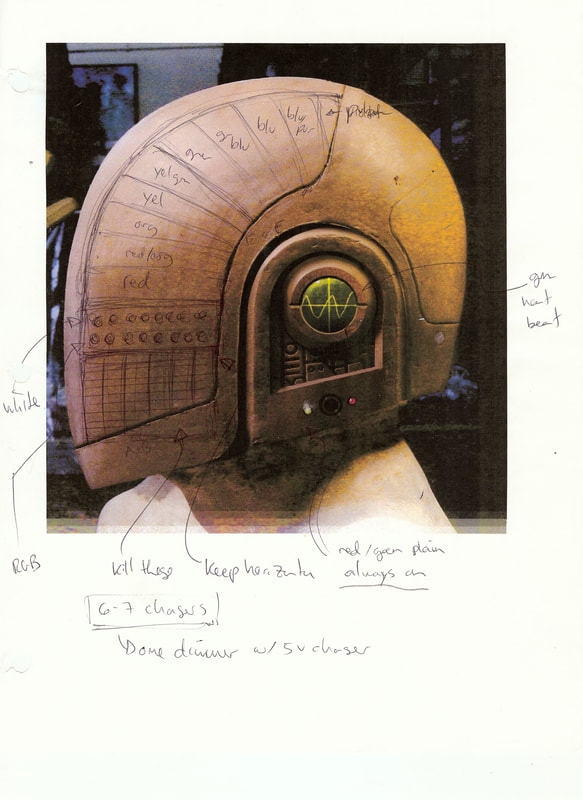
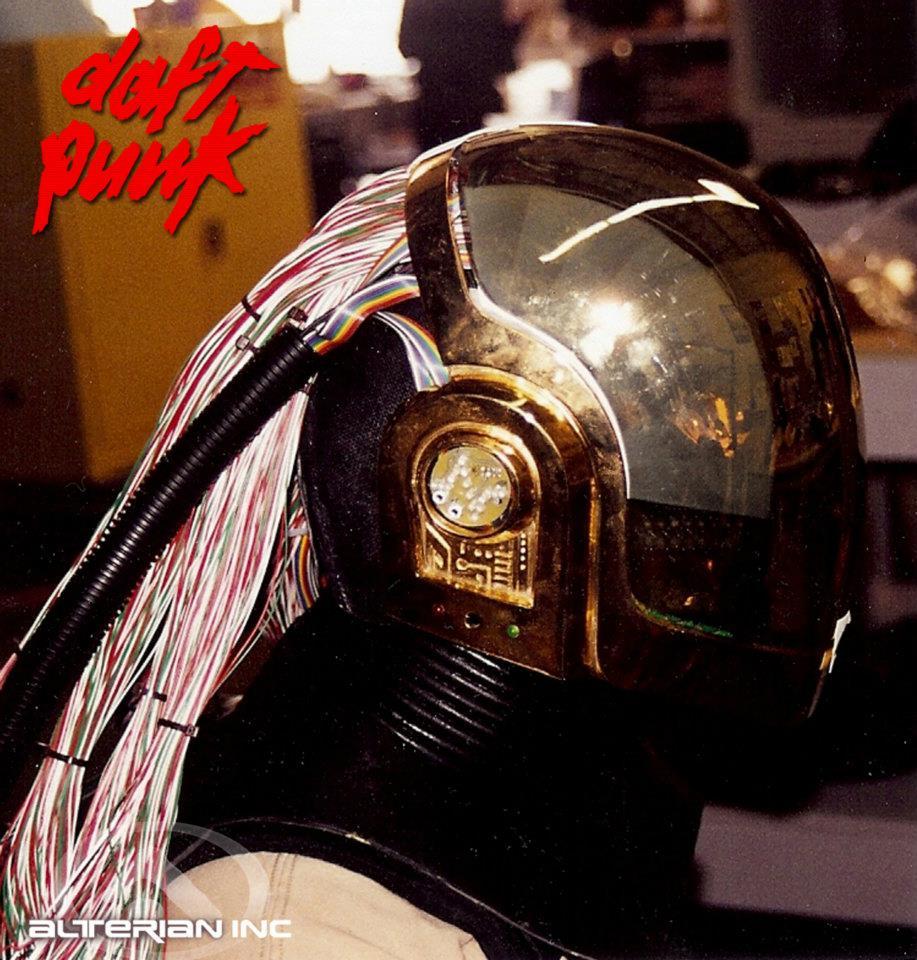
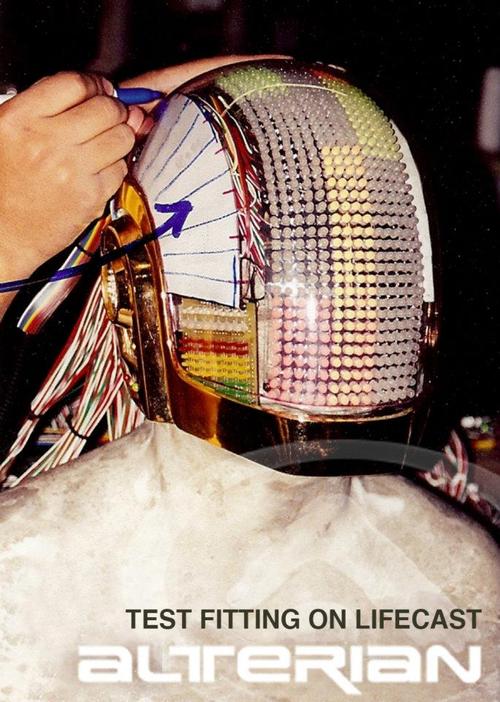
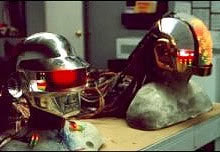
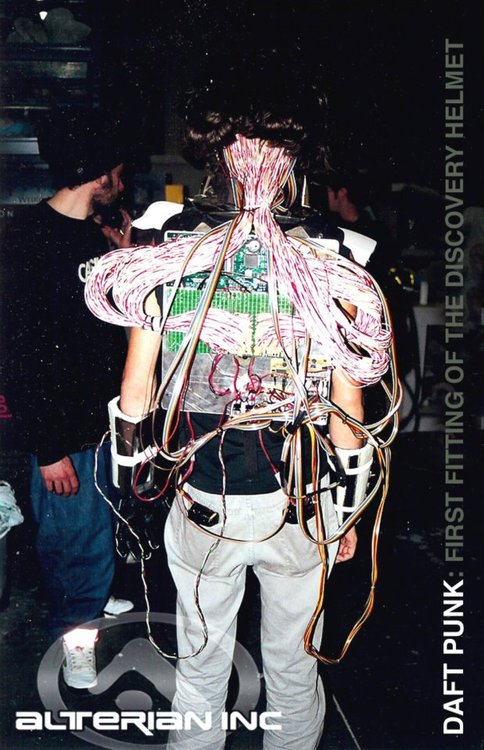
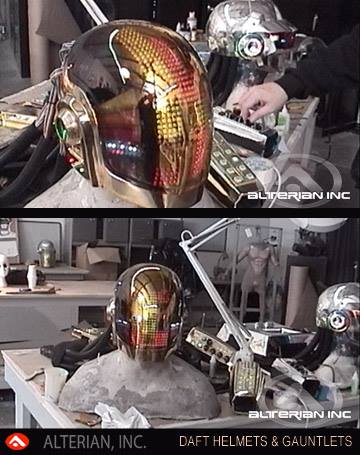
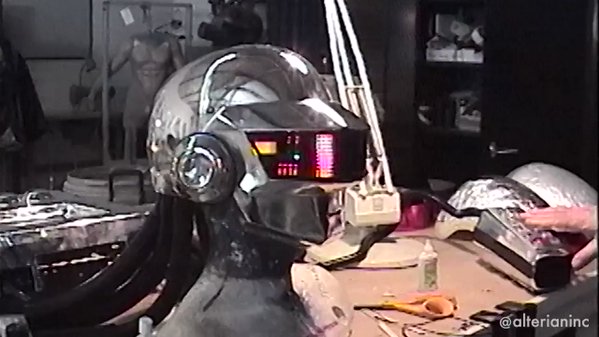
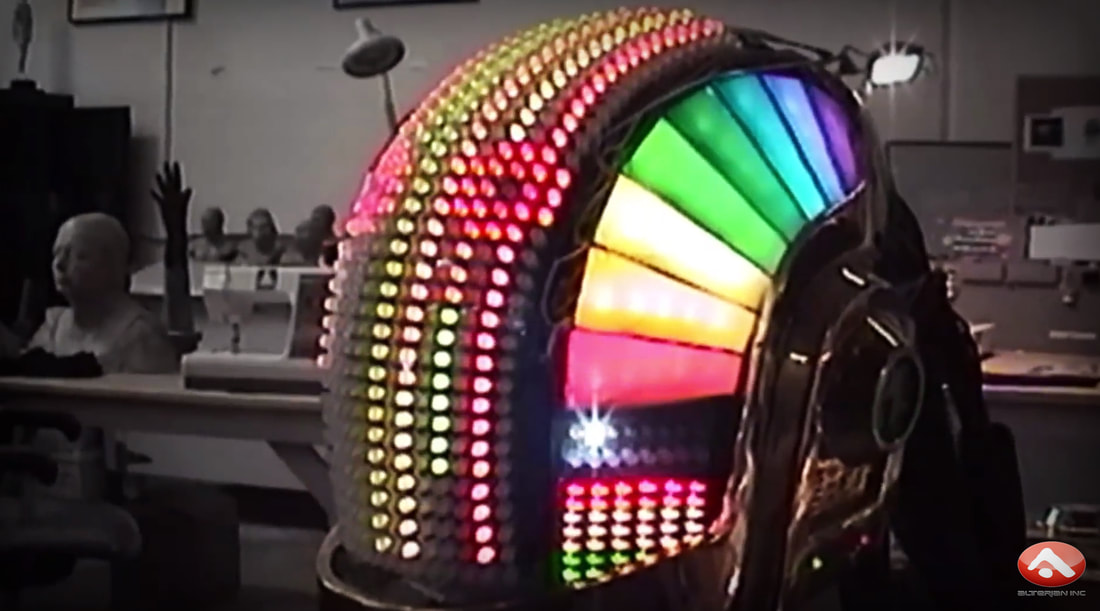
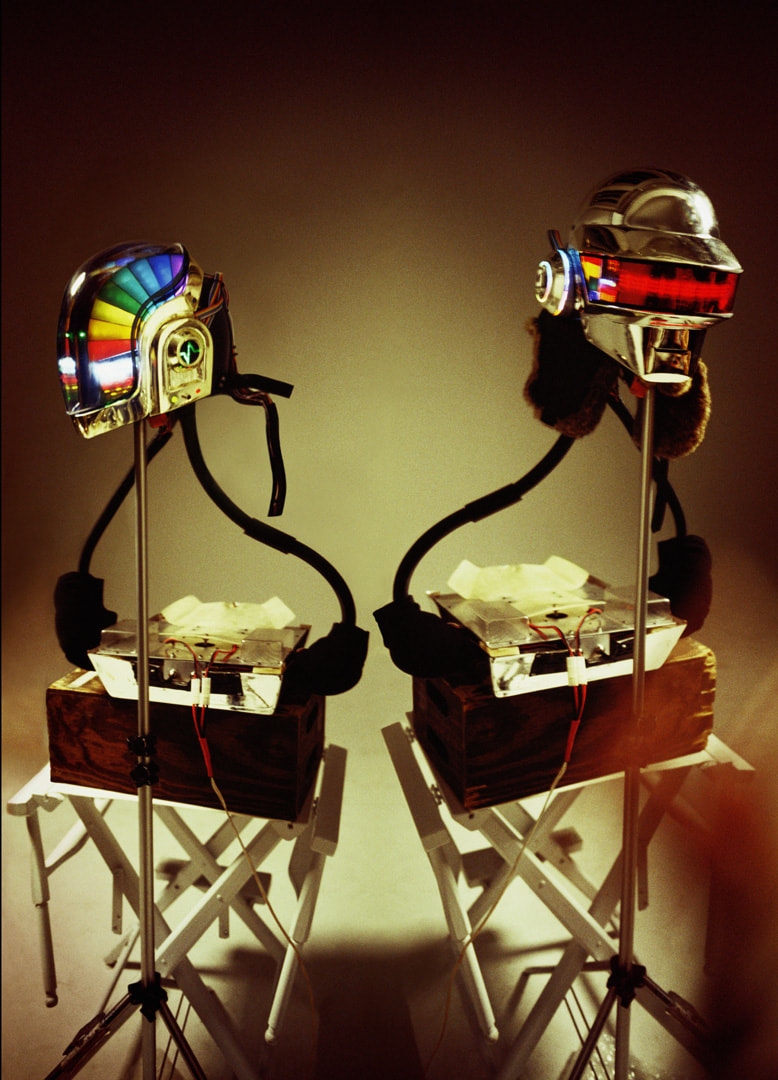
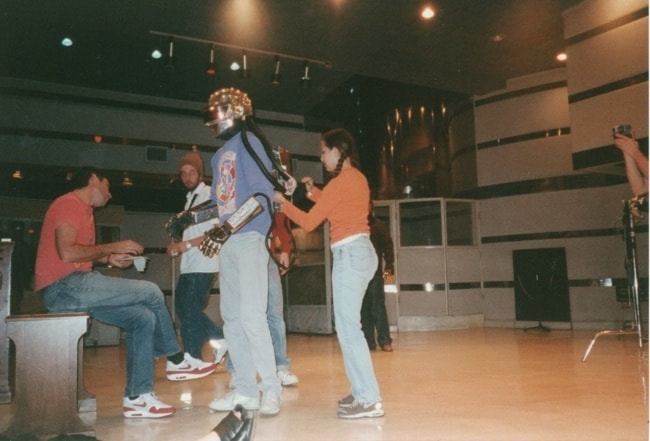
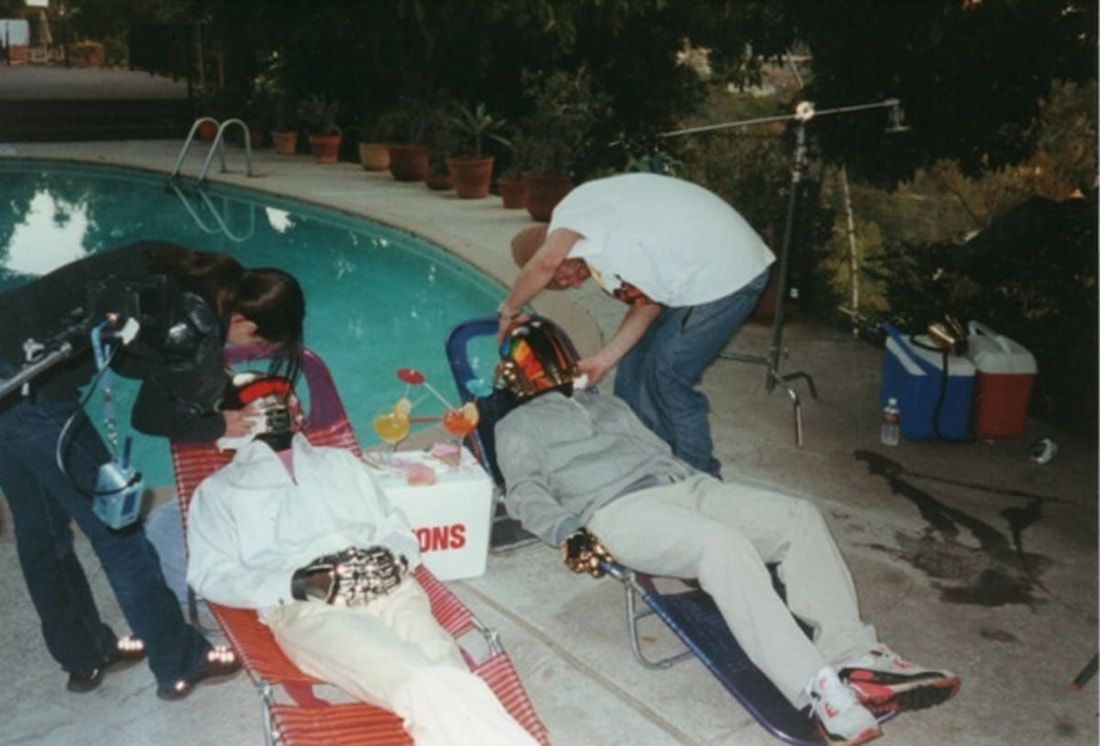
The actual manufacturing of the robot costumes proved to be quite the undertaking. First they approached Hollywood prop-makers Alterian Inc. around mid 2000 asking them to make their robot idea a reality. Then they had Grammy winning music video directors Alex & Martin help design the robots. Tony Gardner who owns Alterian Inc. is an American makeup and special effects designer and has been active since his work on Michael Jackson's "Thriller" video. Tony Gardner and the rest of his crew worked for months to make the robot costumes a reality and then continually updated them over the course of the next 7 years. The biggest challenge to them was fitting so many electronics within such a tight space since every individual LED required its own wire. Their solution was to have the wires come out of the back of their helmets and lead down into a backpack containing all the necessary electronics. Another challenge they faced was Daft Punk's insistence on having the lights in their helmets be activated via gauntlets worn on their arm and be programmable to display words and animations. To achieve this, they got help from the man who designed the jumbotron screens which are often seen at sports stadiums. Another important factor was the ability for Daft Punk to be able to see out of the helmets but for no one to be able to see in. This was achieved in early iterations with LEDs and scrims behind the visors. Daft Punk reportedly spent around $65,000 for each helmet which can be attributed to all the advanced technology being utilized as well as the fact that they were plated with actual gold and silver.
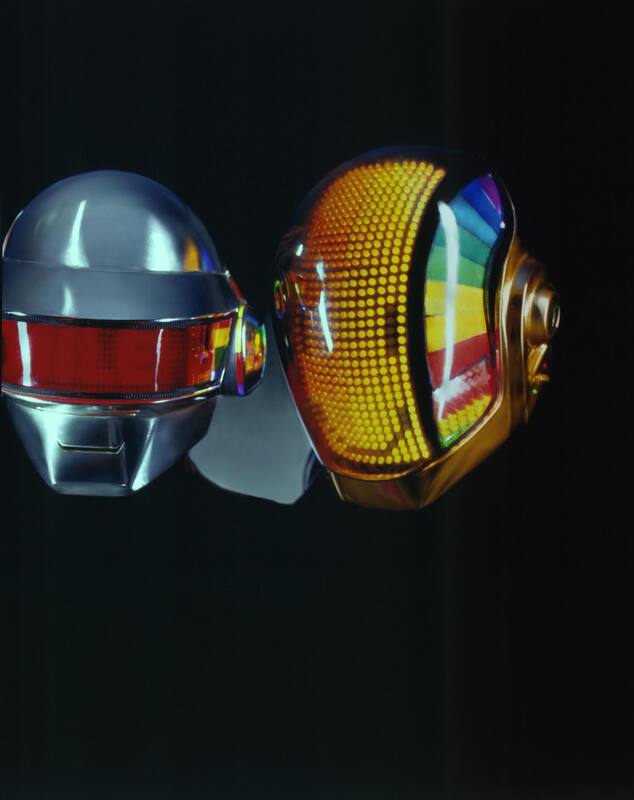
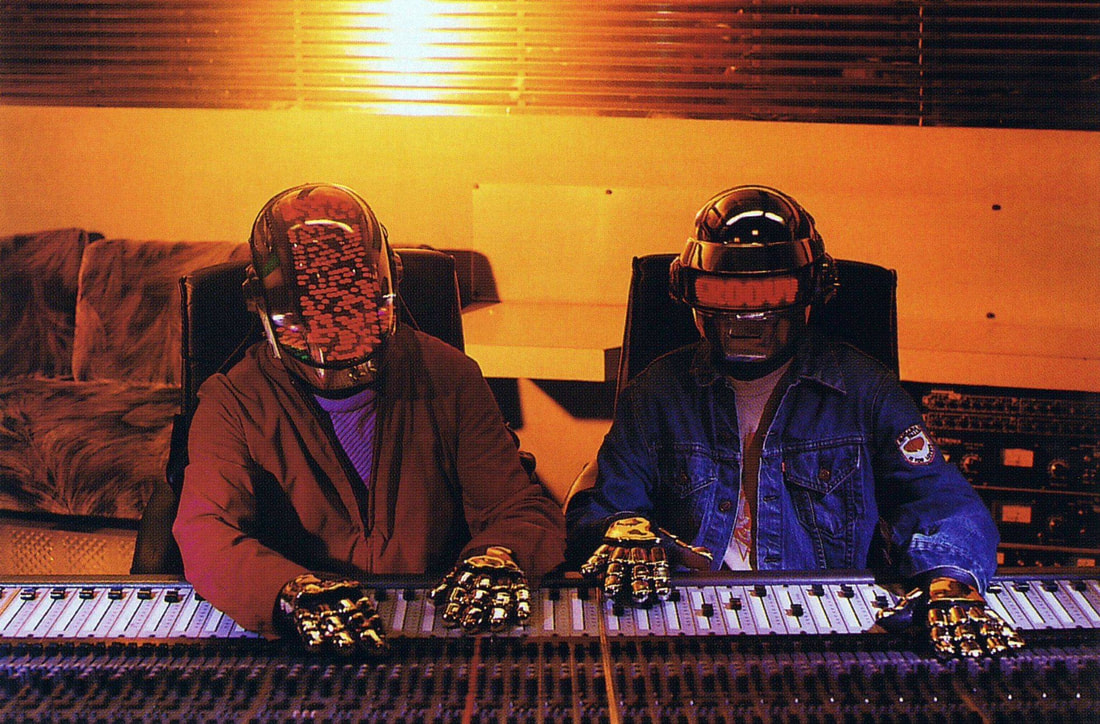
While quite impressive, the first robot iteration was not all that practical when it came to public appearances, photoshoots, or interviews. The LEDs had to be programmed in advance to display text, so interviewers wanting to use video would have had to give them their questions in advance. The total weight and heat inside the costume was also a problem because Daft Punk could only be in costume for so long which made public appearances and photoshoots difficult. They complained of back problems during the Discovery era. All of the LEDs in the visor also made it difficult to see out of. Because of these things, Daft Punk developed three options to choose from which varied in weight, LED displays, and visor color. They used these three iterations interchangeably until 2005 when they rolled out a new design.
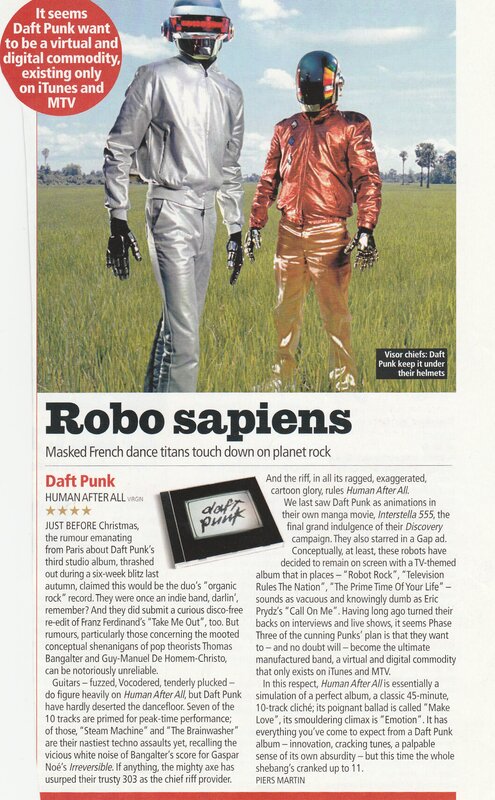
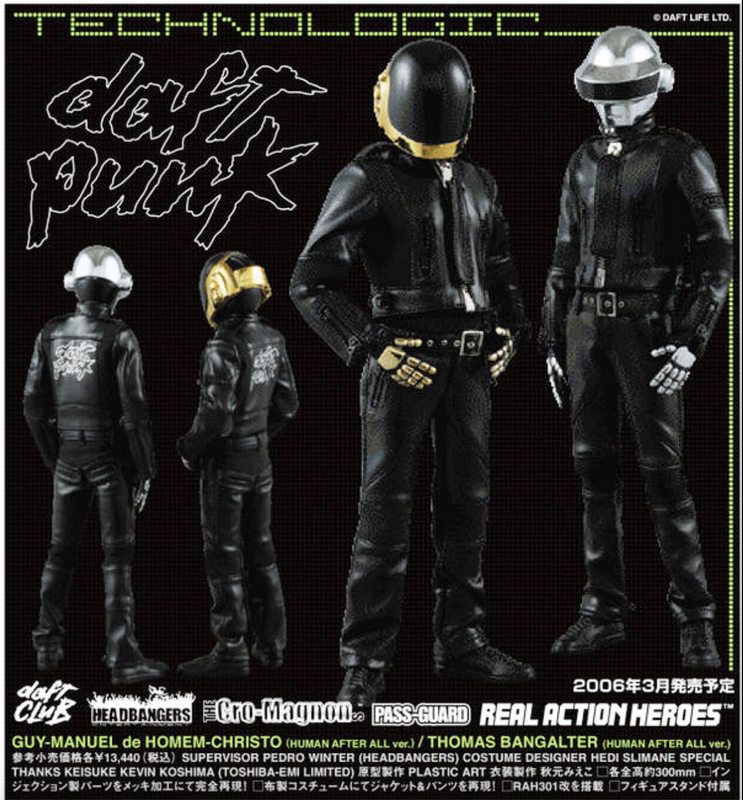
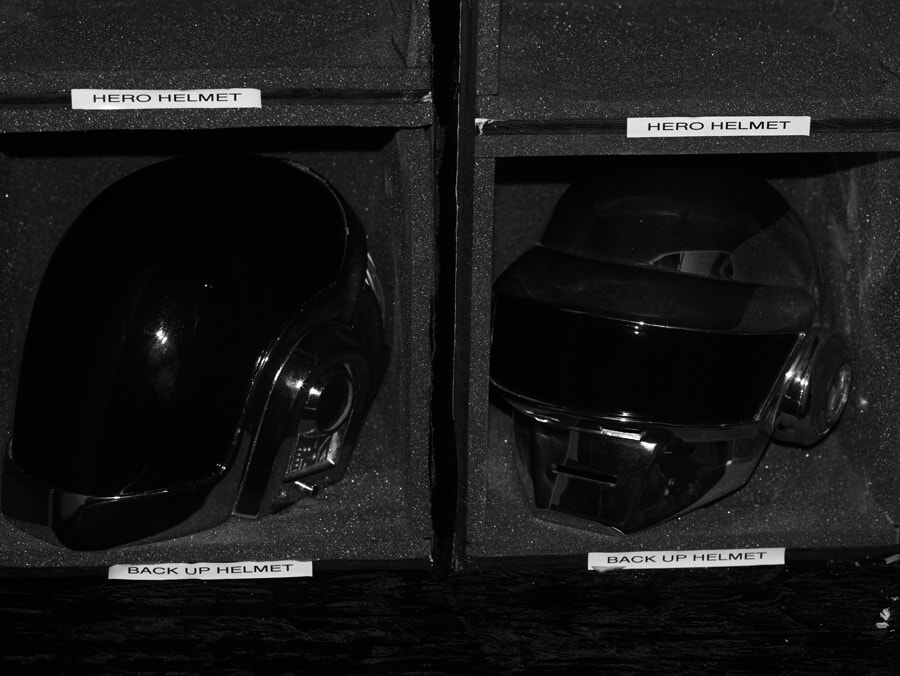
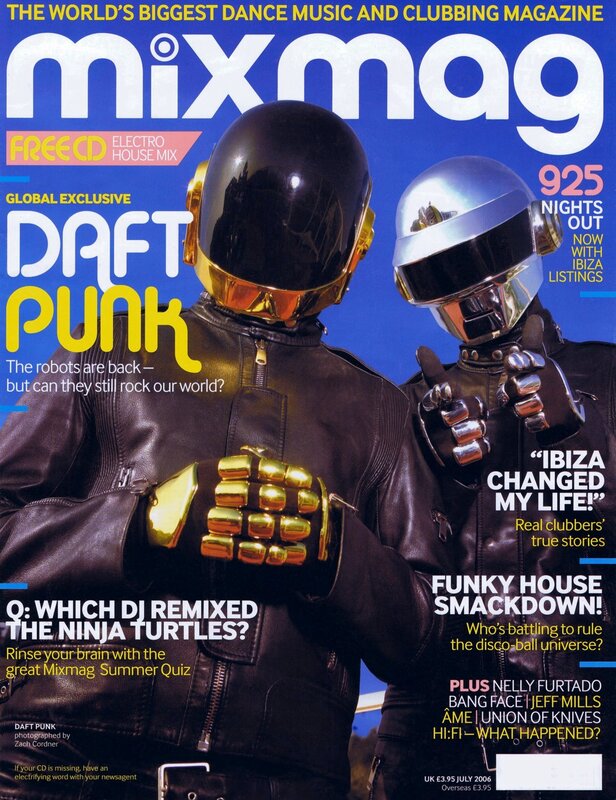
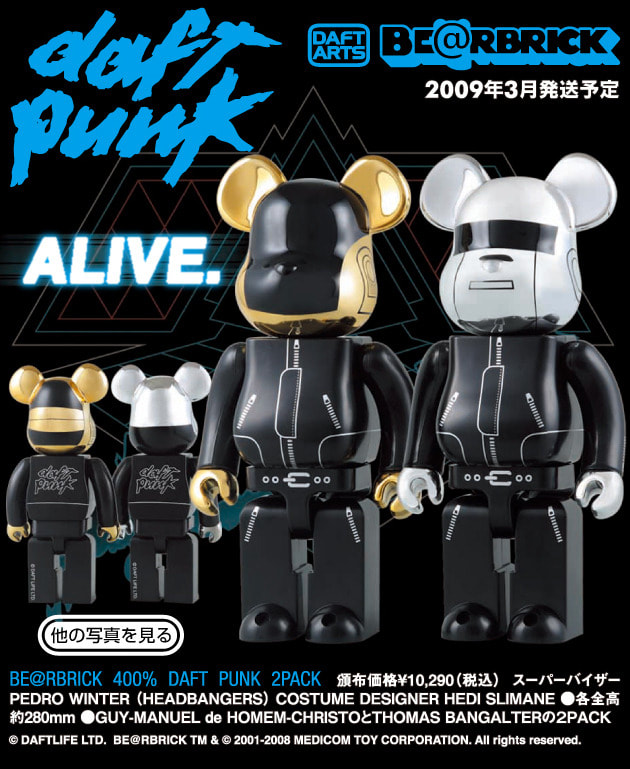
In 2005 Daft Punk released their third album Human After All which took a much darker tone and the robots were redesigned to match that tone and to be more practical for things like photoshoots and filming music videos. They ended up removing all of the lights from the helmets which meant no more bulky backpack. They also ditched the stiff gloves and neck pieces for a black bodysuit which allowed for better movement and touch. The robots were styled by Hedi Slimane in black Dior Homme leather jackets and pants which matched the darker tone of their album. These changes gave Daft Punk a more refined and sleek look and they would stick with it until 2010.
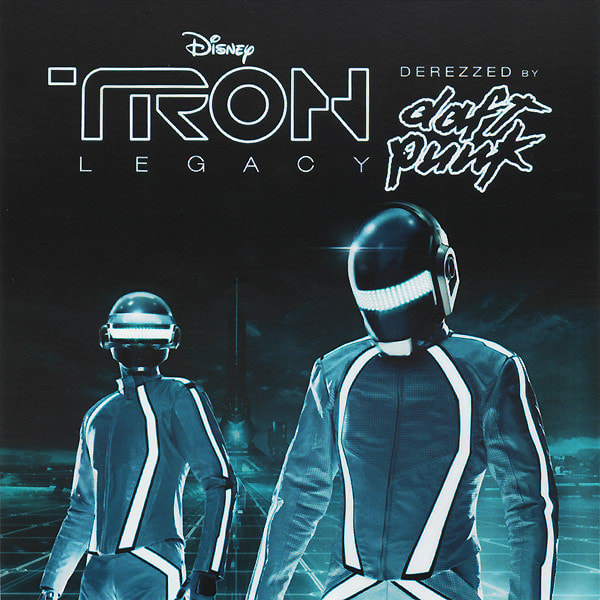
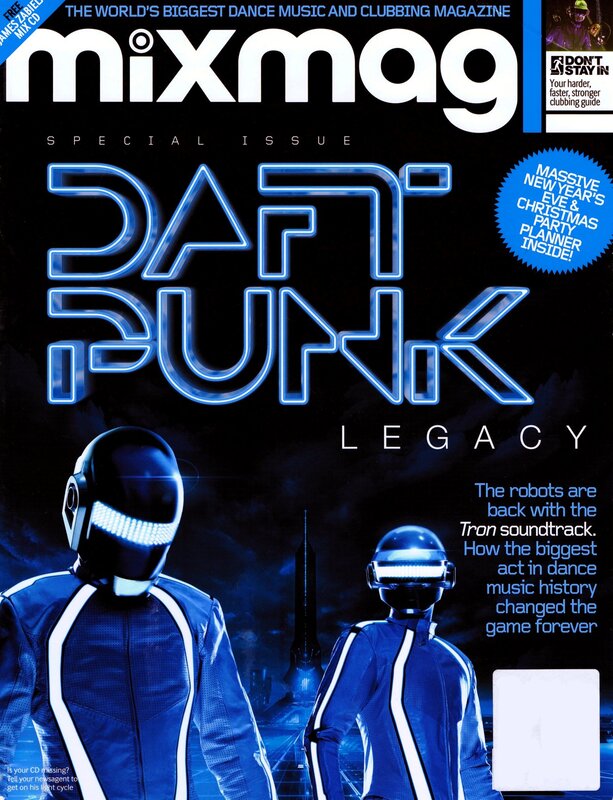
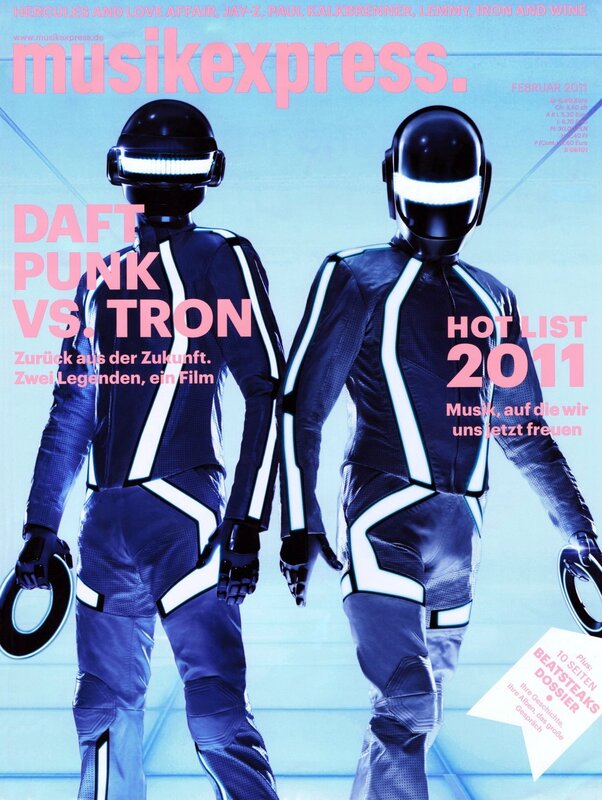
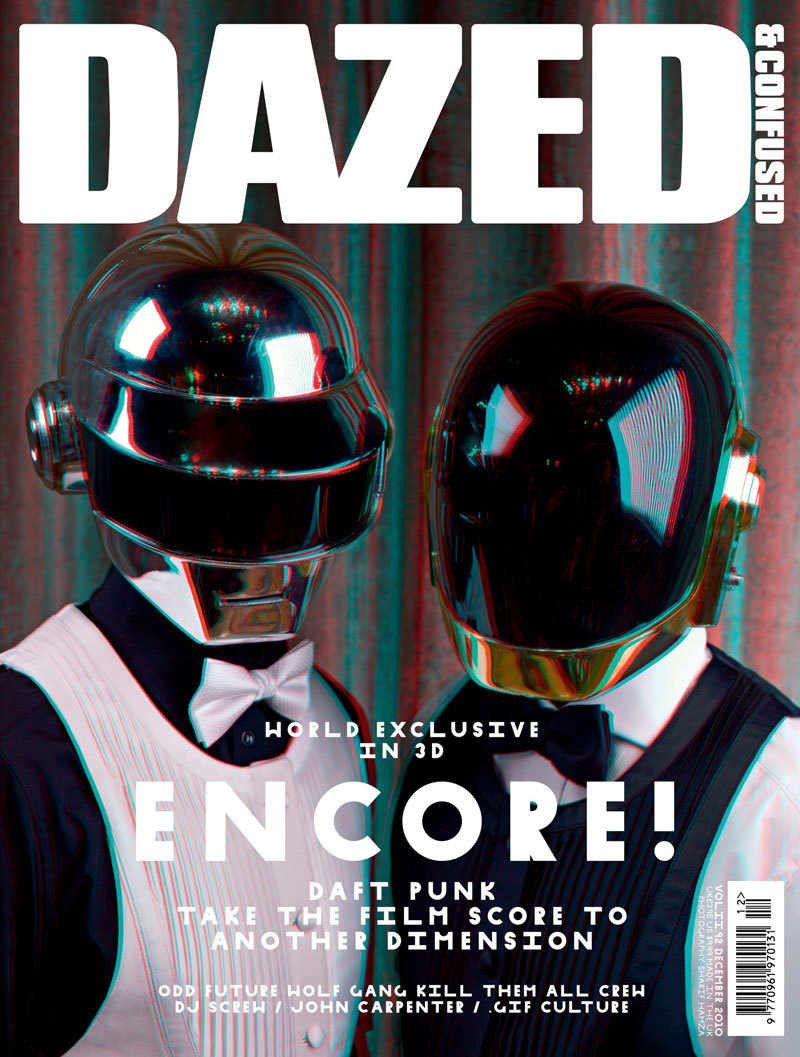
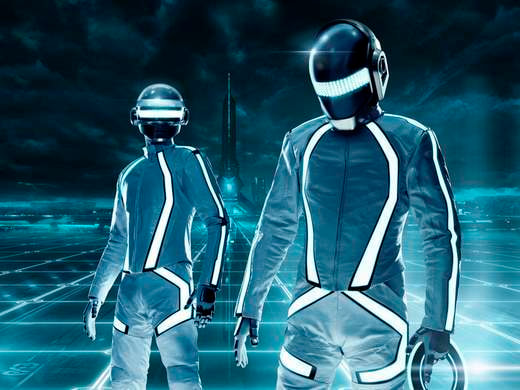
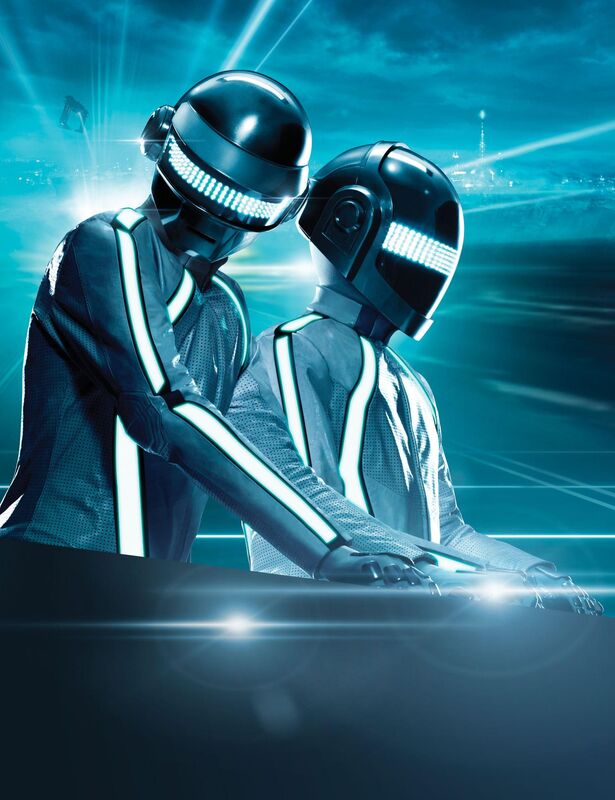
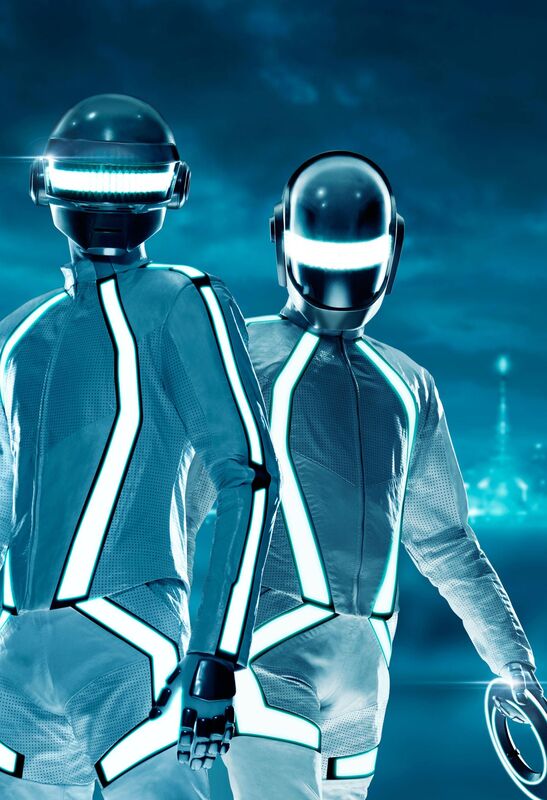
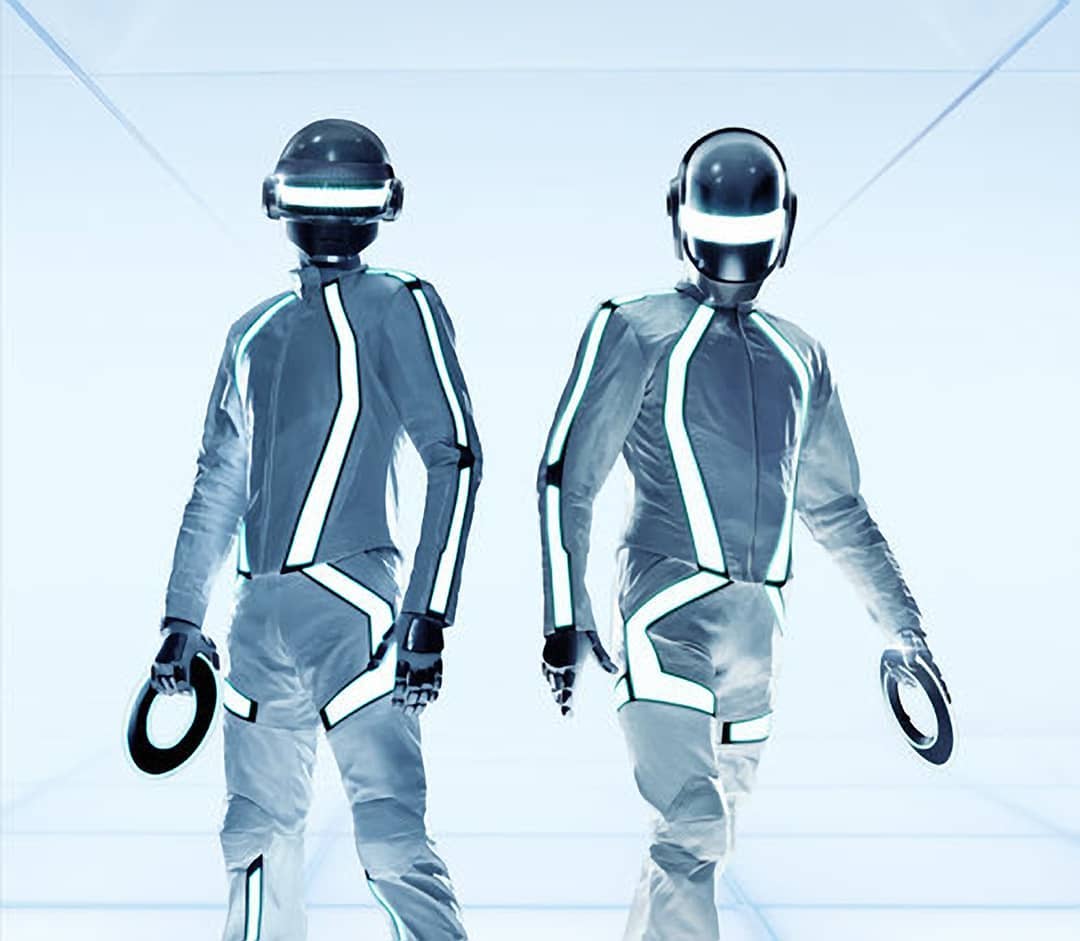
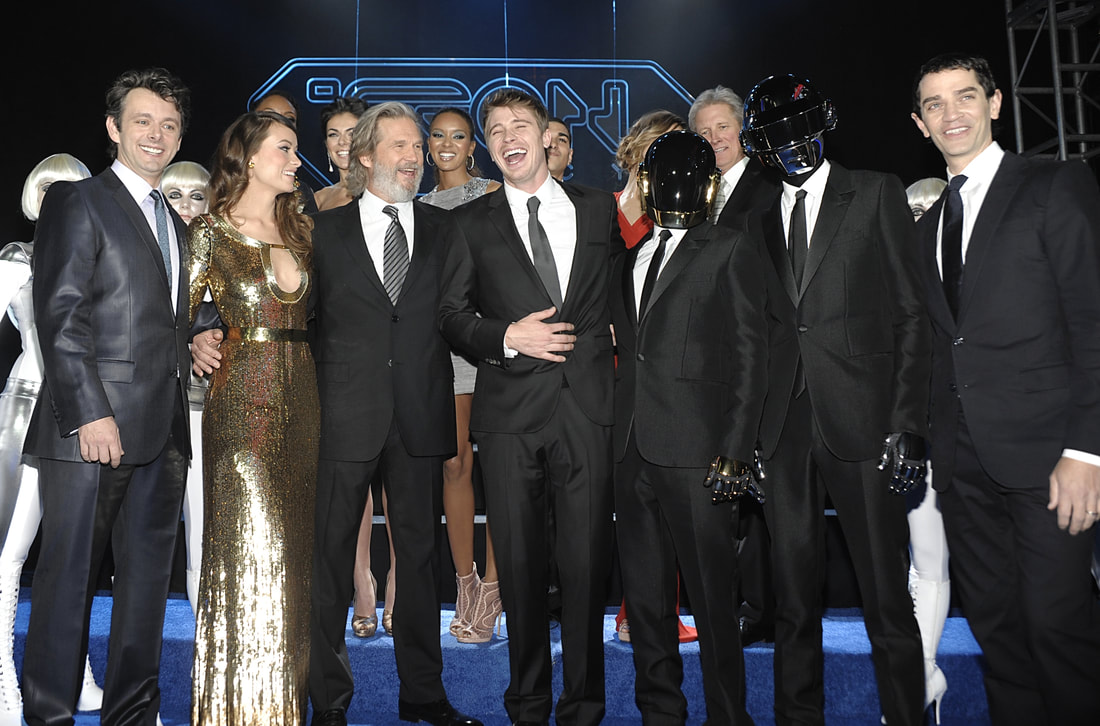
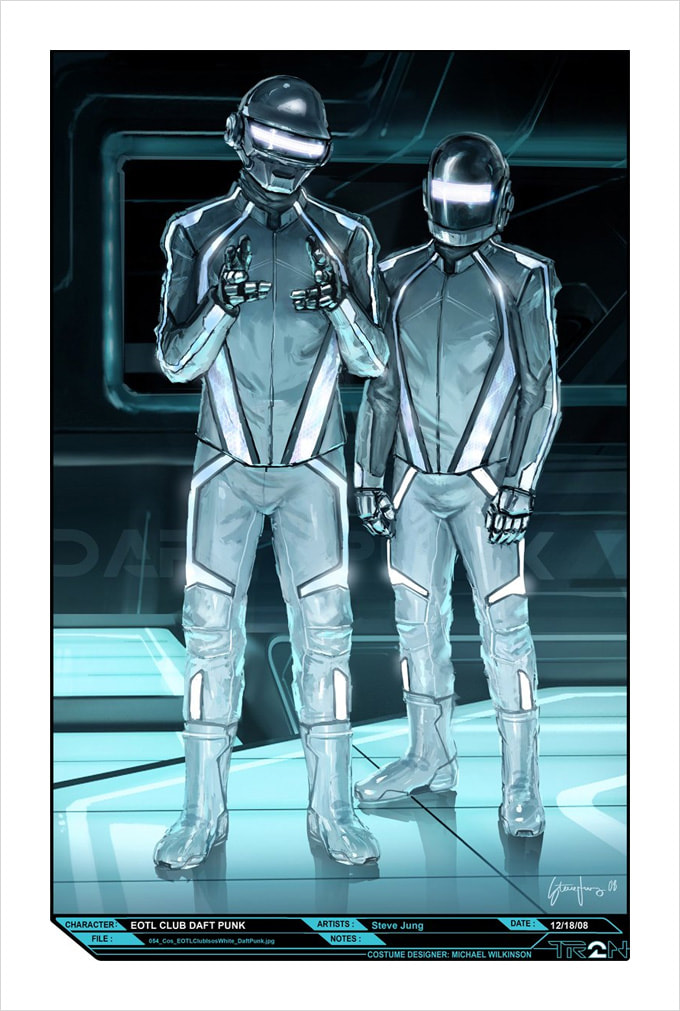
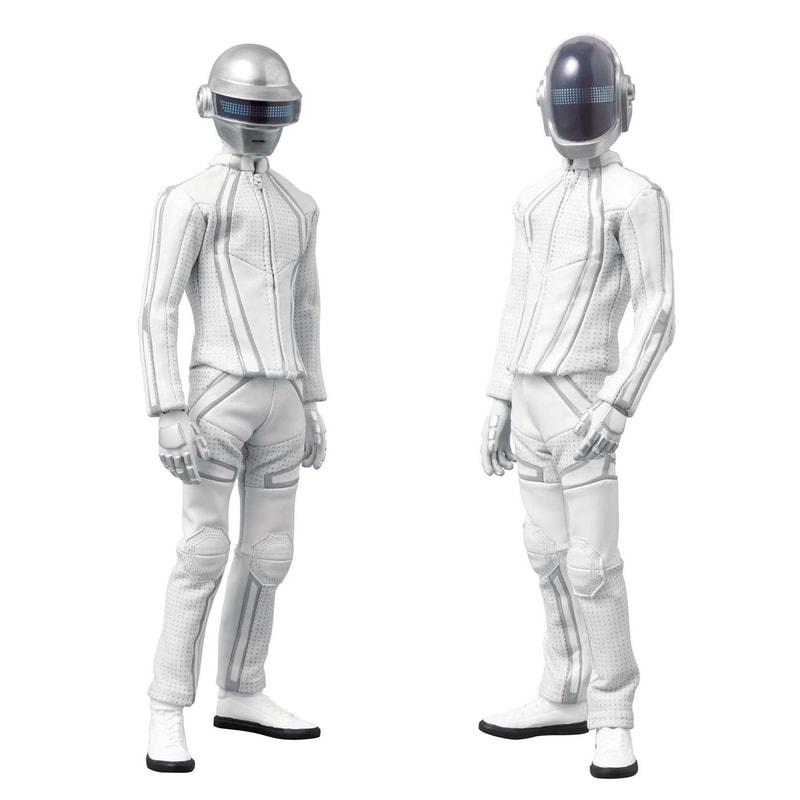
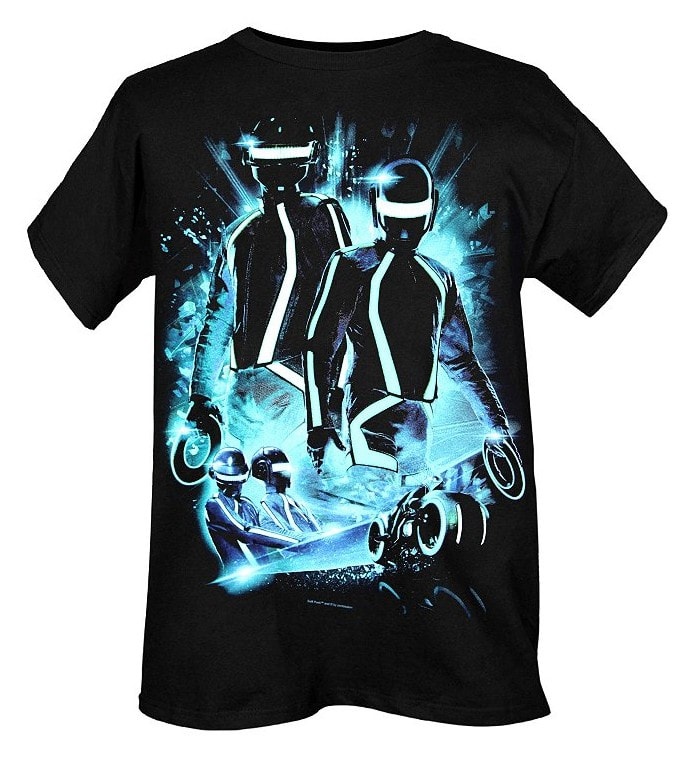
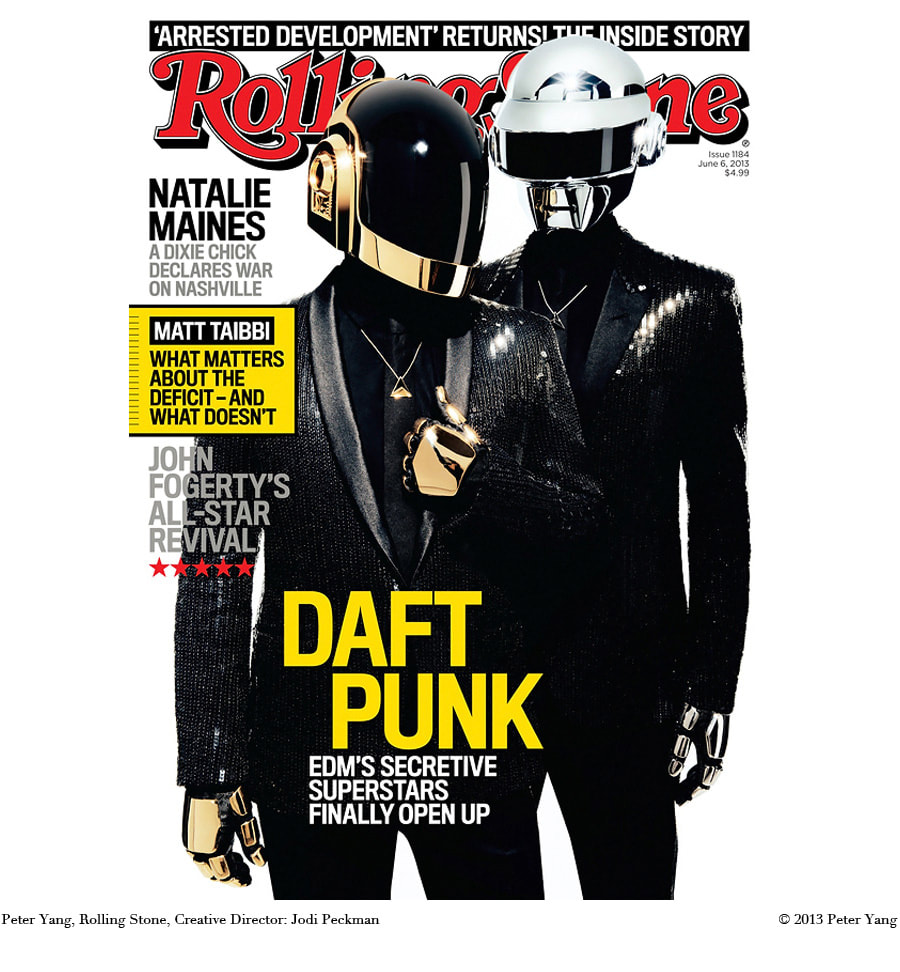
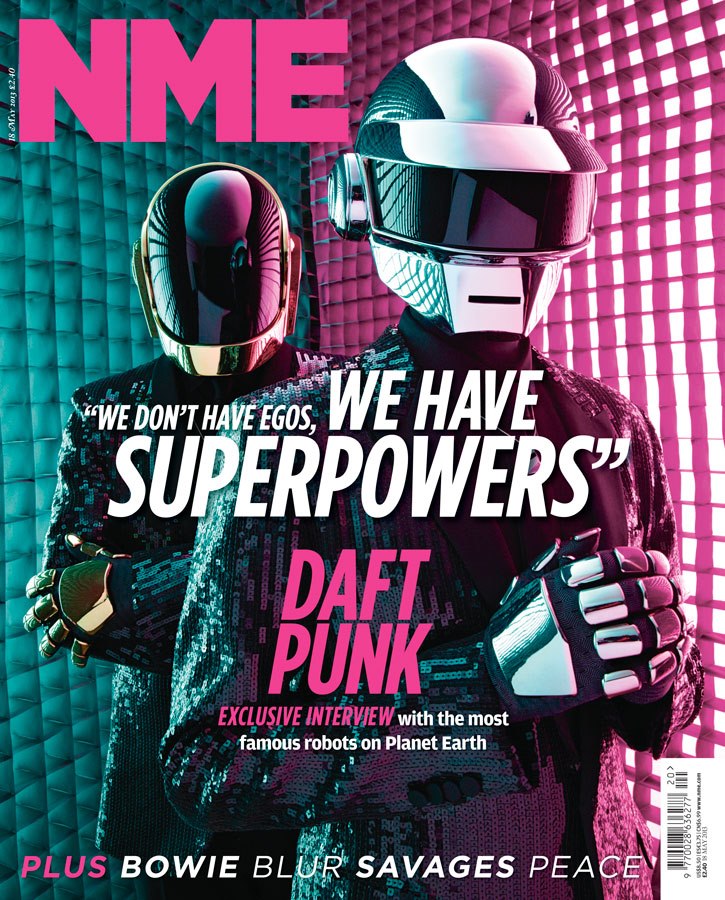
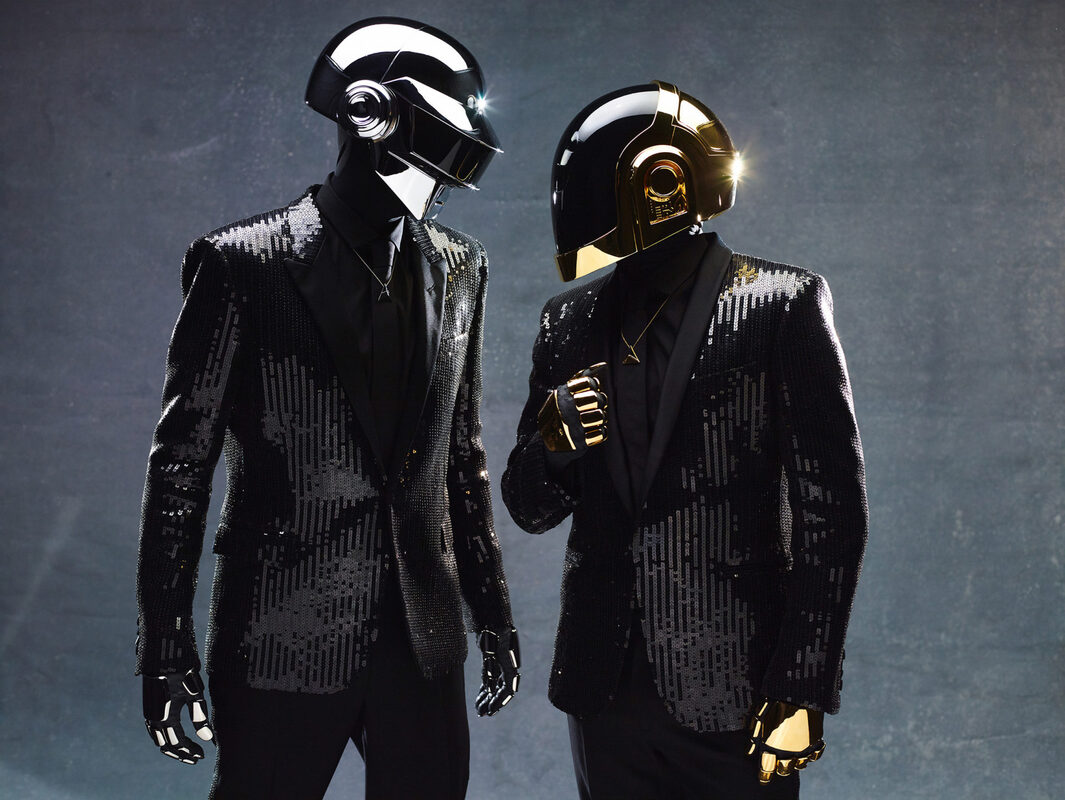
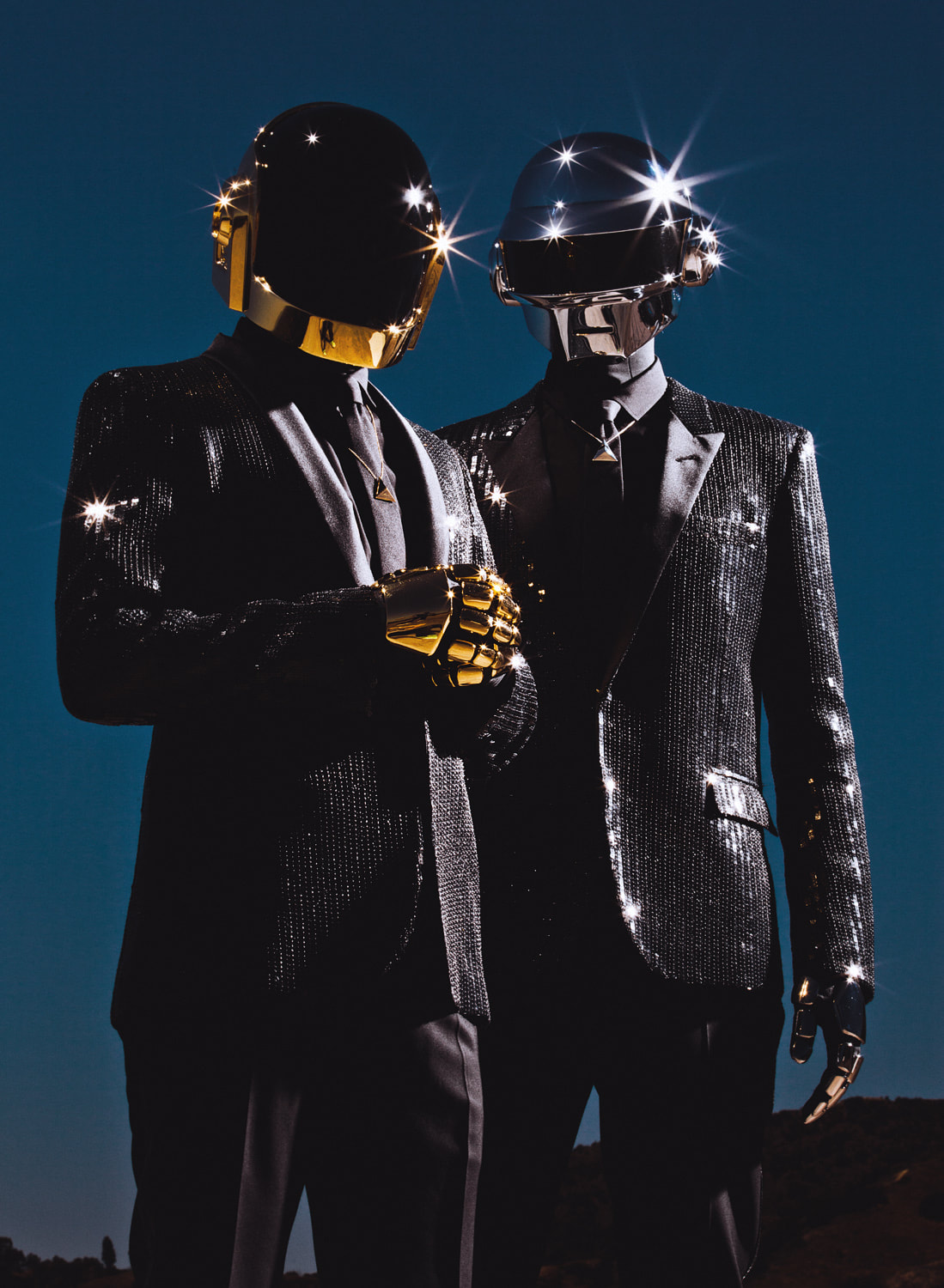
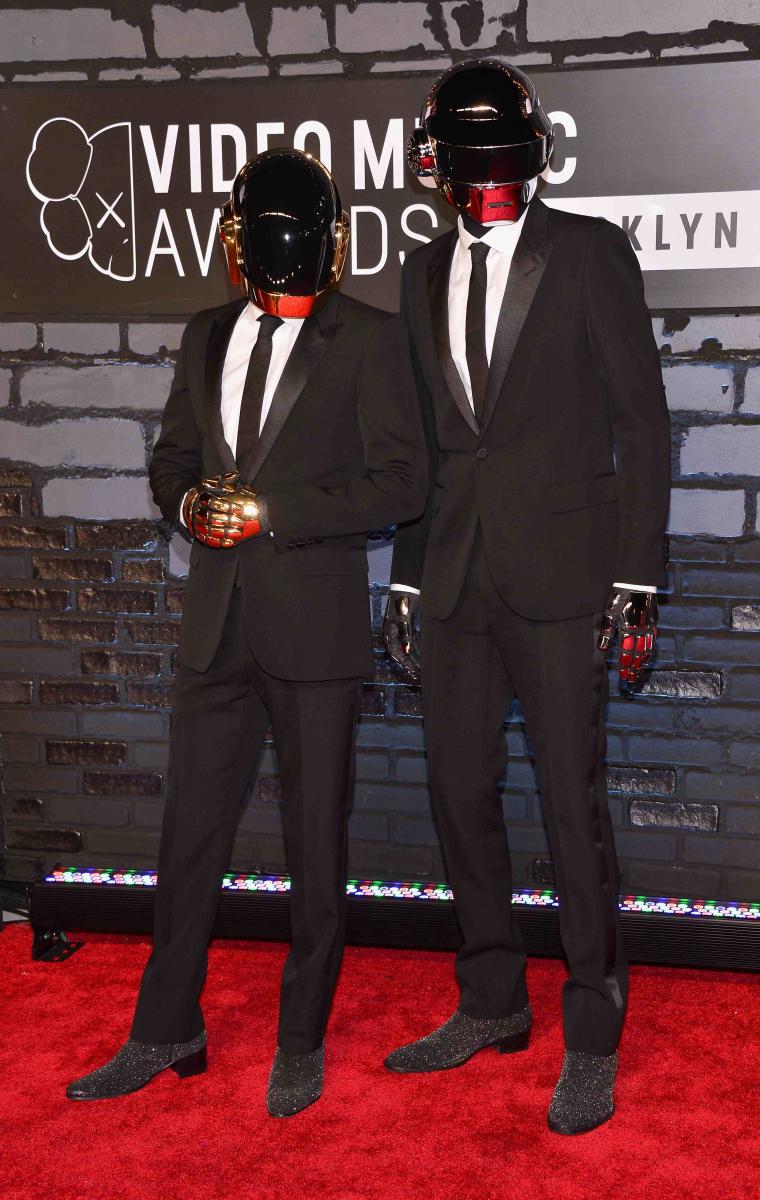
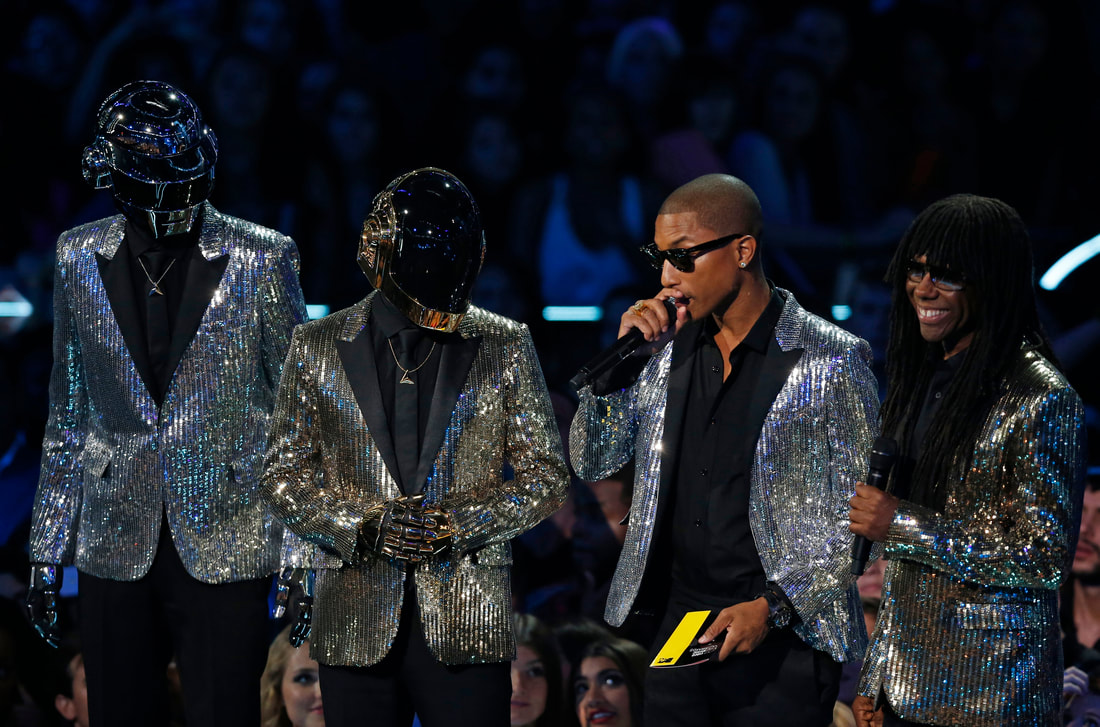
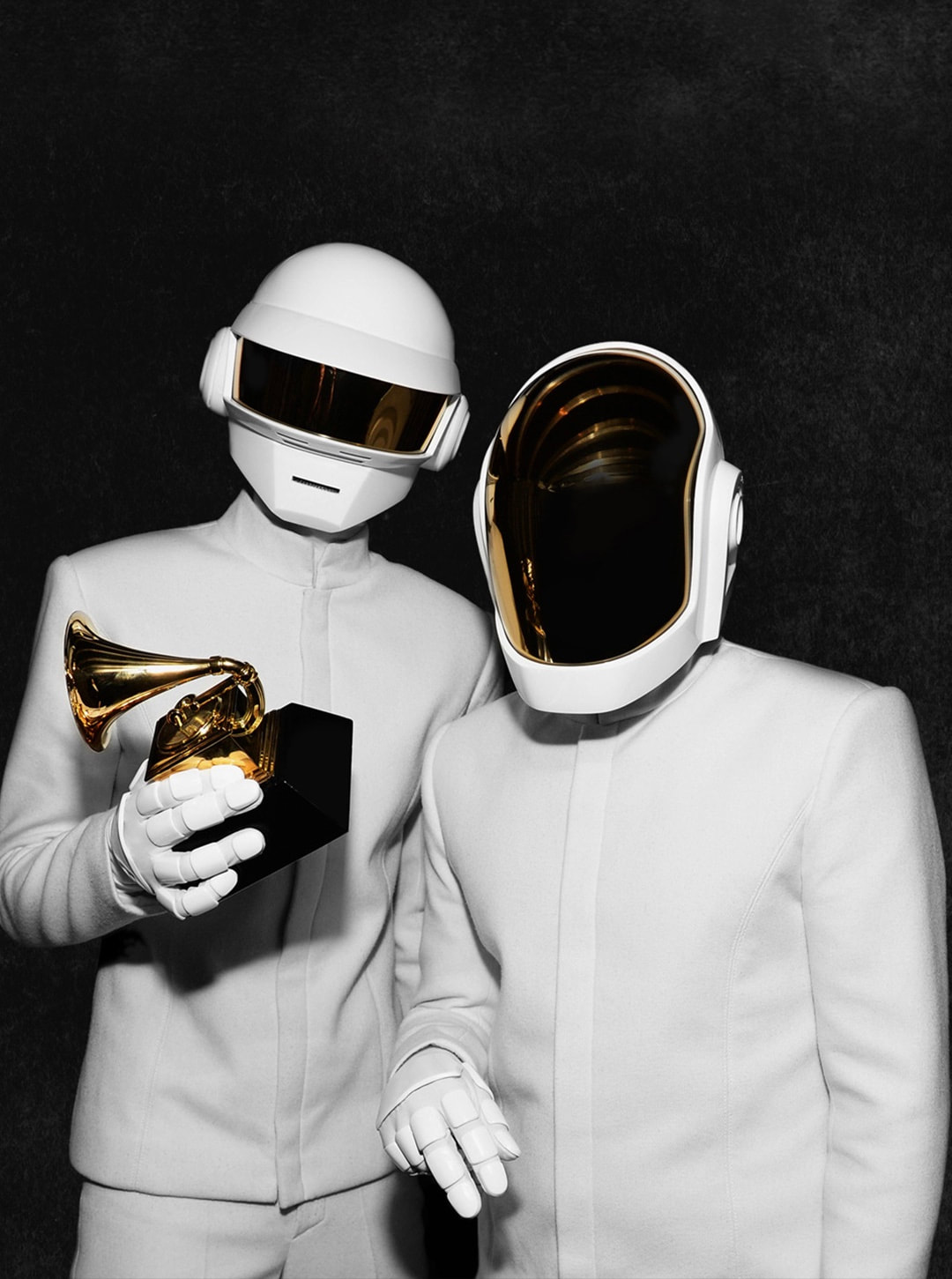
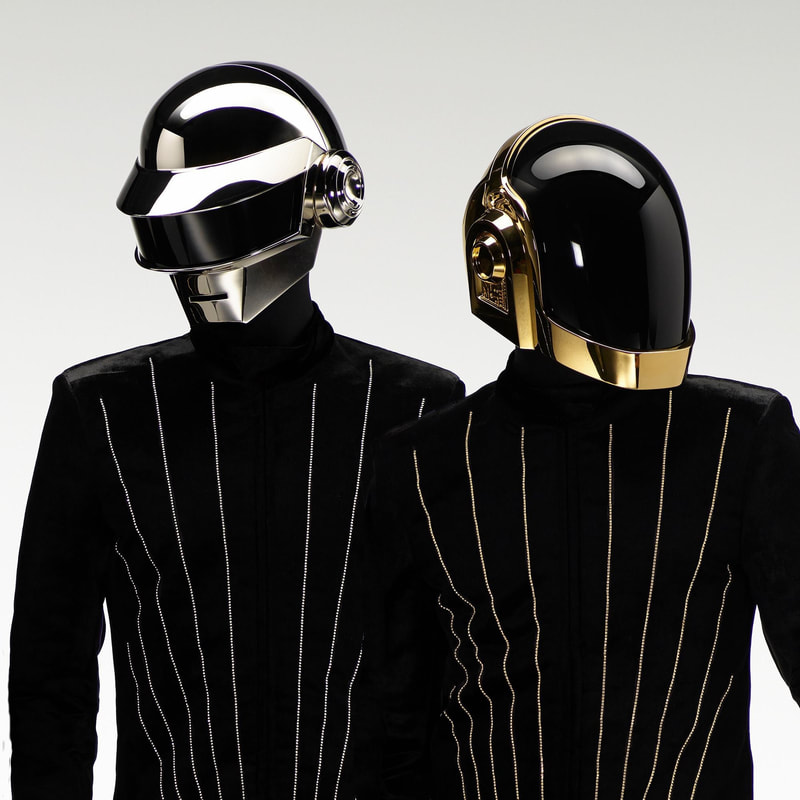
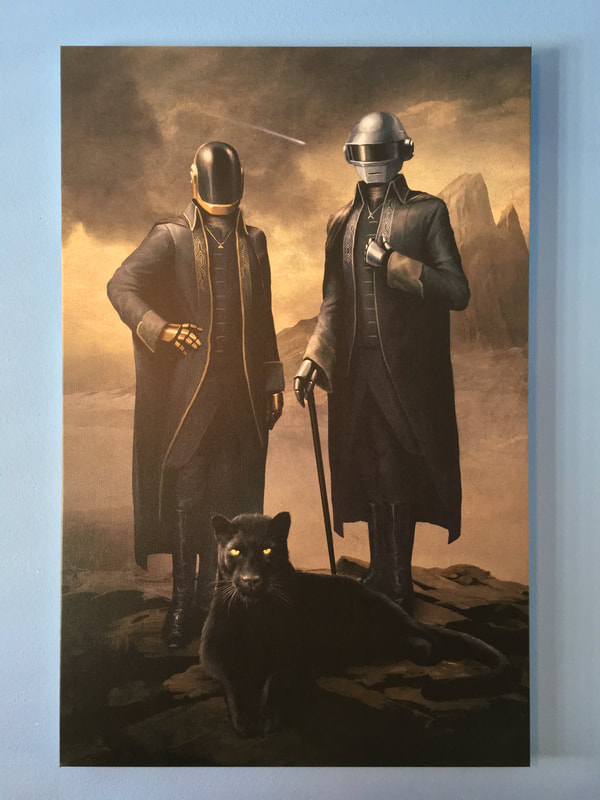
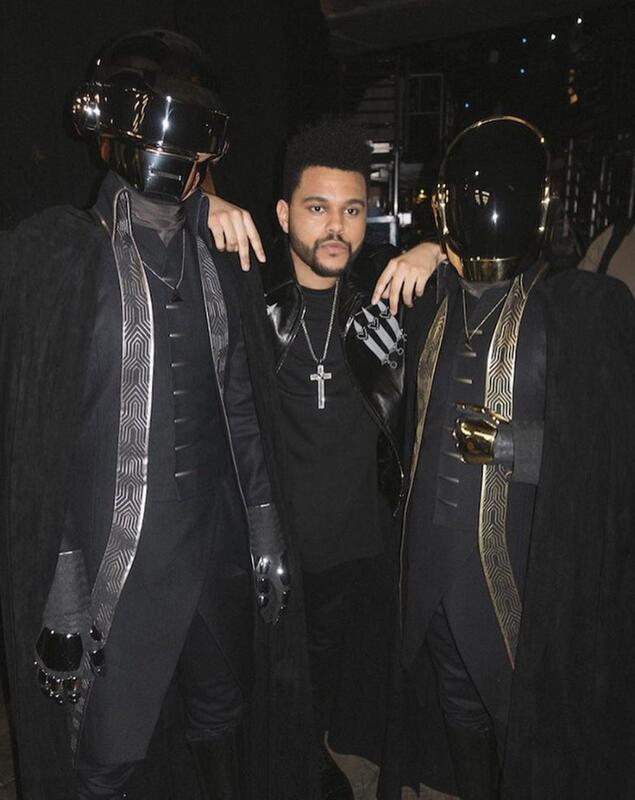
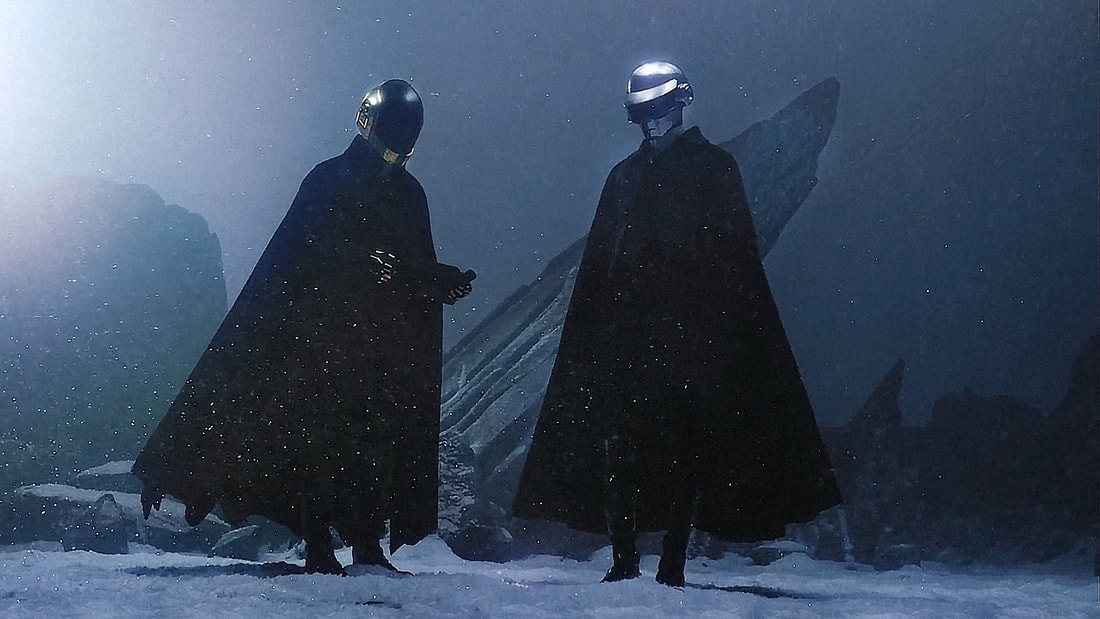
In 2009/2010 Daft Punk's involvement with Disney in the film Tron: Legacy required them to change up their look to match the film. Instead of black leather, Daft Punk were adorned with futuristic grey and blue outfits which glowed. The helmets were also modified to match the Tron aesthetic, temporarily bringing back the internal LEDs and changing from gold and silver shells to a greyish-blue. The shape of the helmets were also modified slightly to be sleeker. This iteration was only used shortly for filming and press photos in 2009. The helmets made for Tron were manufactured by Ironhead Studio, Inc. and Daft Punk decided to stick with them afterwards. In 2010 Daft Punk reverted back to silver and gold but maintained the sleeker redesign. This helmet iteration debuted at their surprise encore performance with Phoenix @ Madison Square Garden on October 20th, 2010 and went unchanged for the rest of their career. While the helmets did not changed after 2010, their outfits certainly did. In 2013 Daft Punk was styled once again by Hedi Slimane in sequined Saint Laurent suits, this time to match the aesthetic of their fourth album Random Access Memories. In 2014 @ the 56th Annual Grammy Awards, Daft Punk had a costume change halfway through the show, debuting an all white version of the helmets with gold visors which appeared to be emulating a vintage astronaut look. In 2015 Daft Punk once again suited up in Saint Laurent garb for their Tidal signing and press photo. And finally In 2016/2017 Daft Punk donned long black cloaks with gold and silver circuit patterns sprinkled inside their layered black tunics for their collaboration with The Weeknd.
The Daft Punk robots underwent many changes in their 20 year existence. Nonetheless they have become icons in the music world and have been referenced countless times in pop-culture from The Power Puff Girls to The Simpsons to Family Guy.
   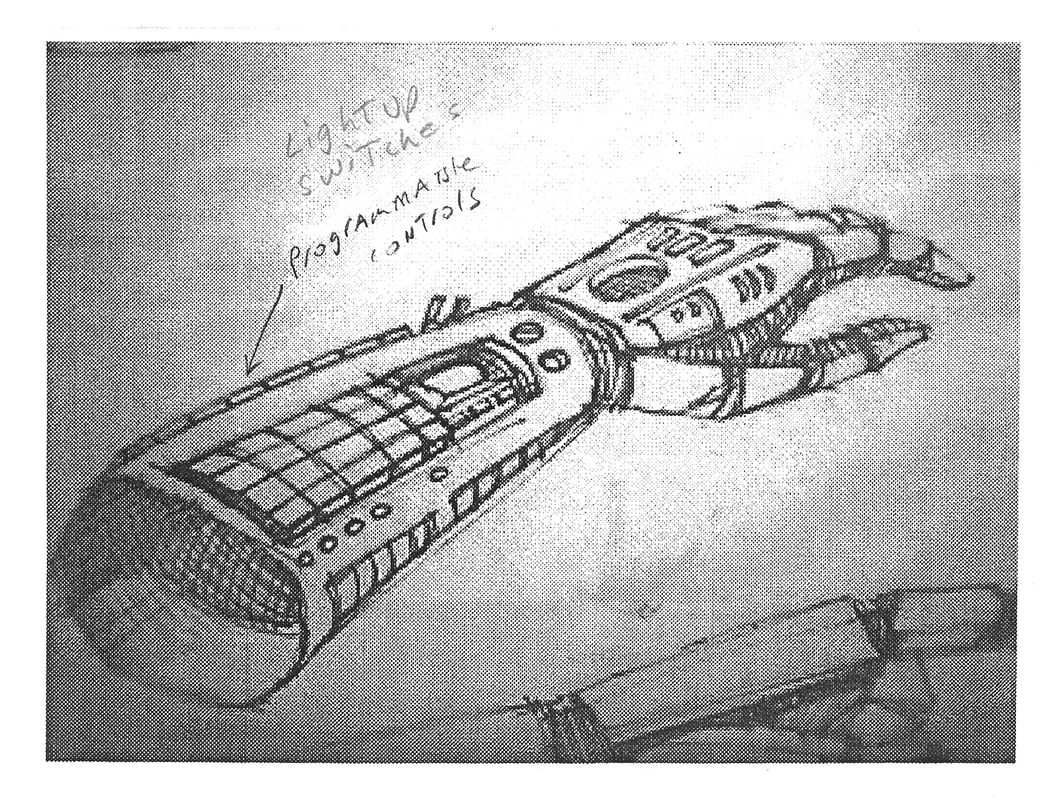 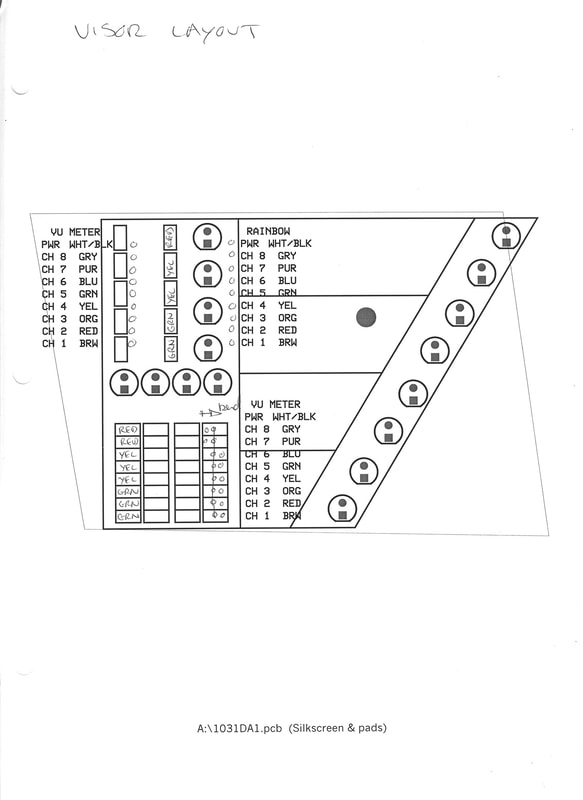 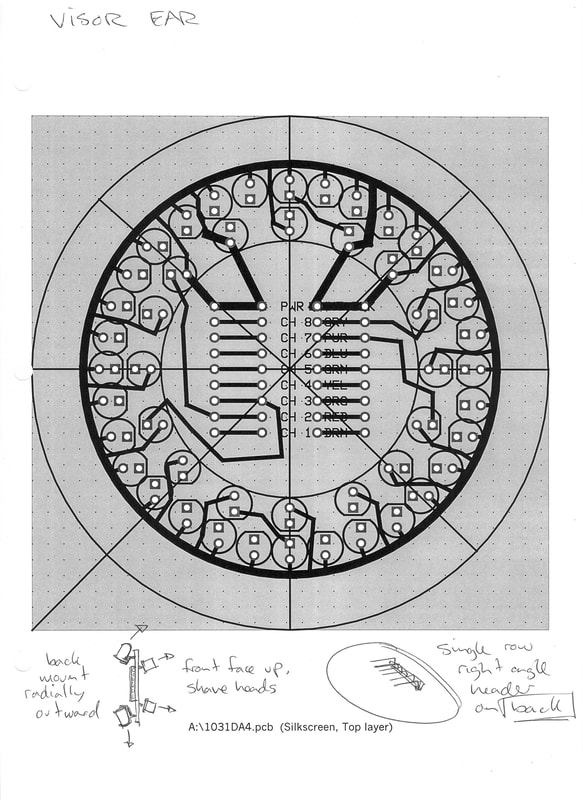 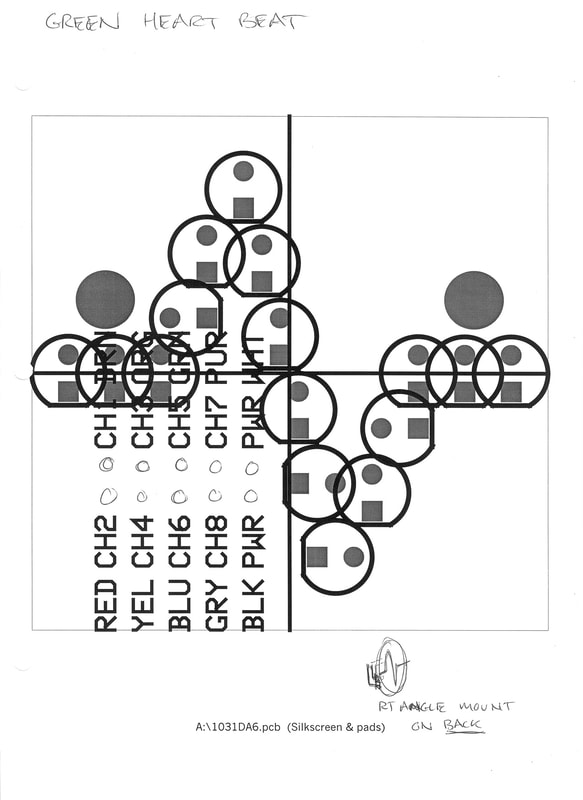              |
|
Discovery (1998-2003)
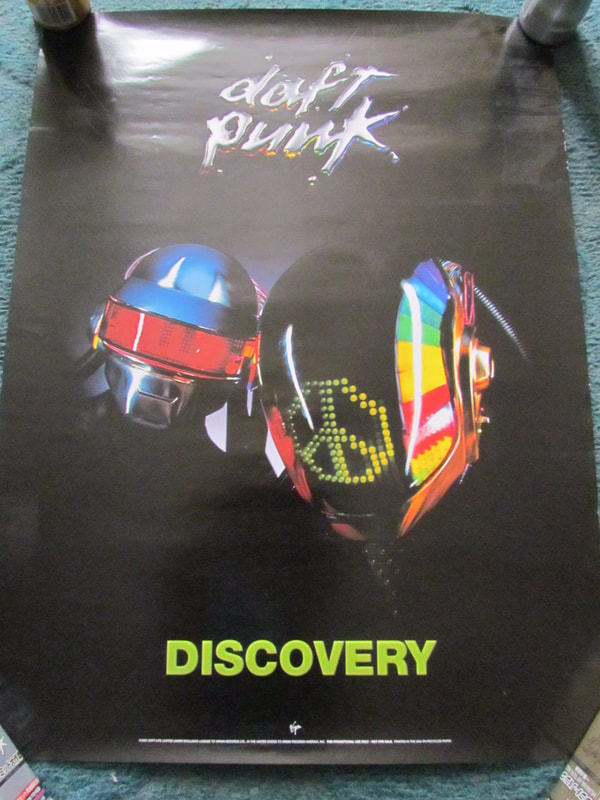
After finishing their Daftendirektour in 1997 and releasing the rest of the singles and videos for Homework in 1998, Daft Punk began formulating ideas for their next album. One artist they had always wanted to work with was the American singer and DJ named Romanthony. They had plans to do a track with him for Homework but it did not come to fruition, however in the summer of 1998 they finally managed to get in the studio with him and record "One More Time". The track was shelved for two and a half years in order to make sure it had staying power and that it would stand the test of time, especially because it made heavy use of a brand new technology called Auto-Tune which was developed in late 1997. "One More Time" was finally released in November of 2000 as the lead single to their highly anticipated sophomore album Discovery. The single was a massive hit and dominated dance floors thanks to its infectious chorus and anthemic nature. It is considered one of the best songs of the 2000's by many including Rolling Stone who places it at number 33 on their top 100 songs of the decade and number 307 on their list of the 500 greatest songs of all time.
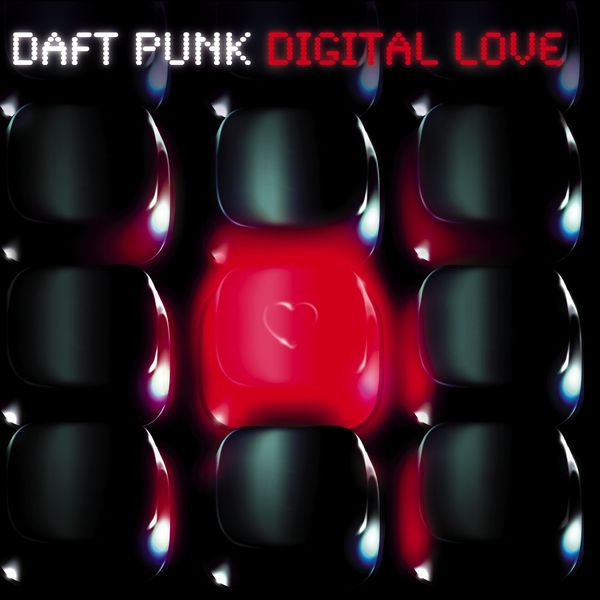
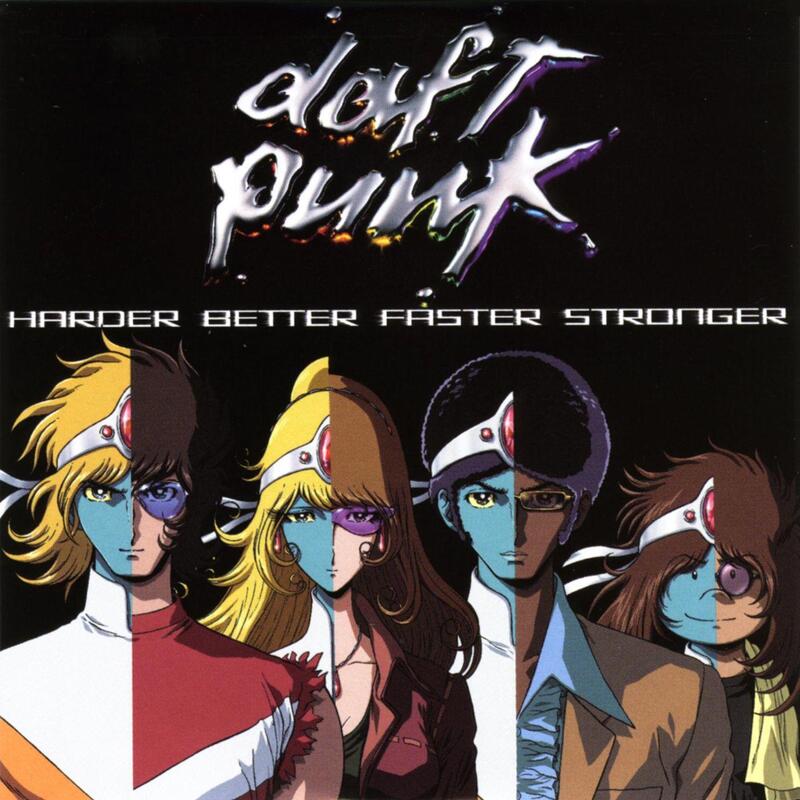
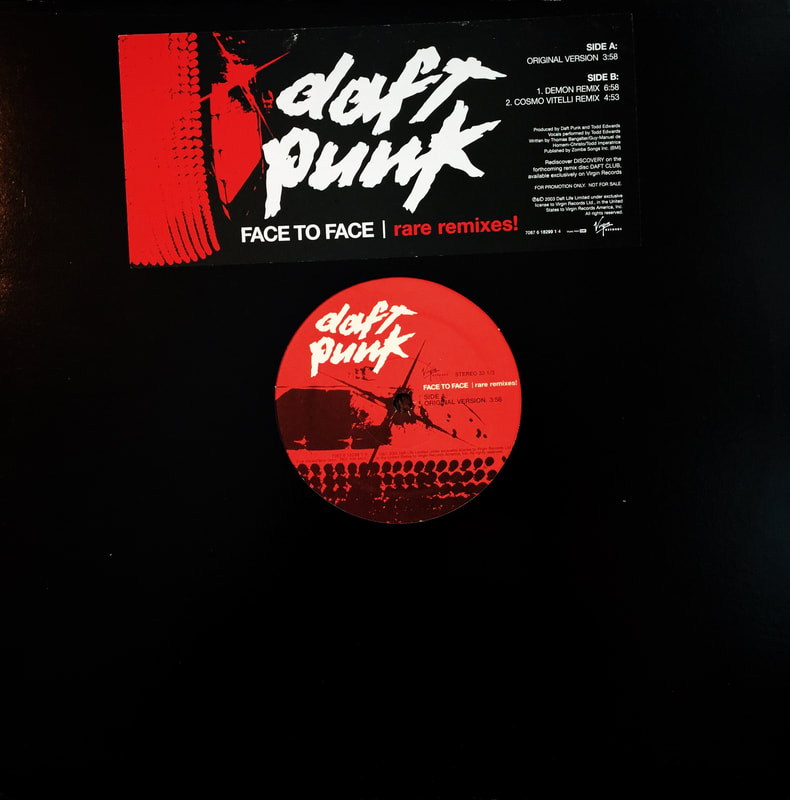
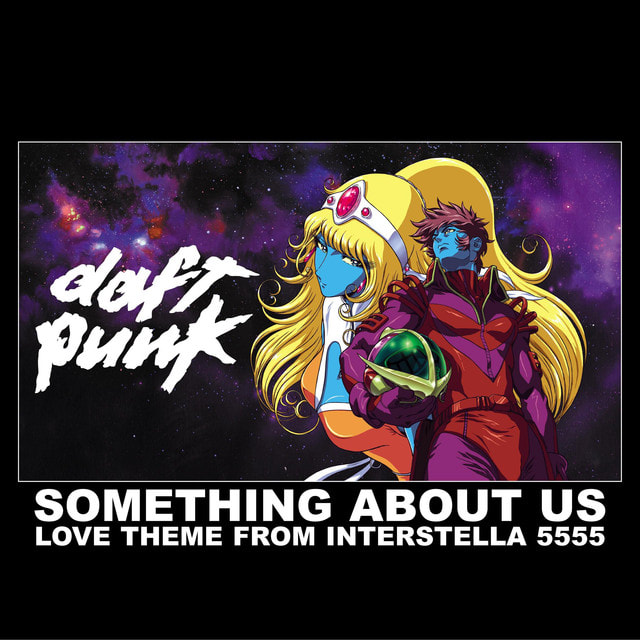
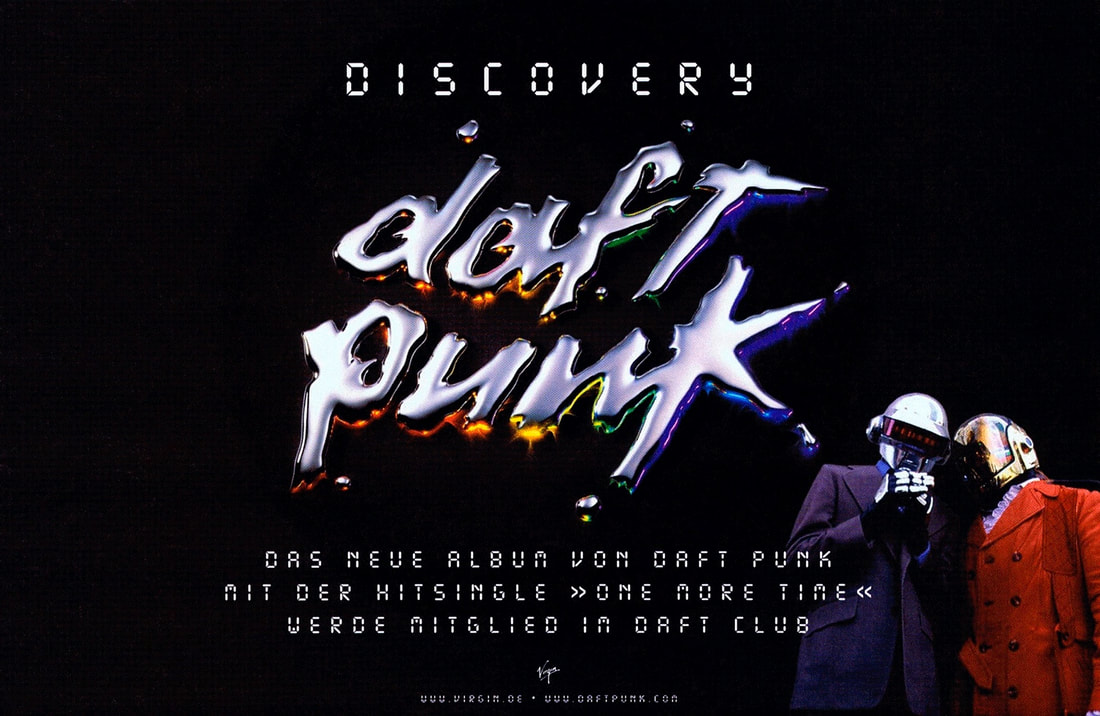
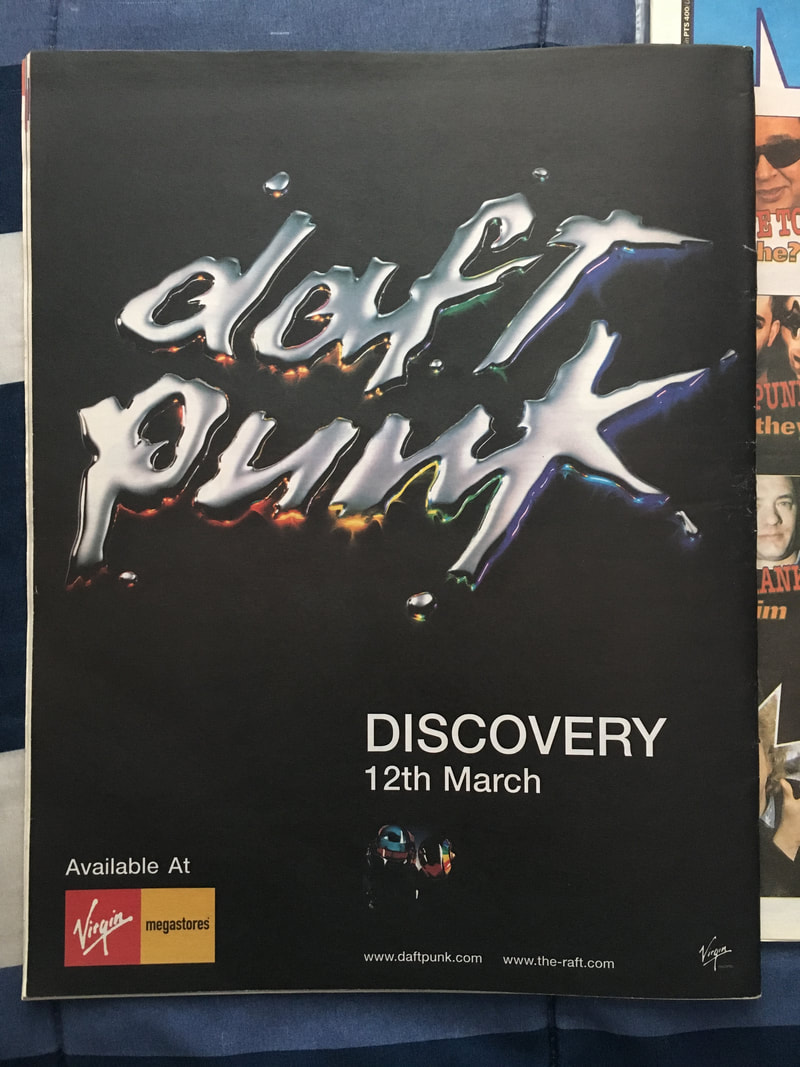
Discovery would be released on March 12th, 2001 with mixed reactions from fans and critics. Many had expected something similar to Homework but Daft Punk wanted to move away from past projects and grow as artists. Early in their career they adopted a philosophy of not doing the same thing twice and Discovery was the result. Others were quite pleased with the album and its creative use of disco samples, Auto-Tune, and vocoders which produced a futuristic yet nostalgic sound. The ambiguity of the sound leaves many modern listeners dumbfounded to find out that the album came out in 2001. This timeless quality is found in much of Daft Punk's discography. Several more singles would be released from the album including "Aerodynamic", "Digital Love", "Harder Better Faster Stronger", "Something About Us", and "Face to Face." It was rumored that Daft Punk would be releasing every song as a single but this never panned out. This rumor probably stemmed from the fact that they were in the middle of working on an animated film to act as the visual realization of the album, in which every track got its own music video. More on that later.
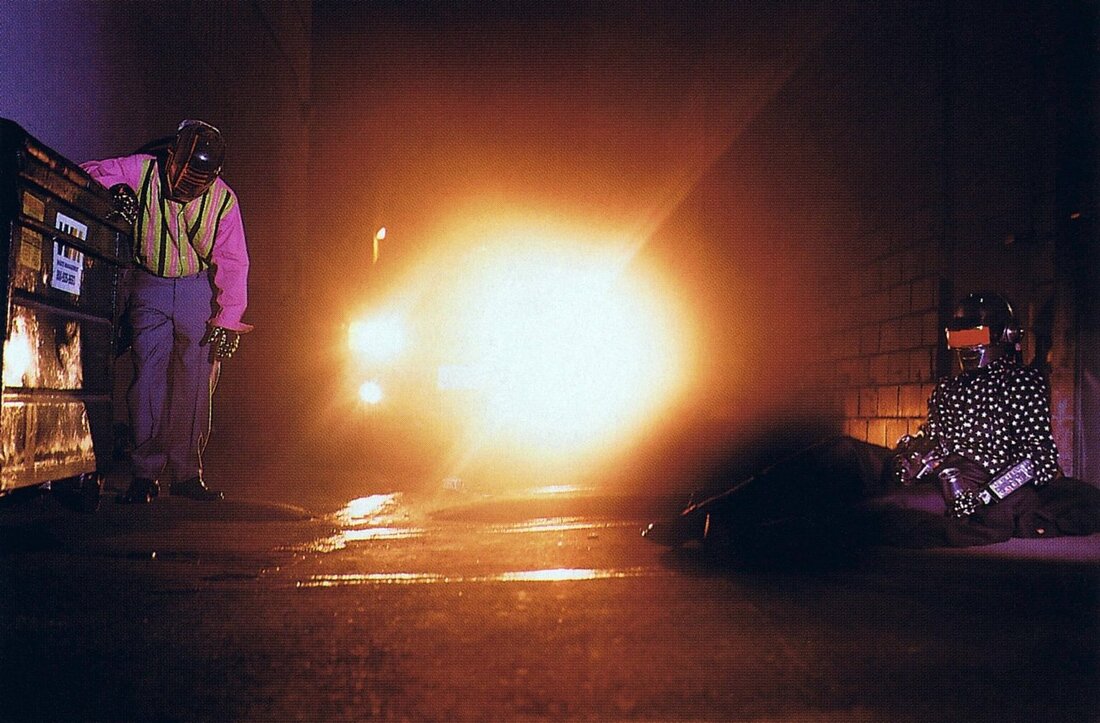
The hype and mystery surrounding Daft Punk grew as they also revealed to the public in early 2001 that they had become robots because of an accident in the studio in 1999. No longer were they a couple of rebellious Frenchmen emulating American electronic music, they were now sleek ambiguous robots who appealed to the world. Their new robotic form allowed them to participate in the media much more than they previously could, all while continuing to protest the star system which they wanted nothing to do with. Daft Punk believed that people should care about the music, not the people making it, so the robots acted as a buffer between them and the fame of being multi-platinum-selling artists. So Daft Punk would appear in magazines and television without it affecting their day-to-day lives.
Daft Punk also continued to make use of the internet to promote their album as they had begun to do in the 90's. By 2001, the internet had grown significantly and was now much more accessible than before. Napster was growing popular and causing a panic among much of the music industry but Daft Punk devised a plan to play into this new world of digital files and free music. Their plan was to create their own "free" music site where they would release exclusive tracks and remixes. They named it daftclub.com as an homage to the lesser-known "Daft Club" collective of fellow DJs that they sometimes performed alongside in the 90's. The only catch was that to access it, you needed a Daft Club Card with an access code that could only be attained by purchasing CD or vinyl copies of their album. As Daft Punk put it in a 2001 interview with Rolling Stone, "we consider things like Napster to be positive. They raise questions. Now people really have a choice as to whether they will buy an album. So we will offer free content to the people that buy the CD and implement into our creation. We spent a lot of time constructing our album….now we will spend a lot of time deconstructing it." Even though the internet was more accessible than it had been in the 90's many people simply did not have it and some that did have it were unable to download the files because of their size, slow internet speeds, or their brand of computer not being able to run the required software. Because of these problems Daft Punk decided to physically release the most popular tracks and remixes from daftclub.com onto CD and vinyl in 2003 and called it Daft Club. daftclub.com was truly ahead of its time and it incentivized many people to buy their album when they could otherwise just download it off of Napster.
Overall, Discovery was an immense success and between it and its side projects Daft Punk was catapulted into the mainstream and electronic music continued to gain credibility and inch its way forward to the powerhouse of a medium it would become. Despite high demand, Daft Punk decided not to tour the album. In a 2007 interview they stated "For the second album, Discovery, when we had to think about doing a live show I think we were not happy with the way it would look like and sound like. We were not happy coming onstage with just two or three samplers and a few drum machines." Today Discovery is revered as a classic electronic album and many who criticized it in 2001 have (in time) realized its innovativeness such as Pitchfork who originally gave the album a 6.4/10 but later placed it at number 3 on their Top 200 Albums of the 2000s or Rolling Stone who originally gave the album a 3/5 but later placed it at number 8 on their 30 Greatest EDM Albums of All Time. Hindsight is 20/20.
       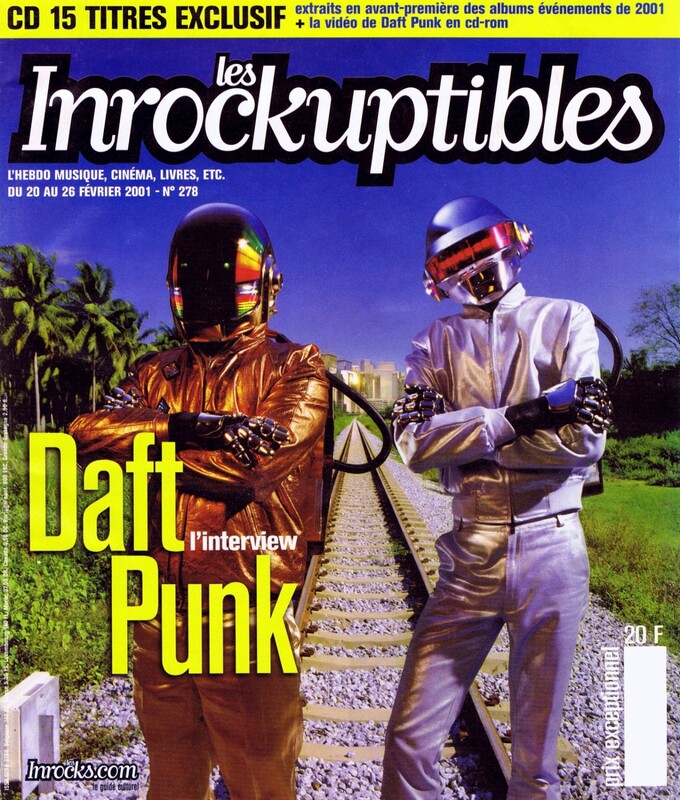 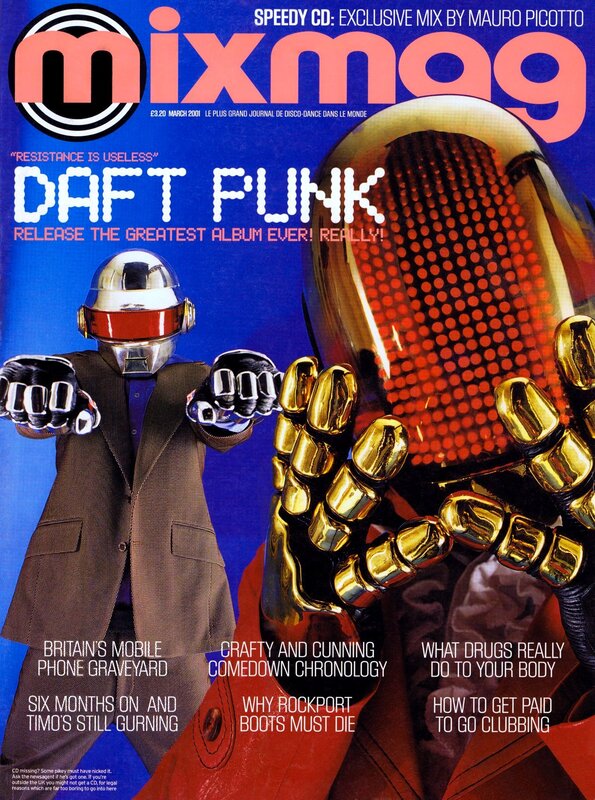 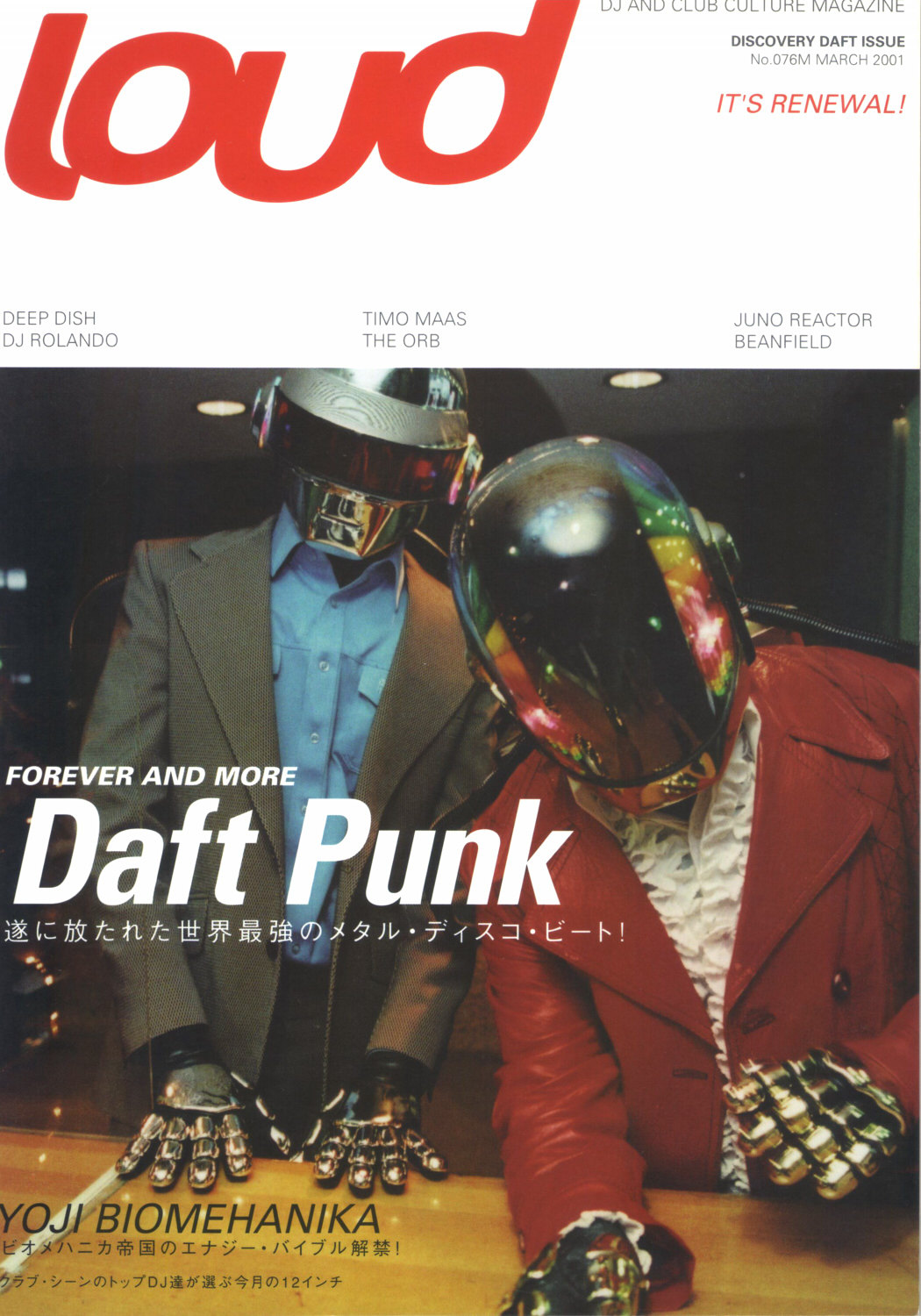           |
|
Interstella 5555 (2000-2003) x
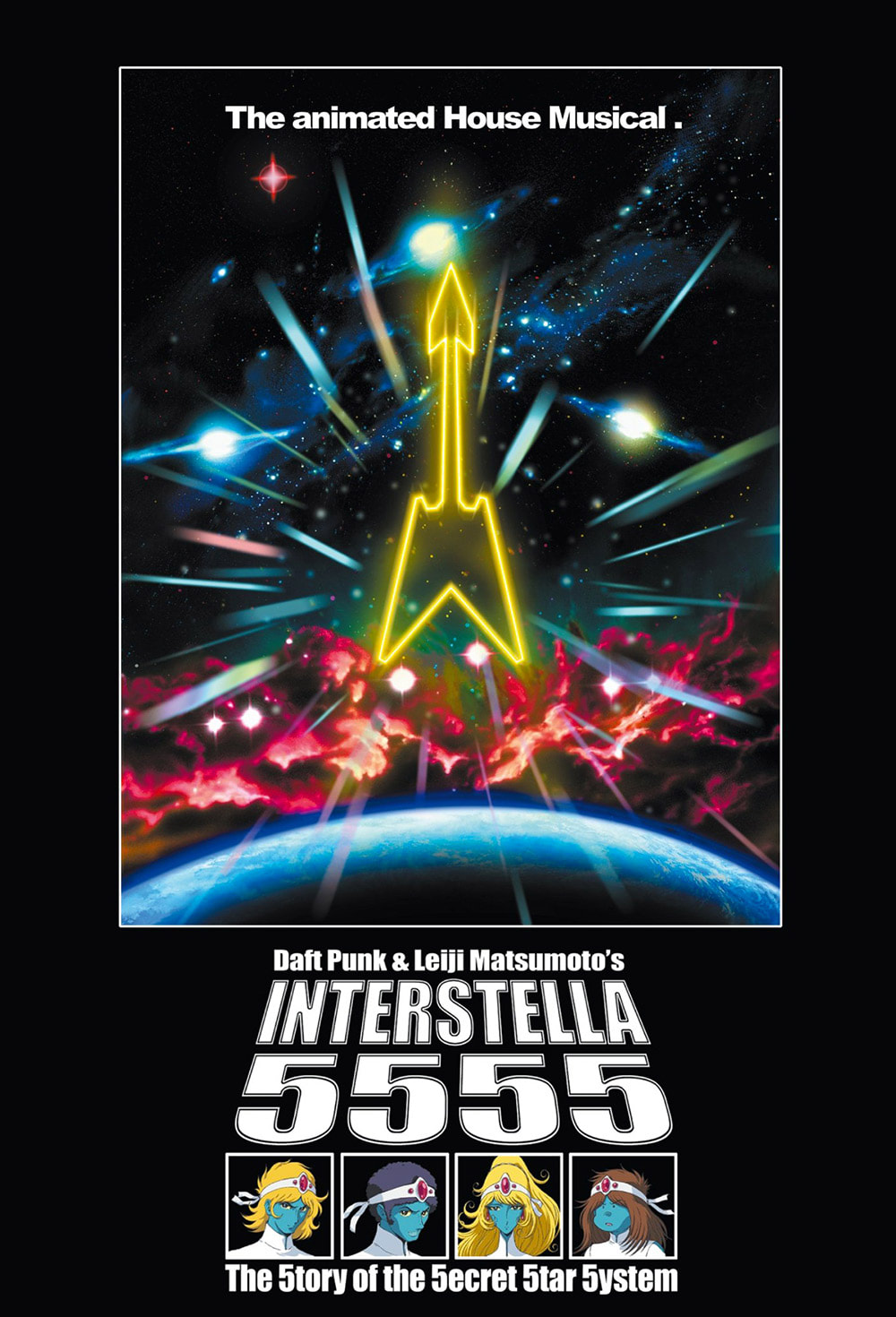
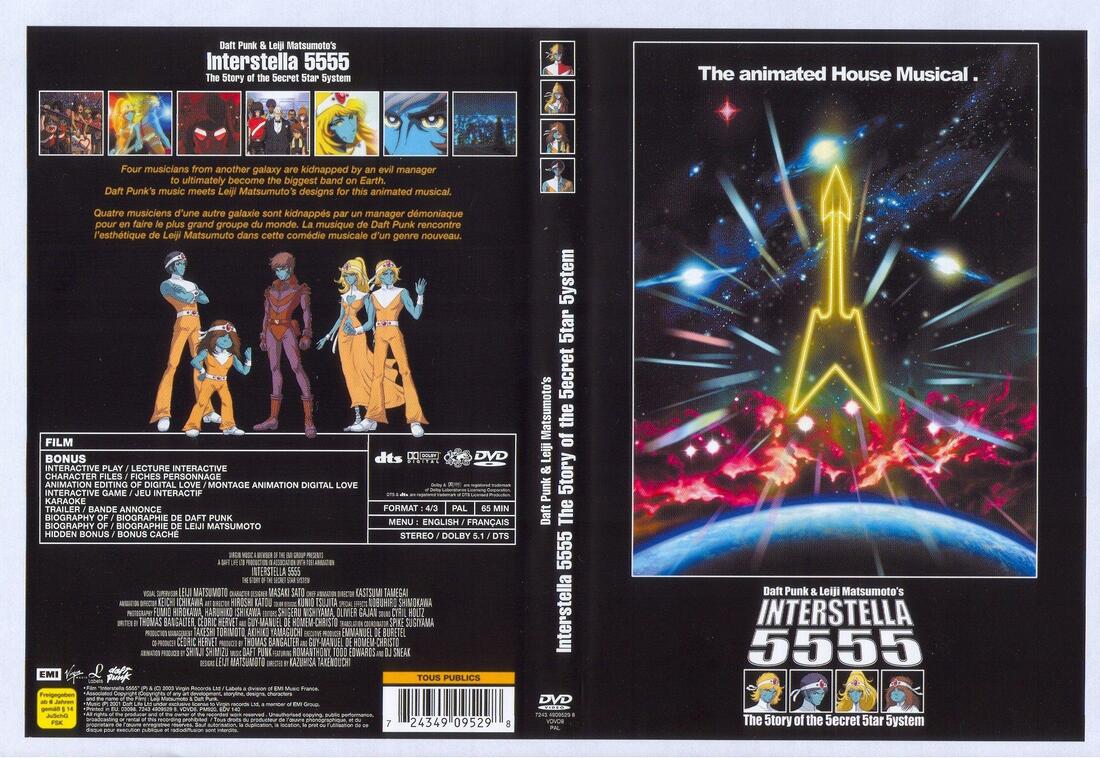
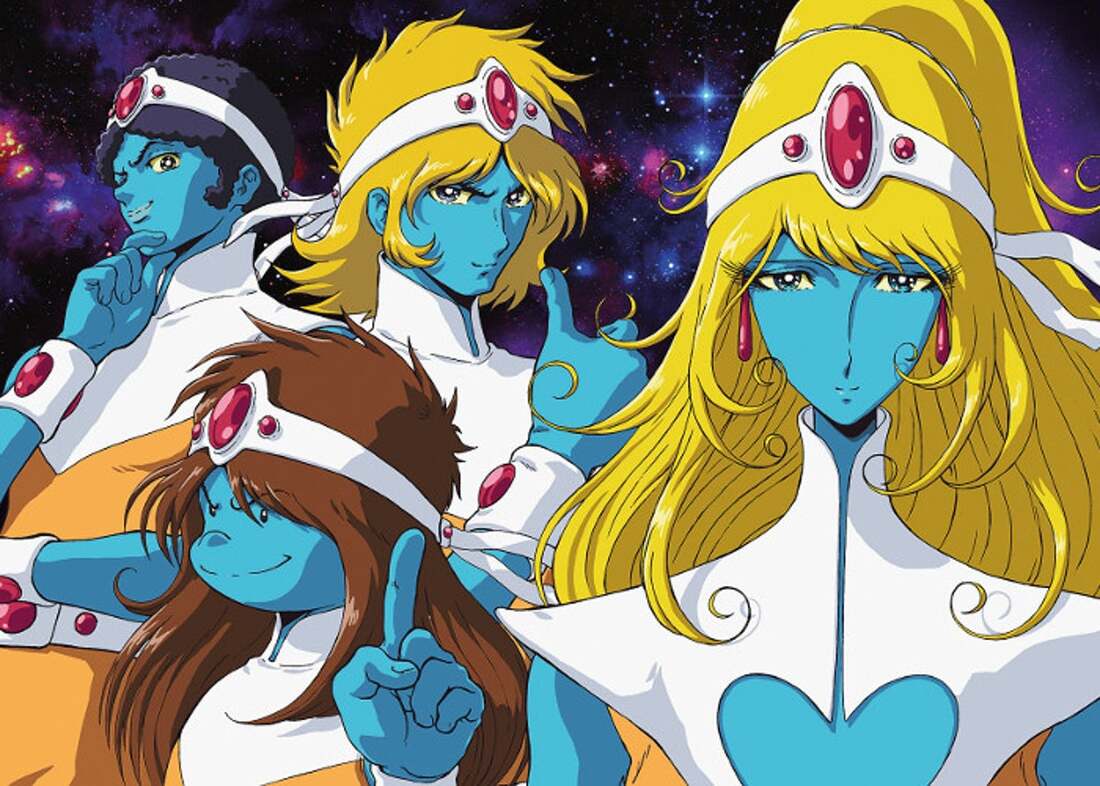
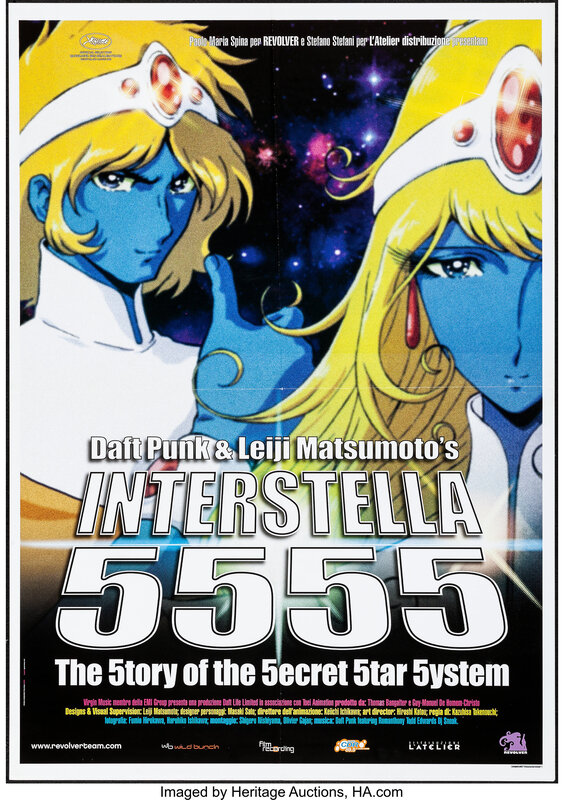
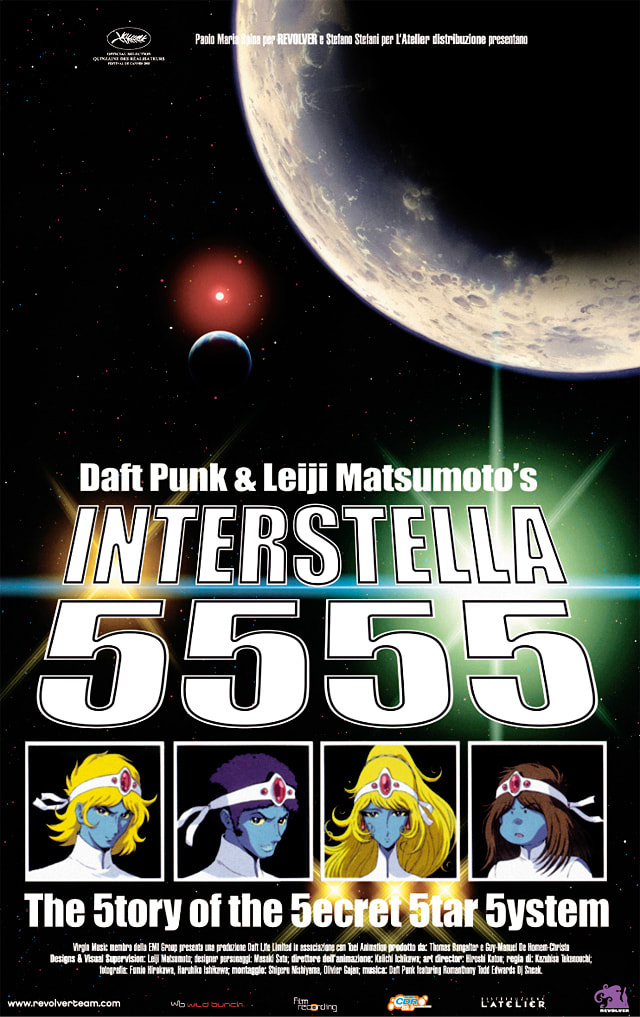
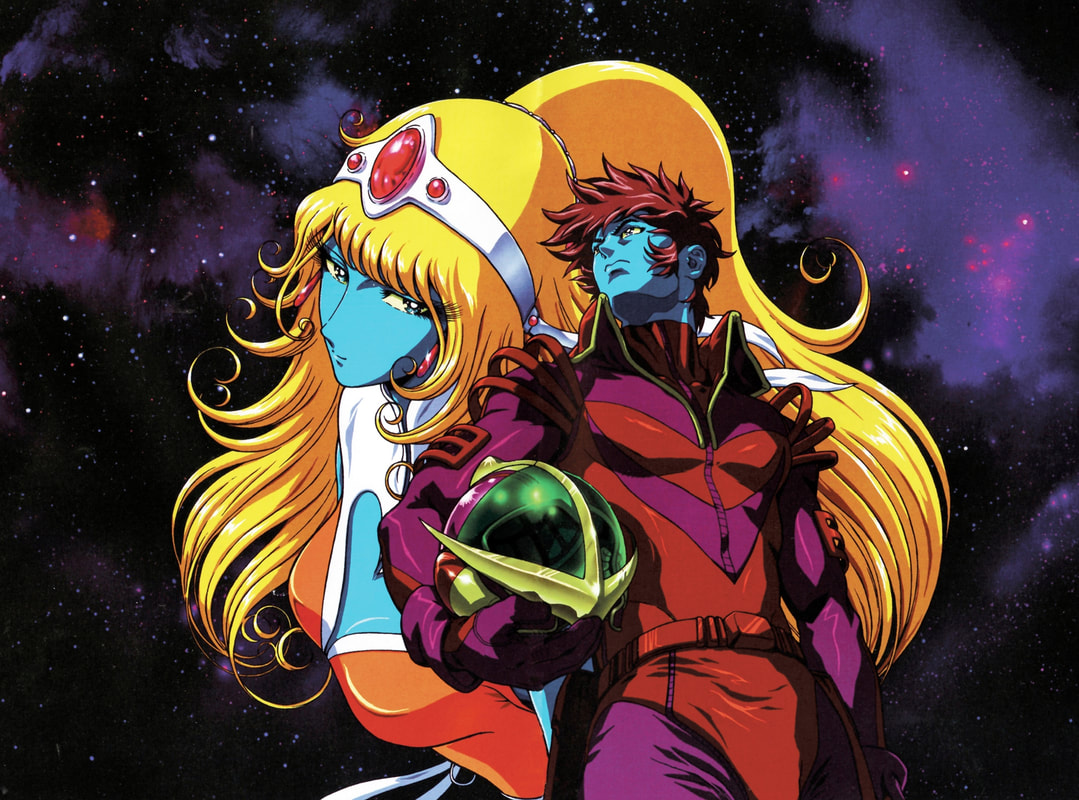
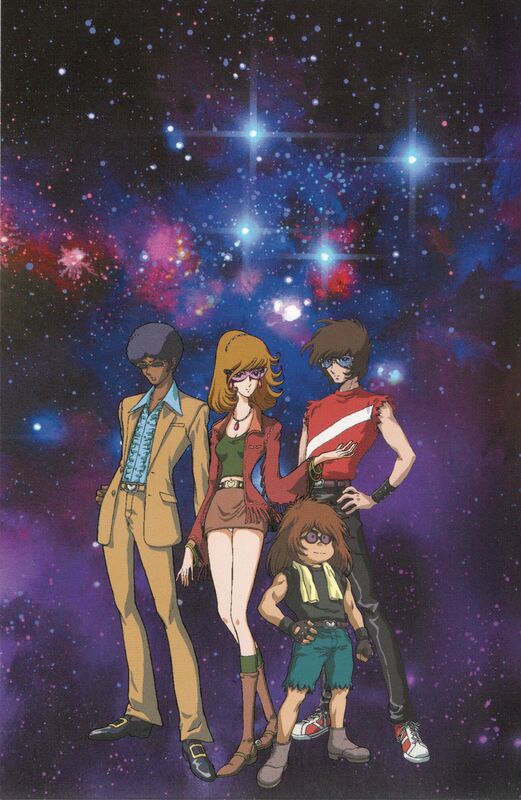
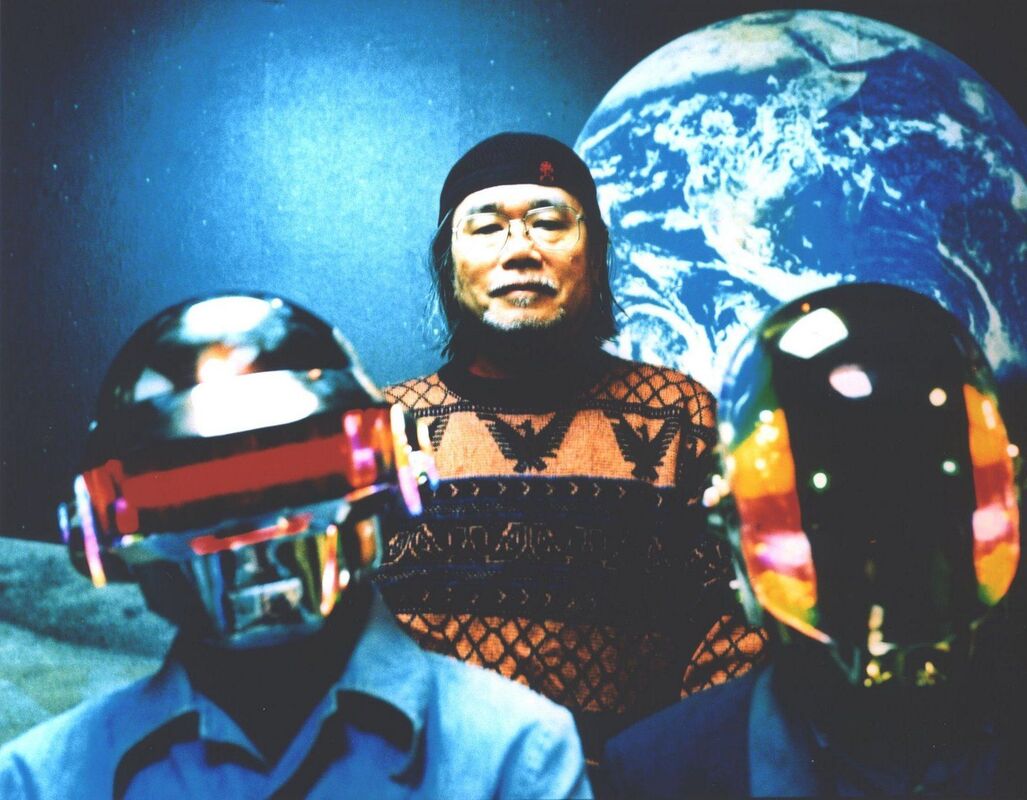
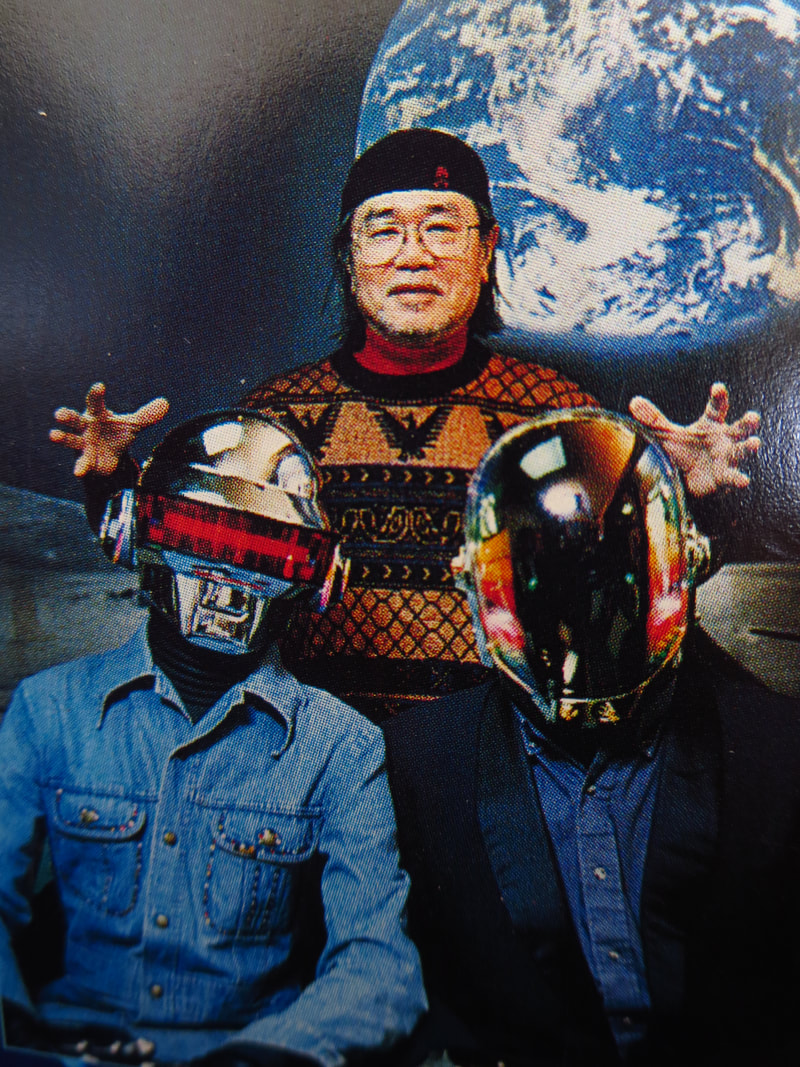
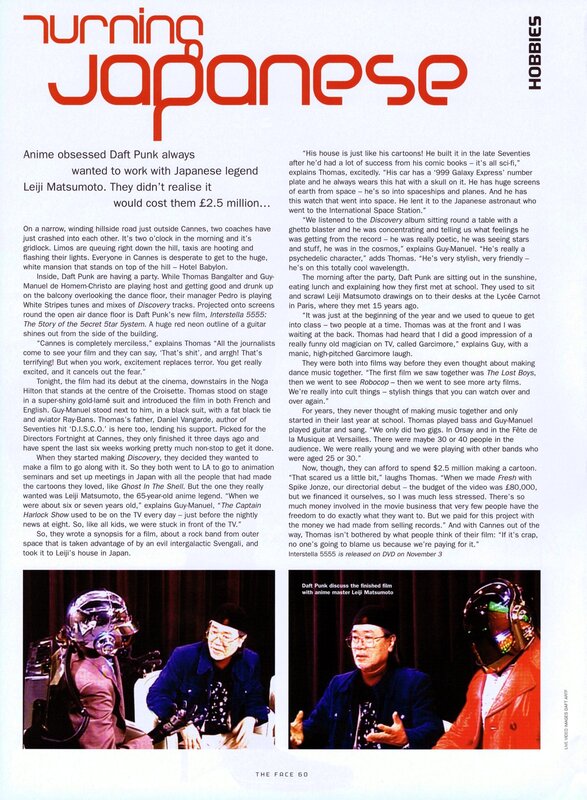
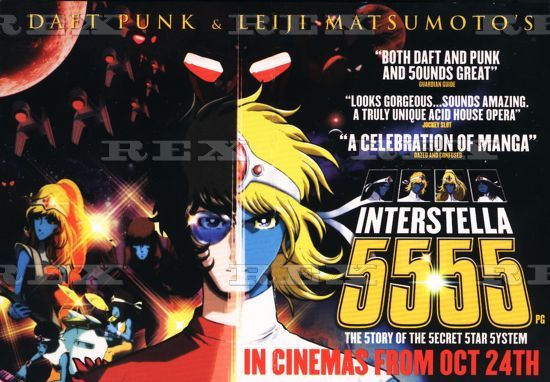
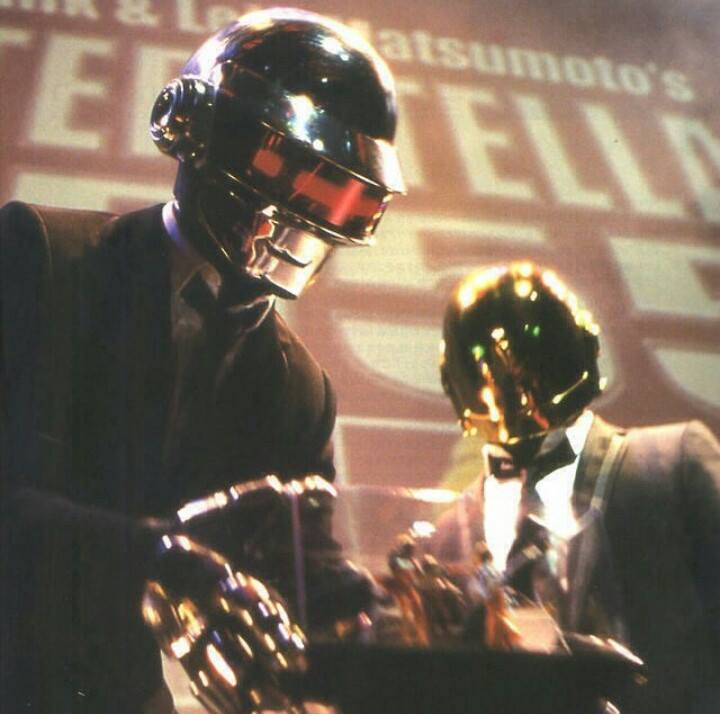
In October of 2000 (before anything about Discovery was revealed to the public) production began on Interstella 5555, the visual realization of the album. Daft Punk had the idea of creating a film to coincide with the album early on in the recording process, so much of the pacing of the album was intentionally curated so that it would fit the pace of a movie well. Production of Interstella 5555 took place in Japan because it was an anime style movie under the supervision of legendary anime and manga artist Leiji Matsumoto and being animated by Toei Animation. Daft Punk had grown up in France in the 70's and 80's watching Leiji Matsumoto's Captain Harlock and Galaxy Express 999 so it had long been a dream of theirs to work with him. His receptiveness to the project pleased them and the art direction for Interstella 5555 was ripped straight out of Captain Harlock to achieve a more vintage anime look.
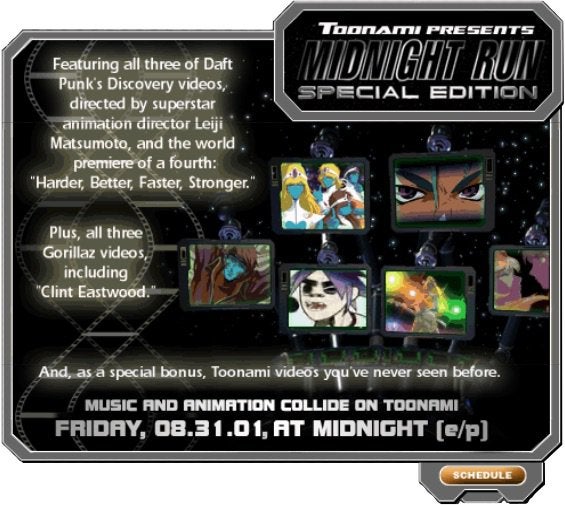
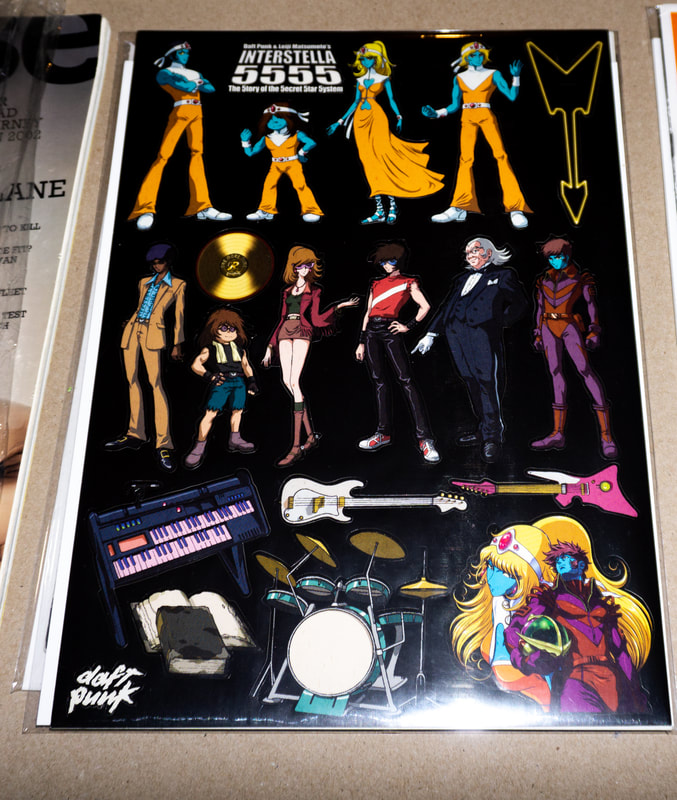
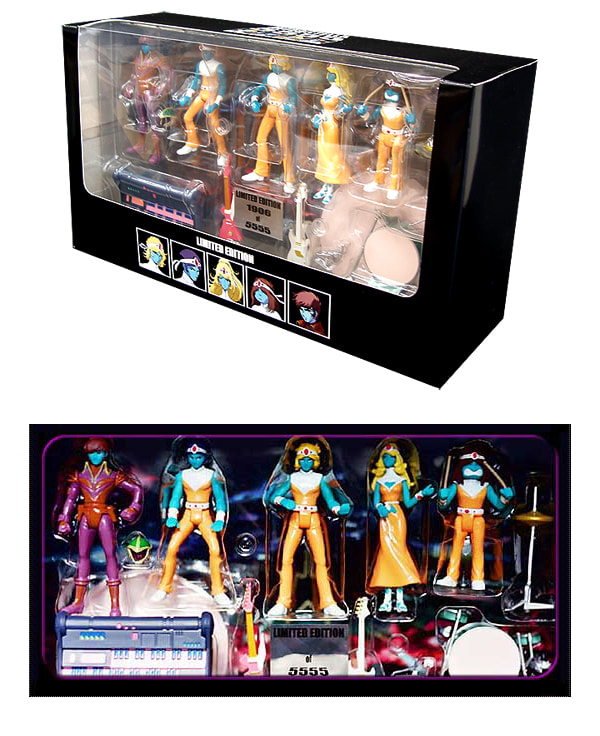
The team worked hard throughout 2000 and 2001 and were able to complete the animation for the first four songs of the album by August 31st of 2001. These first four videos for "One More Time", "Aerodynamic", "Digital Love", and "Harder Better Faster Stronger" would air on Cartoon Network's anime program Toonami. Toonami also hosted these four videos on their online video streaming service called Toonami: Reactor. Toonami's target audience was children aged 6-12 so Daft Punk were spreading their music to new demographics and likely influencing many to buy their album. The first four videos were ultimately just a taste of the entire film and left invested viewers on a cliffhanger. The rest of the film would not be completed until April of 2003, just in time to premier in May at the 2003 Cannes Film Festival. Daft Punk would spend much of 2003 premiering the film at various film festivals. Interstella 5555 received a limited theatrical release and later in 2003 was released on DVD. Daft Punk promoted the film heavily in Japan and even sold figurines of the main characters. It is unknown if the film turned a profit but they reportedly spent upwards of 3 millions dollars to produce it. However, Daft Punk likely weren't thinking about turning profits here, this was a passion project that could be thought of as an extension of their album, and in that sense it was a major success.
       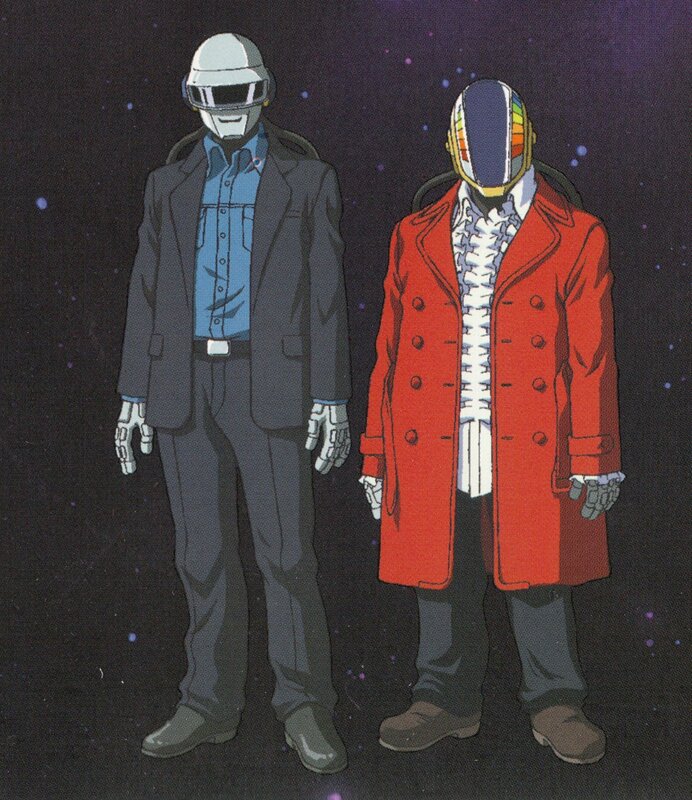 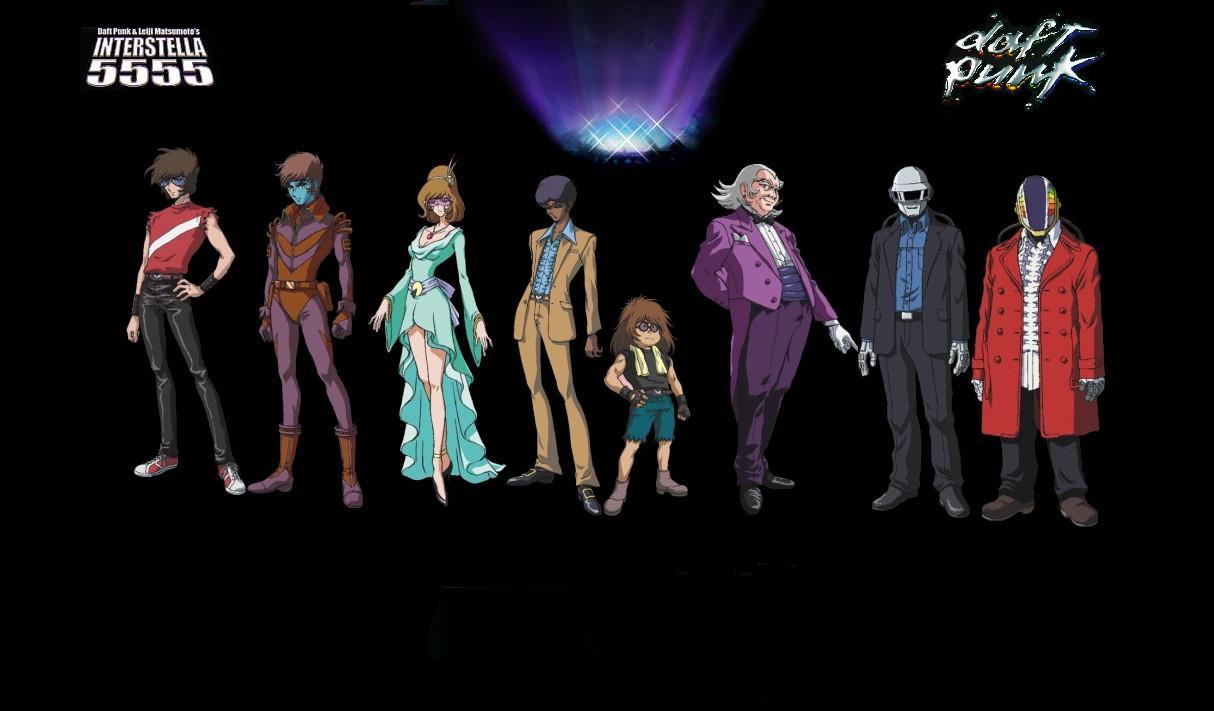 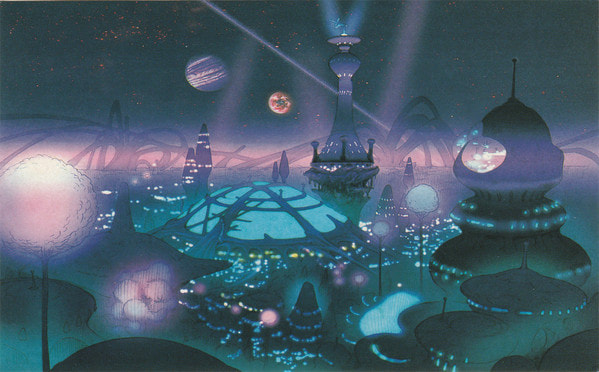 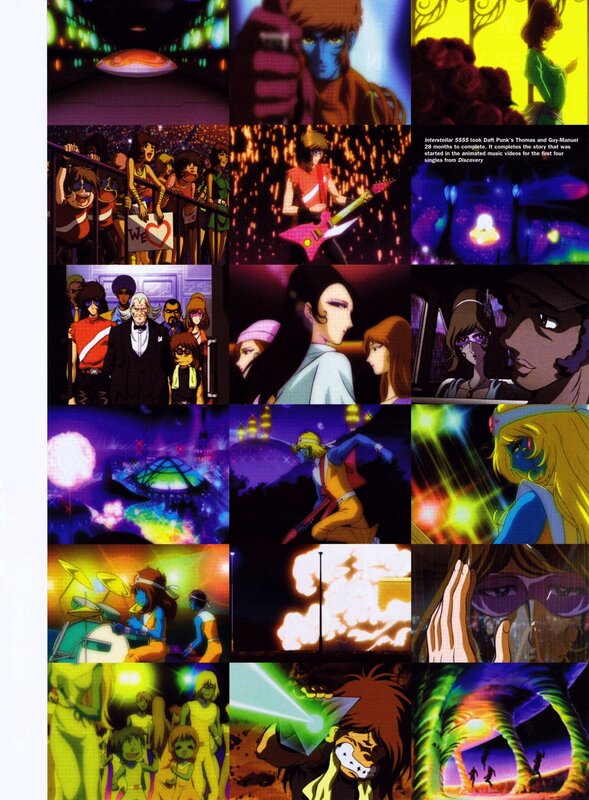          |
|
Human After All (2004-2005)
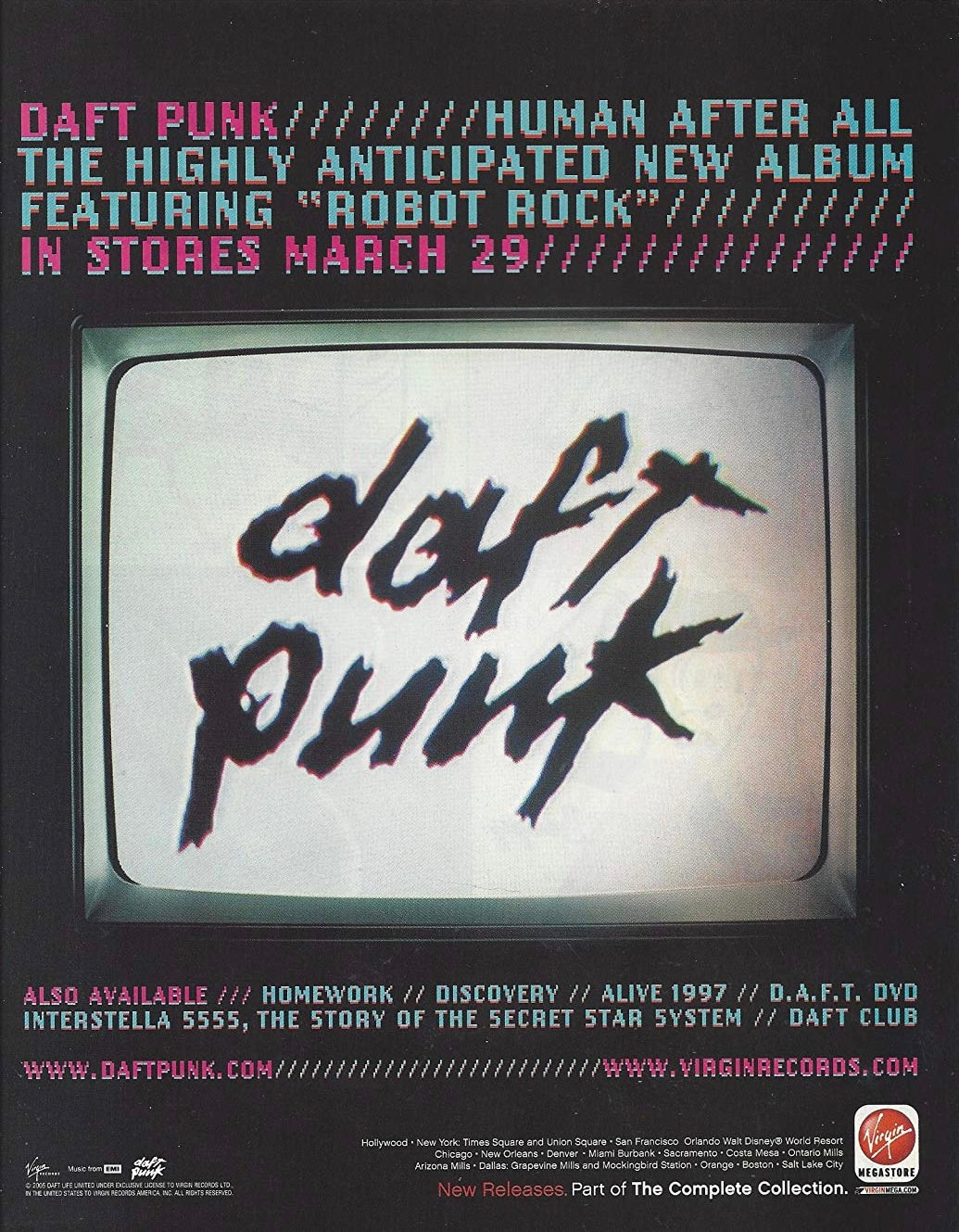
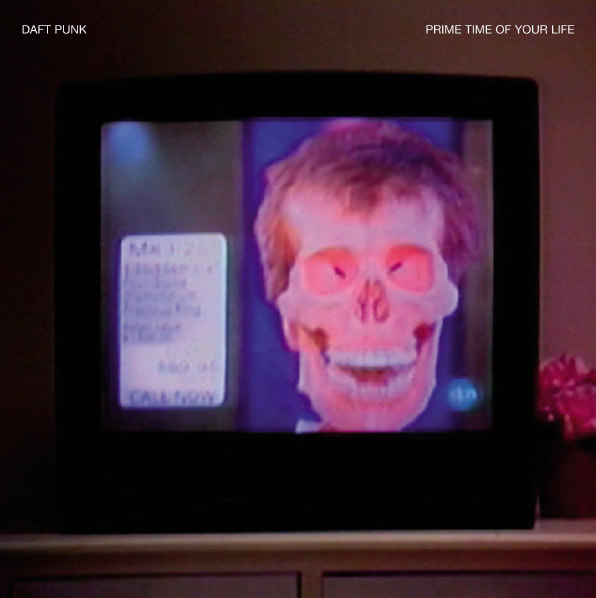
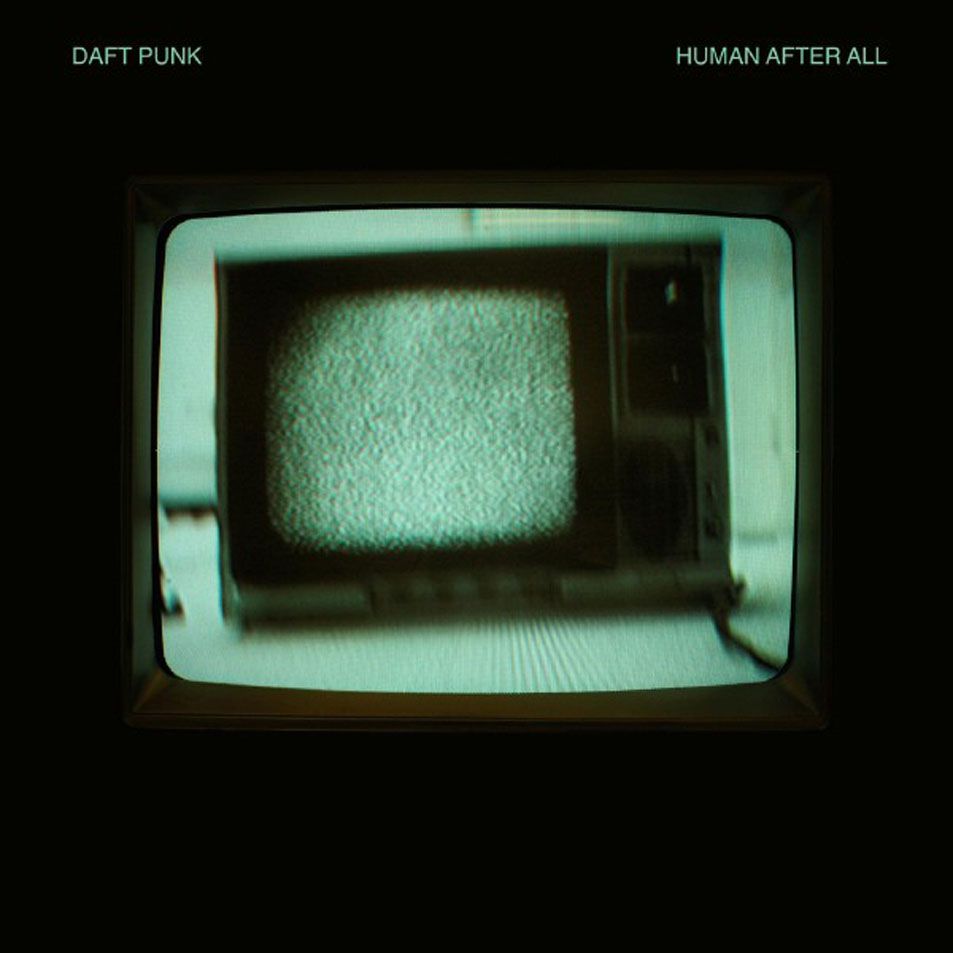
After two very successful albums, Daft Punk was more popular than ever. So far in their career they had strayed from their underground Detroit techno inspired music to a more Chicago house style music and then into a more disco-house style. What would be next? After closing out their Discovery era they returned to the studio to work on new material. Instead of taking a more pop route, as a lot of the electronic music scene was doing, they decided to do the opposite and make an experimental rock/electronic album. They also wanted to stray away from the precedent they had set in their last album of highly polished and radio friendly songs. So instead of spending years in the studio perfecting every aspect of every track, they decided to spend as little time in the studio as possible as well as utilizing guitars to achieve a more raw and human sound. In 2004 they spent a total of twelve days in the studio and the result was Human After All which was released on March 14, 2005.
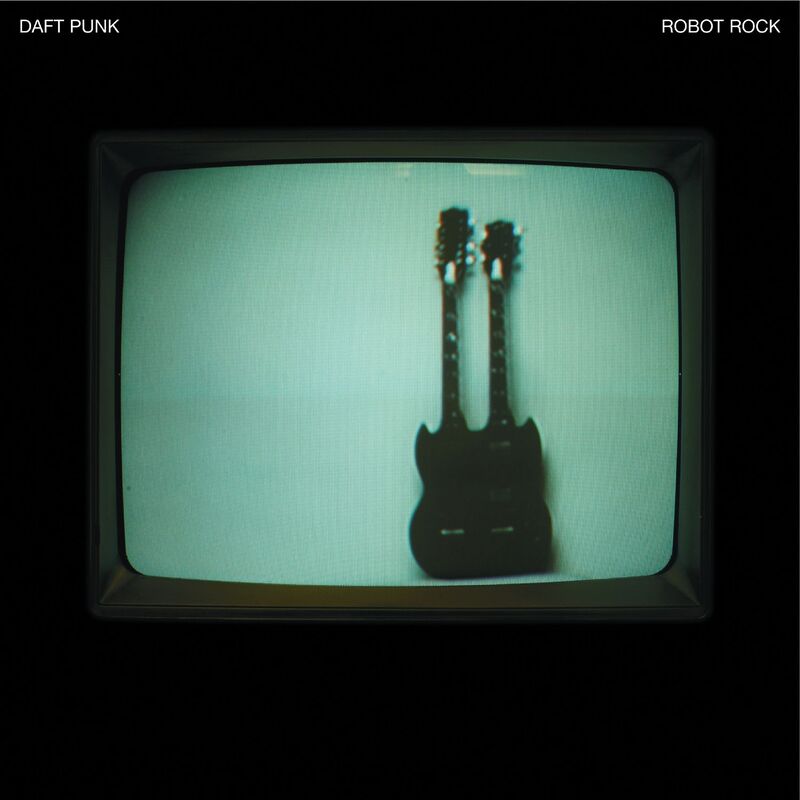
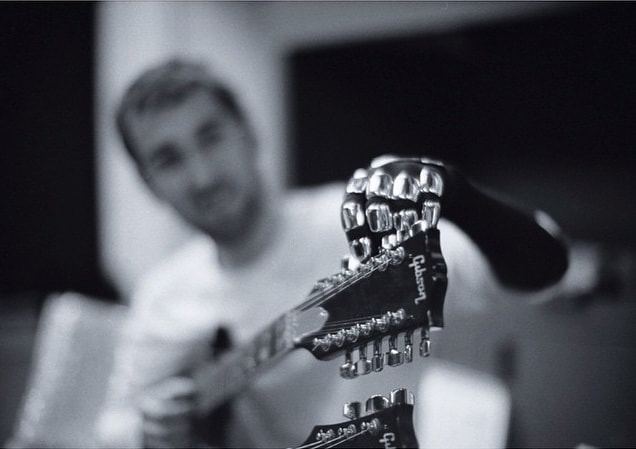
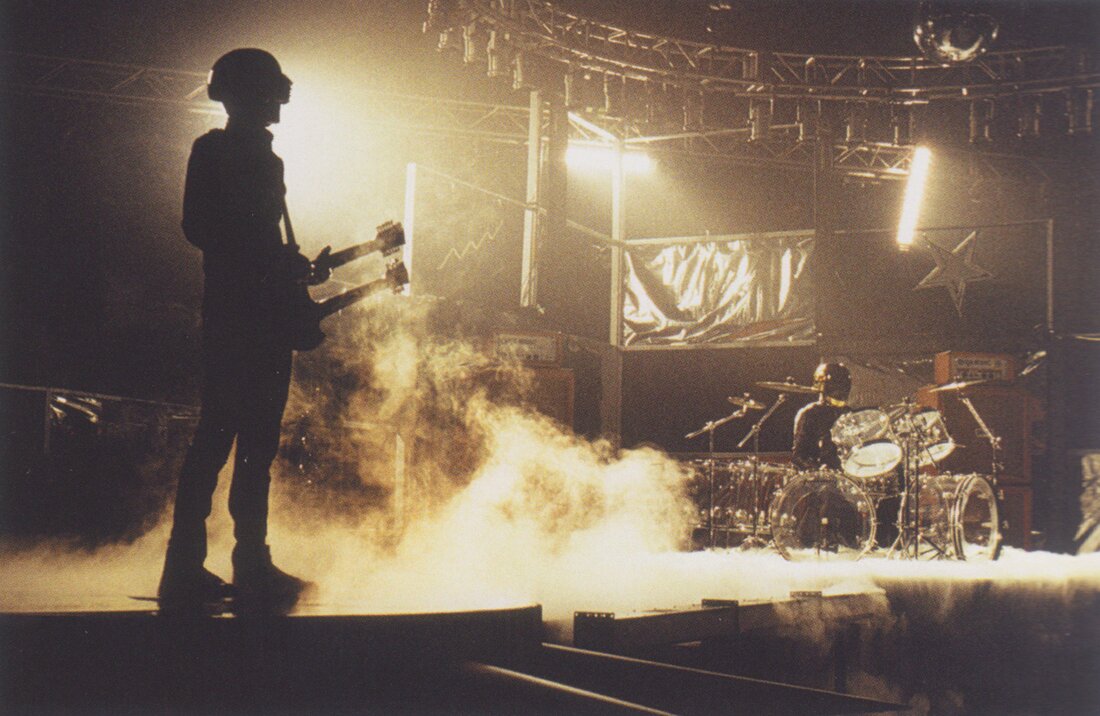
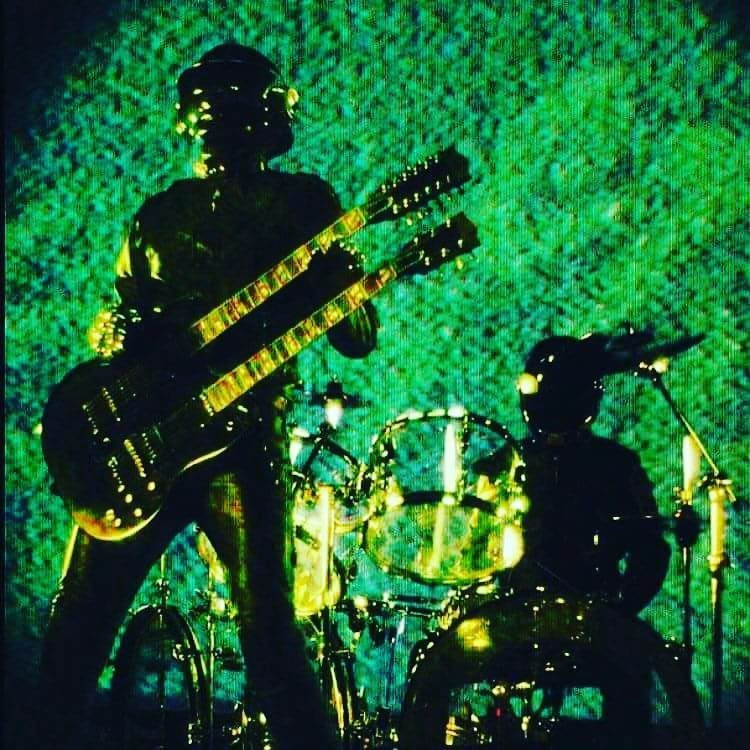
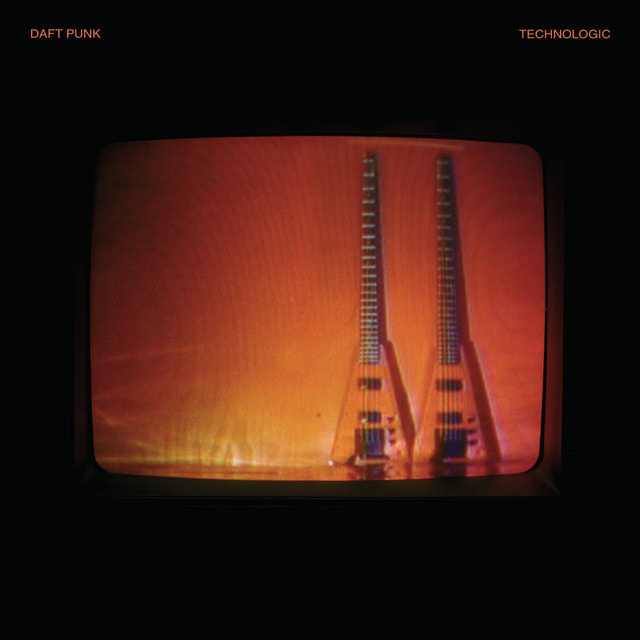
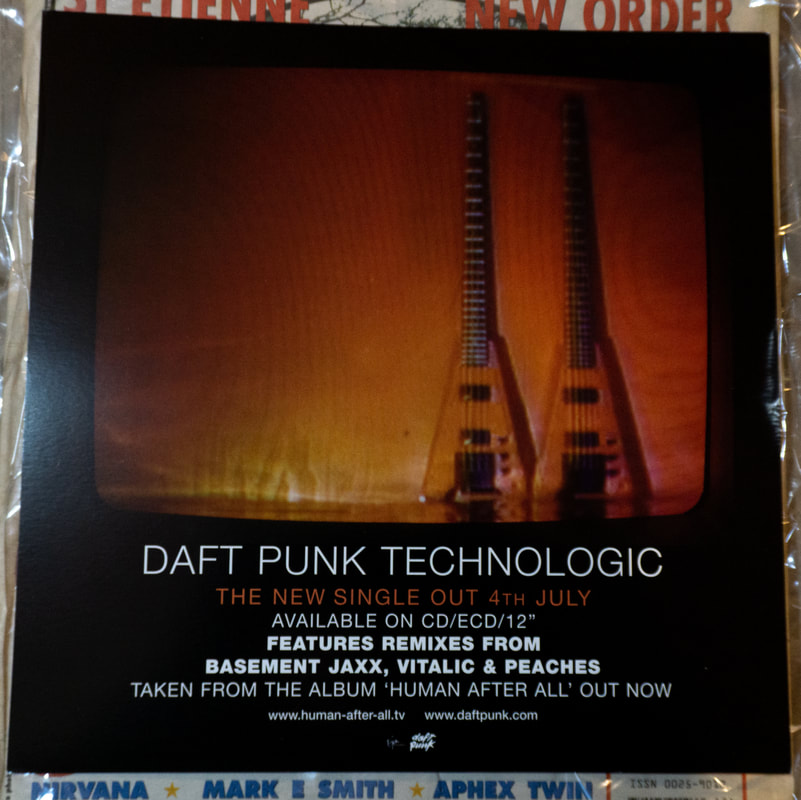
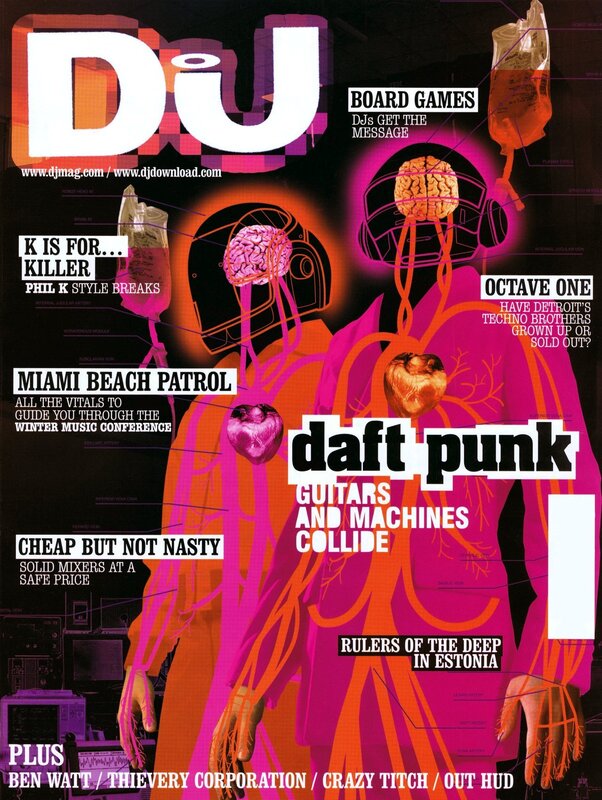
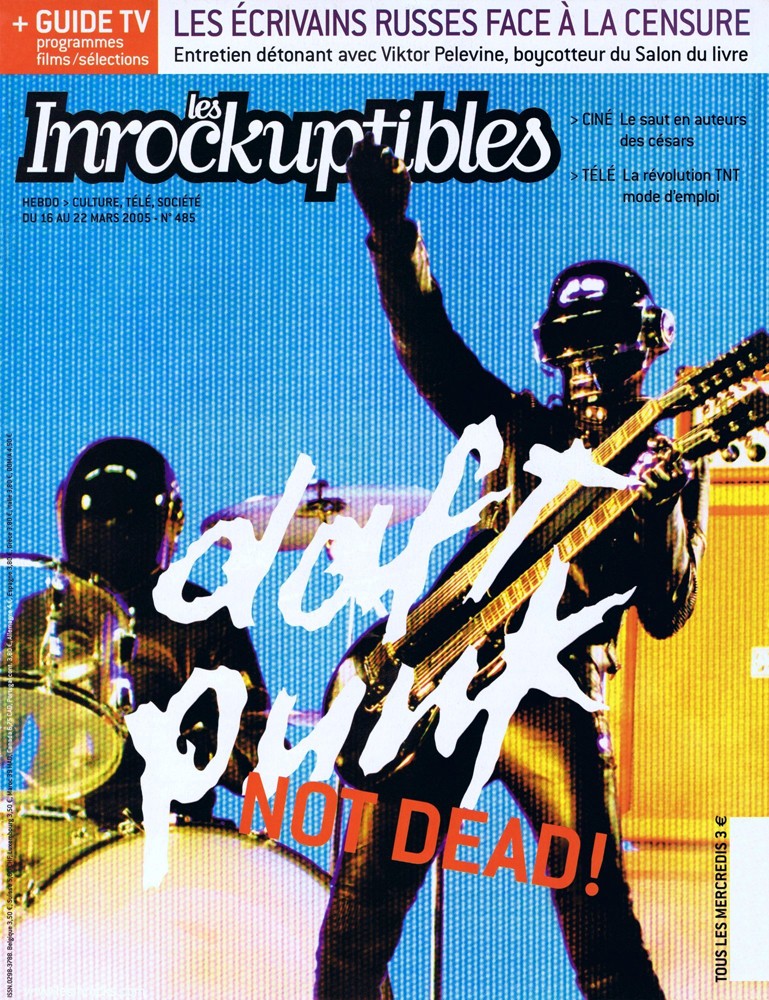
Human After All ended up being 10 tracks long totaling 45 minutes. The album was littered with distorted guitars as opposed to highly polished synthesizers and disco samples. The narrative of the album was one that took a more pessimistic look at technology and the artwork of the album and its singles reflected that in their dark and ominous tones. The album actually leaked online months early but it was so different than their previous work that fans were sure it was a fake. Critical reception was mediocre and fans had mixed reactions, but ultimately it was the album that Daft Punk wanted to make and they never worry about whether or not other people will like it. Their art is personal to them and they are surprised every time that other people also like it.
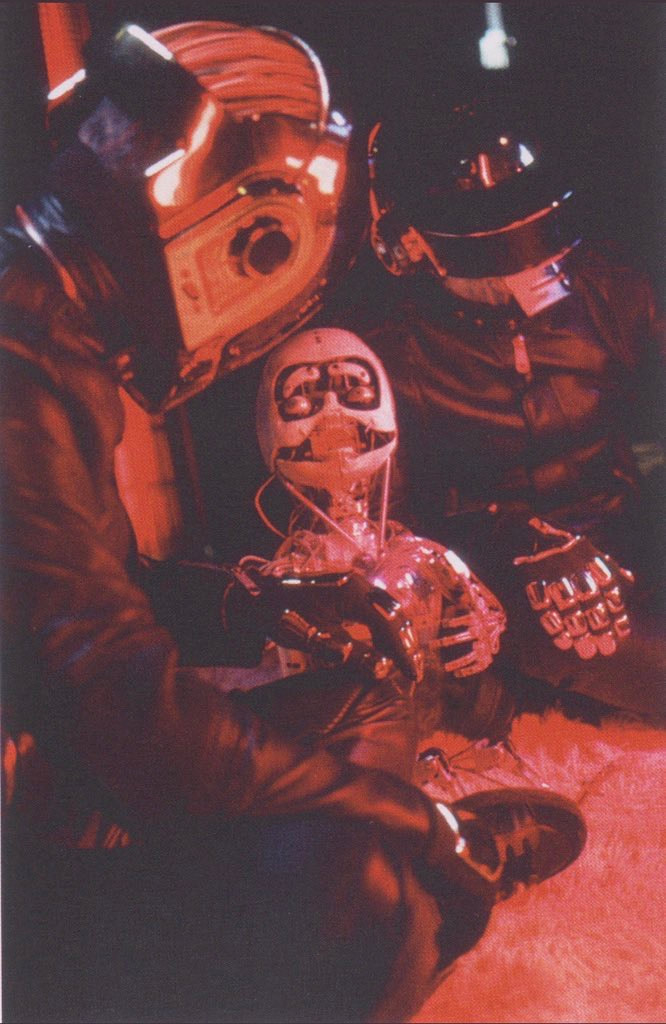
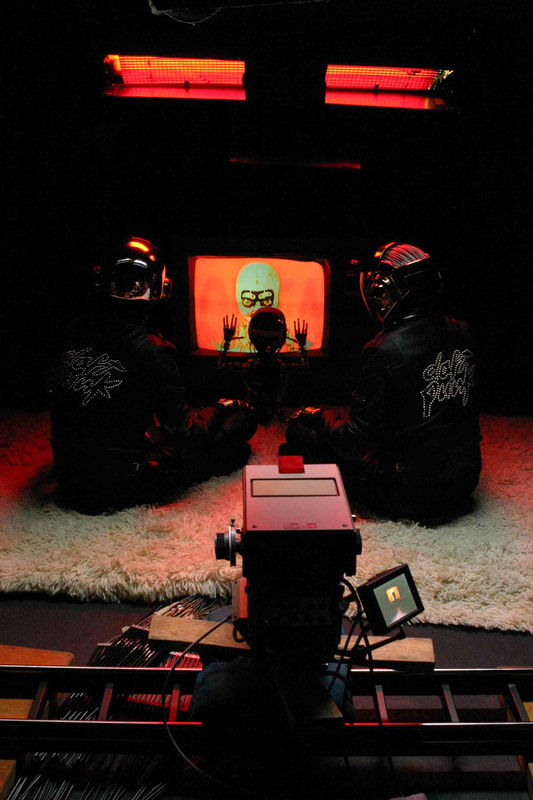
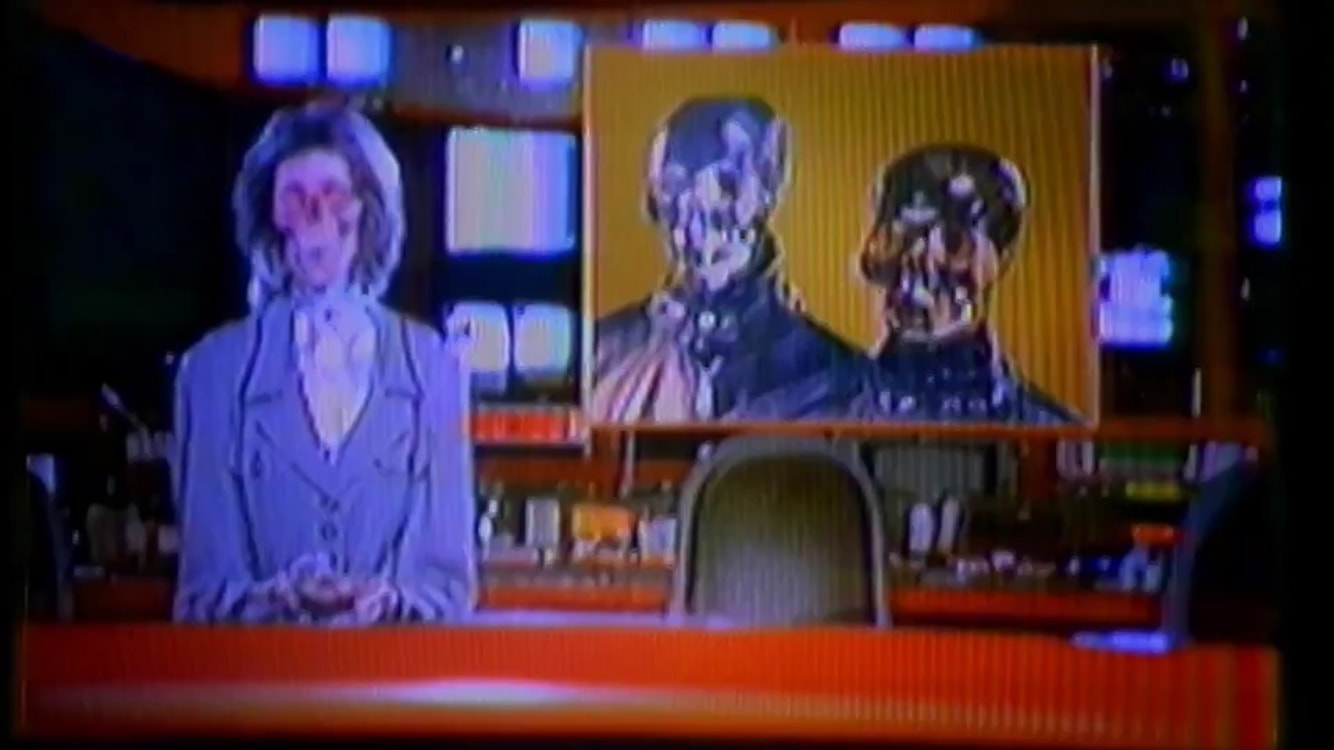
For Homework and Discovery Daft Punk leaned heavily into the media and participated in hundreds of interviews but for Human After All they refused to do any. When asked by journalists to comment on the album, they simply stated “the album speaks for itself” and that was it. Likewise, they didn’t participate in any photoshoots for Human After All so their new blacked out robots (designed by Hedi Slimane in Saint Laurent garb) were revealed in their self-directed music videos which were recorded on VHS tape to achieve a worn and decrepit aesthetic to match the rest of the album. As a result of this media-silence, their third album saw less hype than their previous two which is likely what they wanted. If Daft Punk wanted to create hype and saturate the media, they very well could have so this was no mistake. Human After All would be nominated for the 2006 Grammy Award for Best Electronic/Dance Album but would lose to The Chemical Brothers (the group which had helped popularize their breakout 1995 single “Da Funk.”) Overall, the album sold significantly less units than their previous two albums despite having a few stand out singles such as “Robot Rock” and “Technologic." Despite all of this negative press, some fans consider it to be their favorite album and appreciate it's raw and unfiltered sound. As Daft Punk would say, “people are often afraid of things that sound new.”
                    |
|
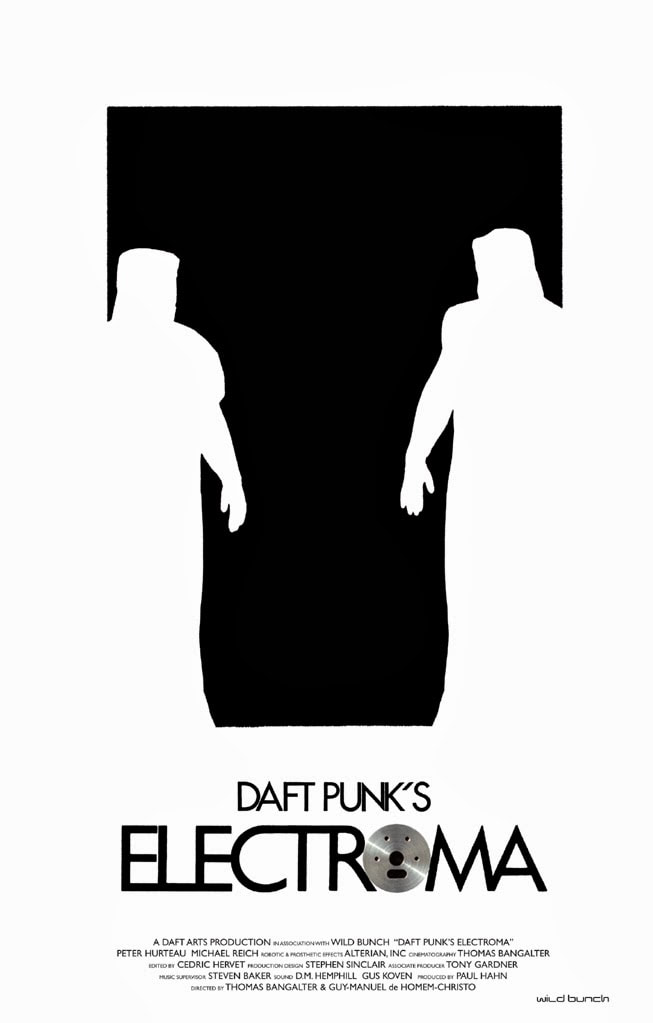
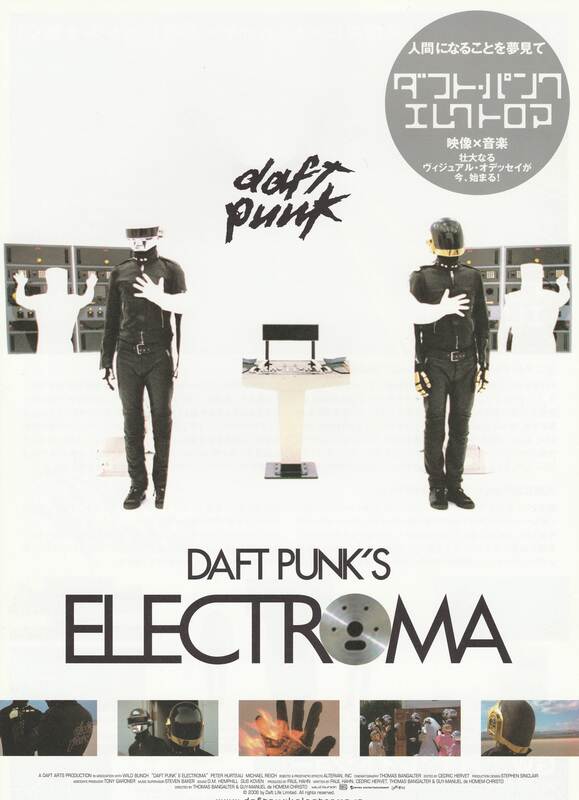
Electroma (2005-2008)
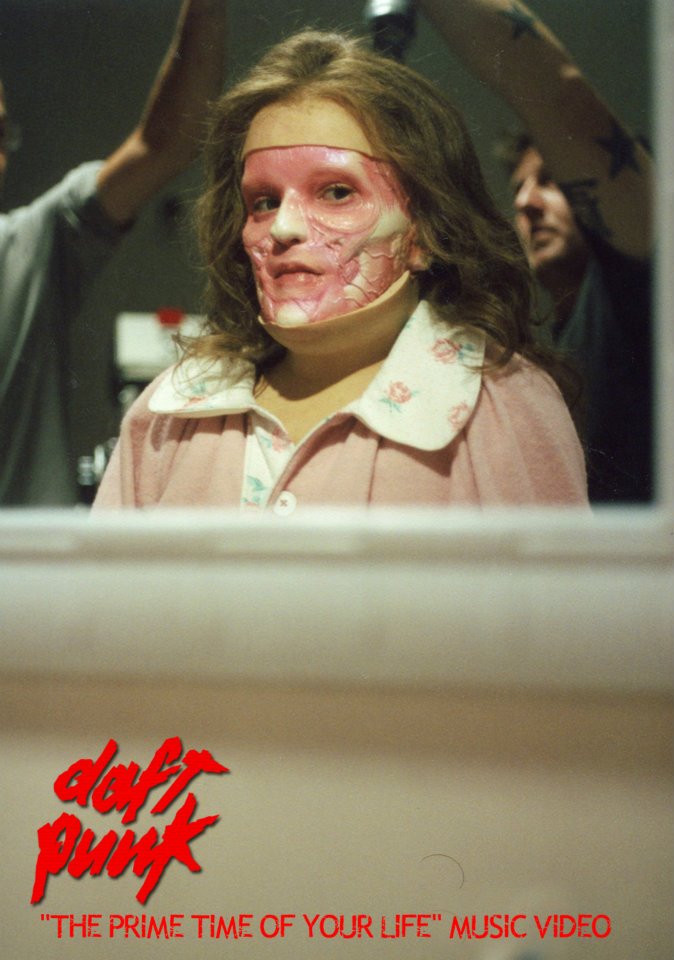
Human After All was Daft Punk’s first album solely produced by themselves. In both Homework and Discovery they received help from a range of artists such as DJ Crabbe, DJ Deelat, Romanthony, DJ Sneak, and Todd Edwards. Continuing on this self-produced path, they decided to direct the music videos for the singles on the album too (except for “Prime Time of Your Life” which was directed by Tony Gardner of Alterian Inc.). Daft Punk directed the music videos for “Robot Rock”, “Technologic”, and even one for “Television Rules the Nation.” When it came time to film a music video for the title track “Human After All” they decided that they wanted to take their idea and expand it into a feature length film. Daft Punk commented on their spontaneous decision to make this film in a 2007 interview stating, “we were not nervous – making a full-length movie was like a dream. We never planned for it to happen, but after we directed the videos for our last album we decided to keep on working. We were in the shooting dynamic, so the movie came naturally. We didn't think too much. Whether it's making music or directing a video, whatever we do we do it quickly. When we have a good work dynamic we don't need to ask too many questions of each other.”
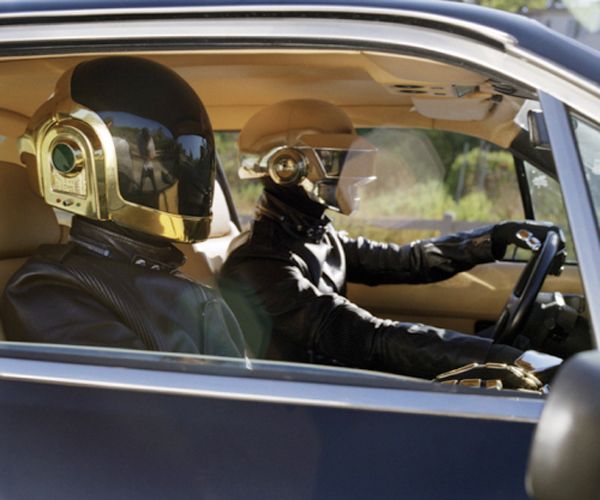
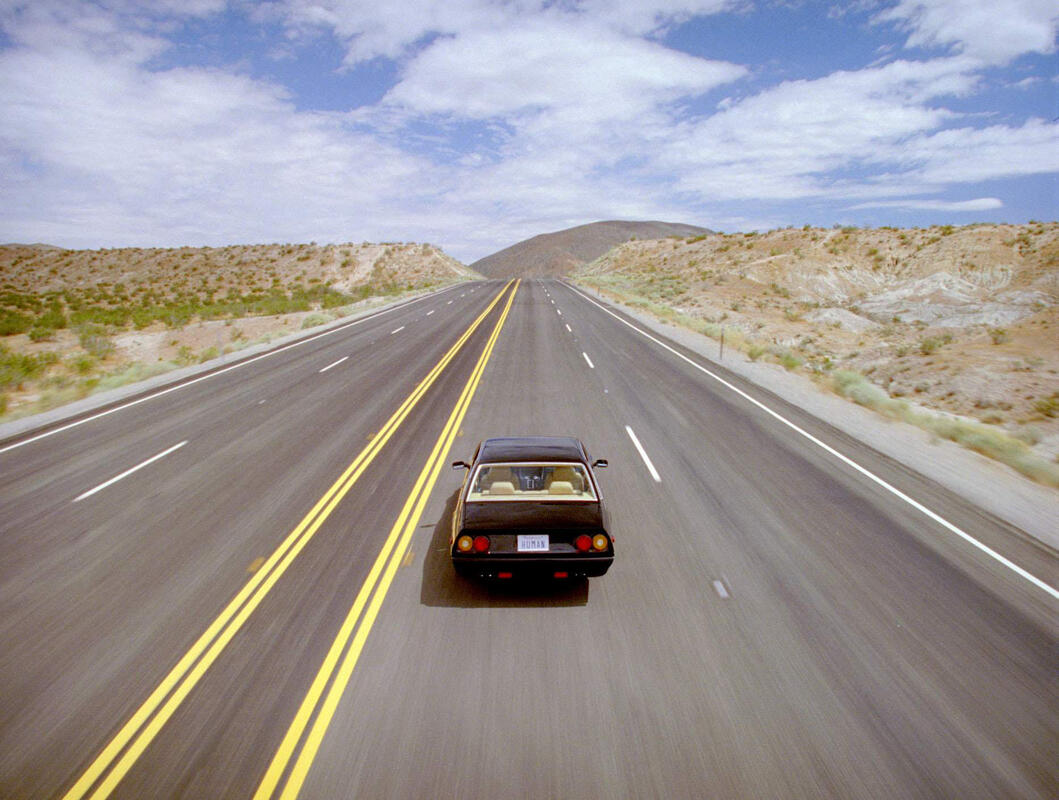
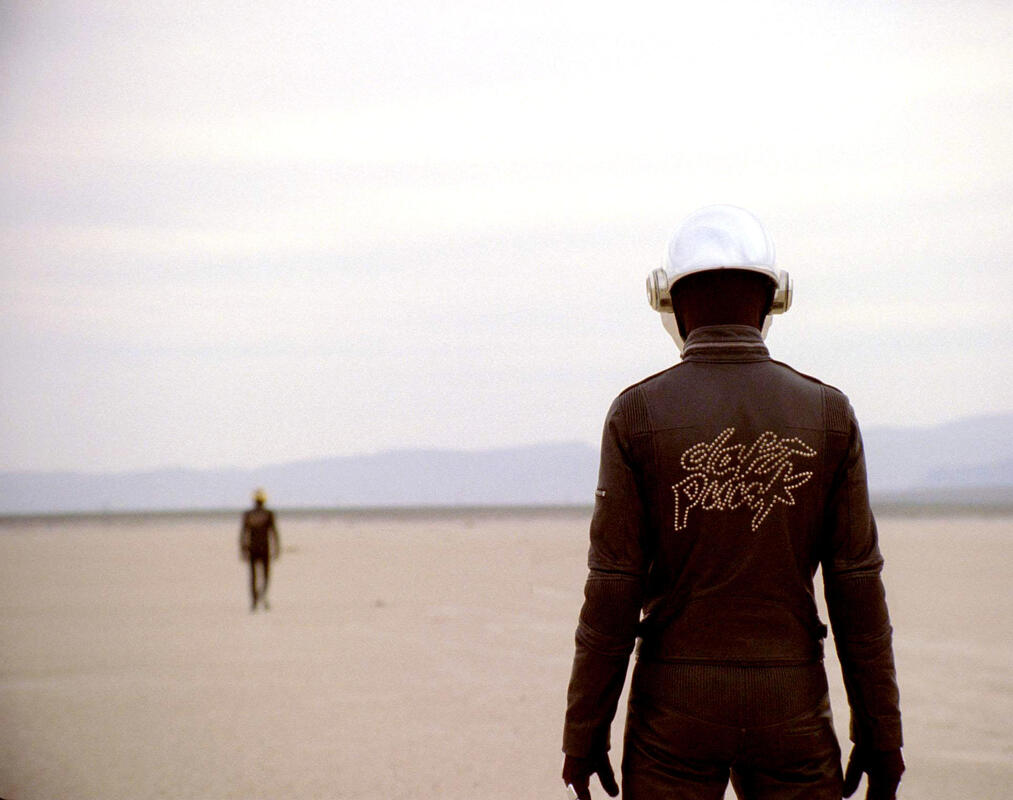
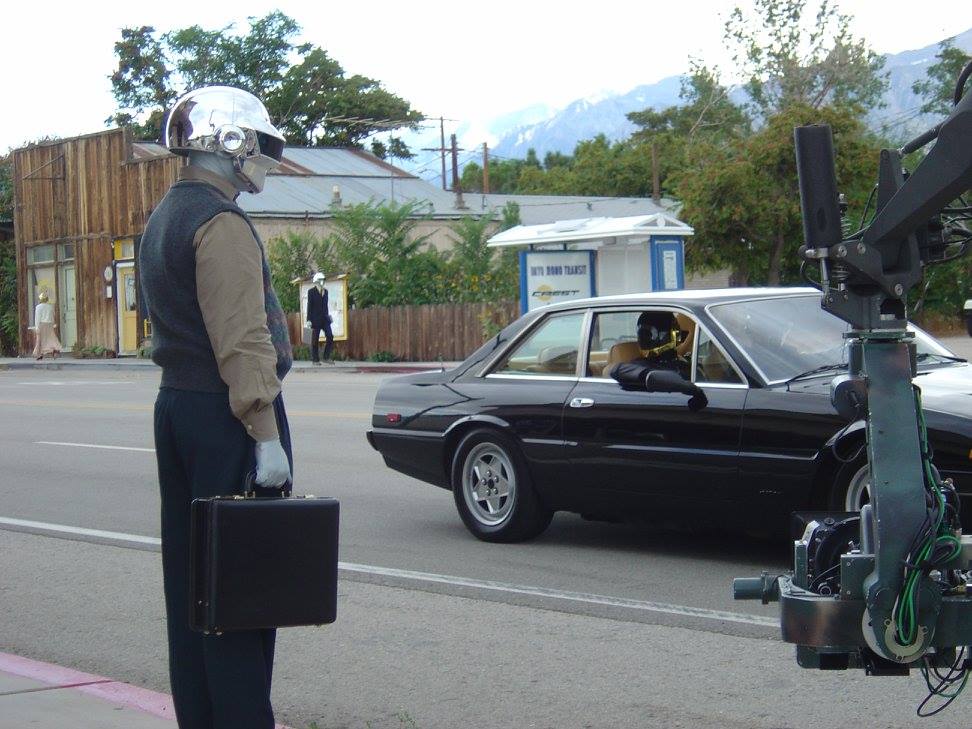
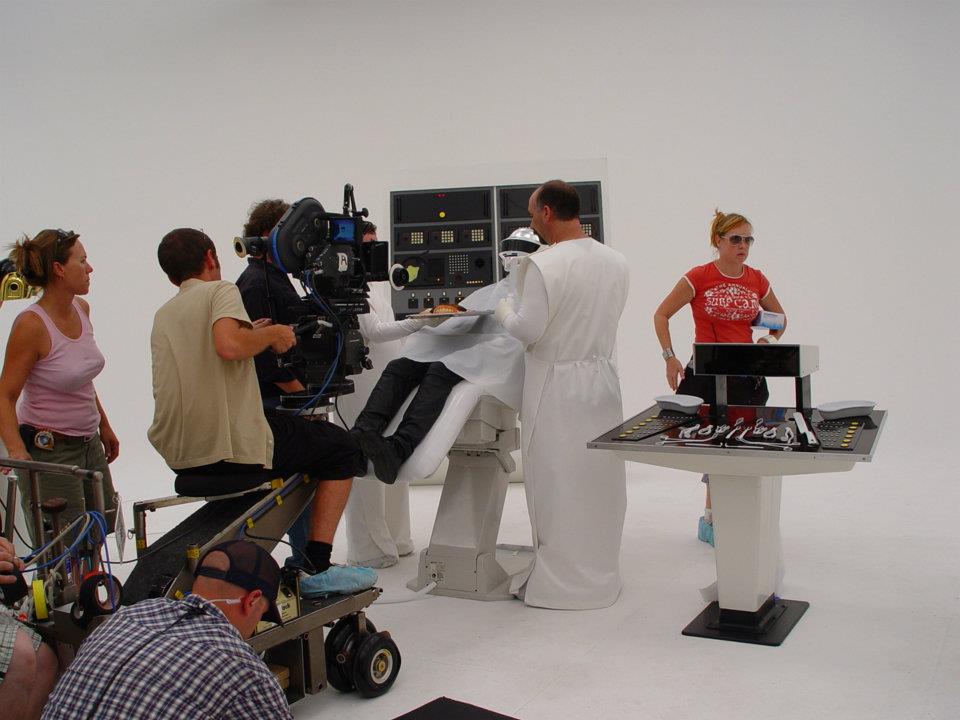
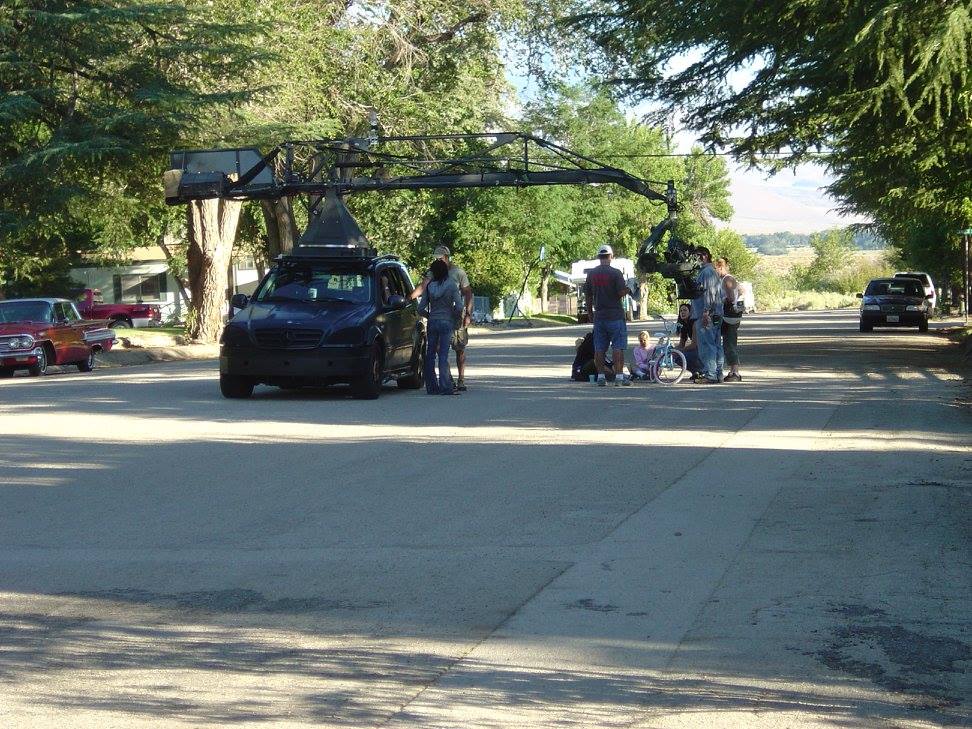
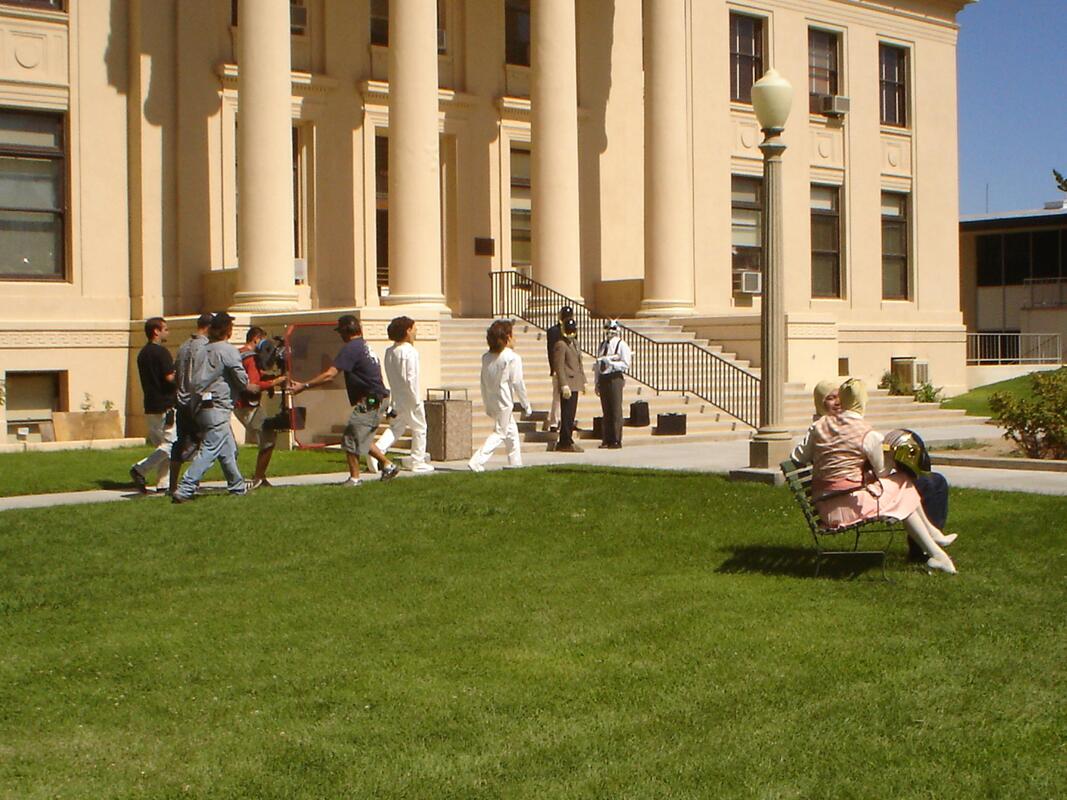
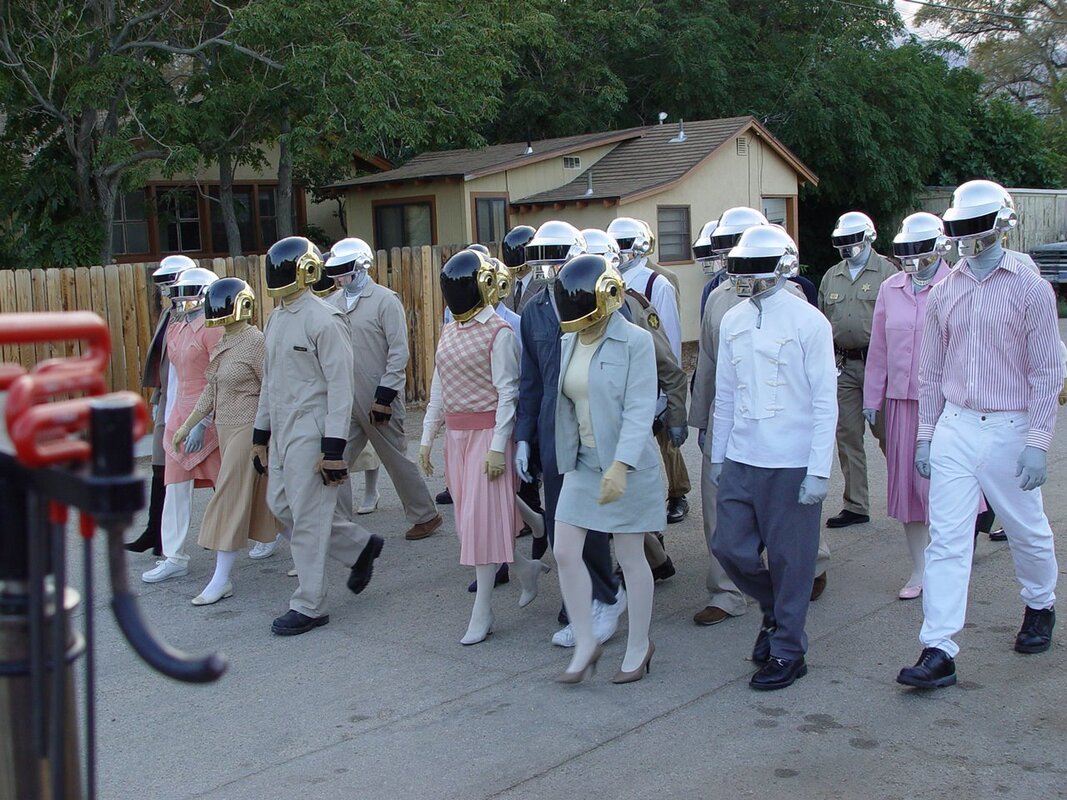
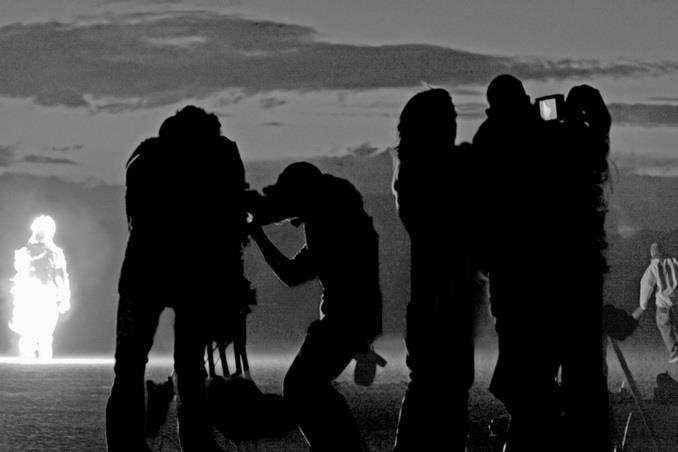
In preparation, Thomas of Daft Punk purchased and read through over 200 back-issues of American Cinematographer as he would be the film’s cinematographer on top of being one of the directors. Daft Punk chose to shoot on 35 mm Kodak film to achieve a feeling of timelessness in that a viewer ten years in the future would not be able to tell if this had been filmed in 2005 or 1985. Filming took place over an 11 day period in November of 2005 in and around the desert town of Independence, California and along U.S. Route 395. While the protagonists of the film are robots wearing Daft Punk’s signature black leather Dior Homme outfits with “Daft Punk” written on the back, they are not Daft Punk for the film’s sake. In the credits they are named “Hero Robot No. 1” and “Hero Robot No. 2” so that this film does not interfere with the real life Daft Punk narrative and lore. Furthermore, since Daft Punk were busy directing the film, Hero Robot No. 1 and Hero Robot No. 2 are played by Daft Punk body doubles, Peter Hurteau and Michael Reich (In 2007 Peter and Michael also stood in for Daft Punk for the filming of Kanye West’s “Stronger” music video as well as a couple of photoshoots in which Daft Punk were too busy to attend due to their 2007 tour...more on the tour later).
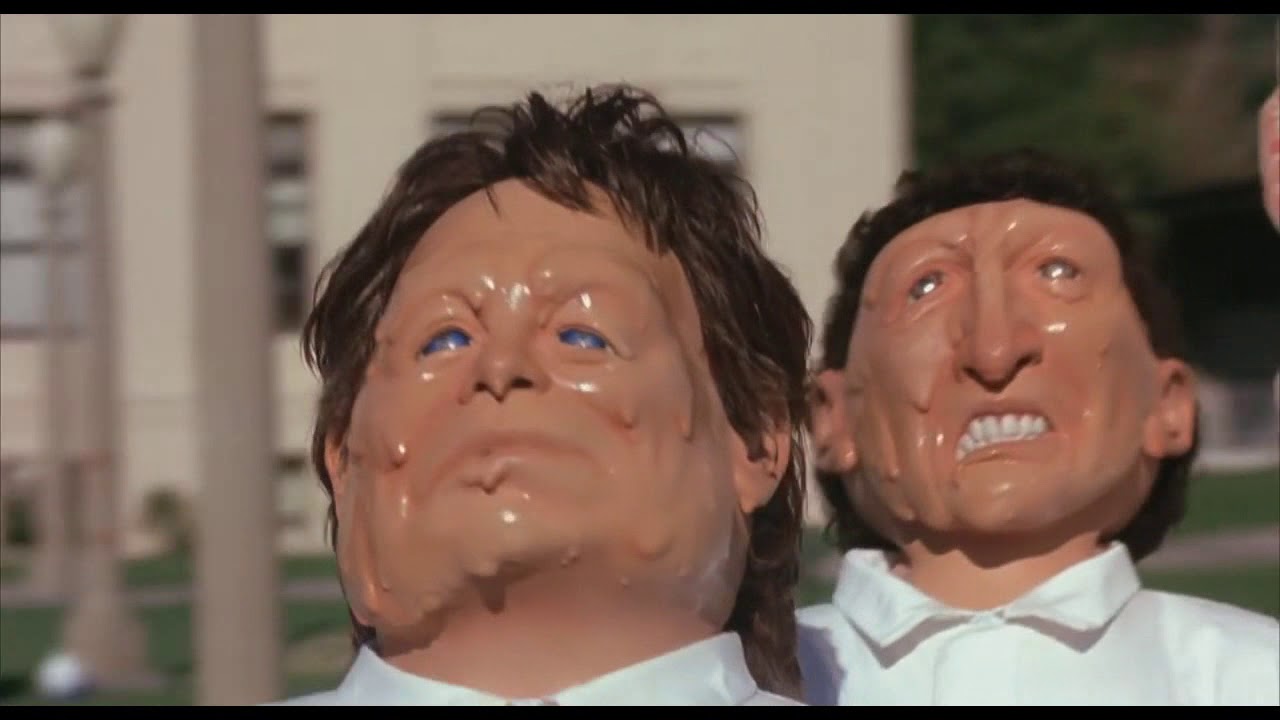
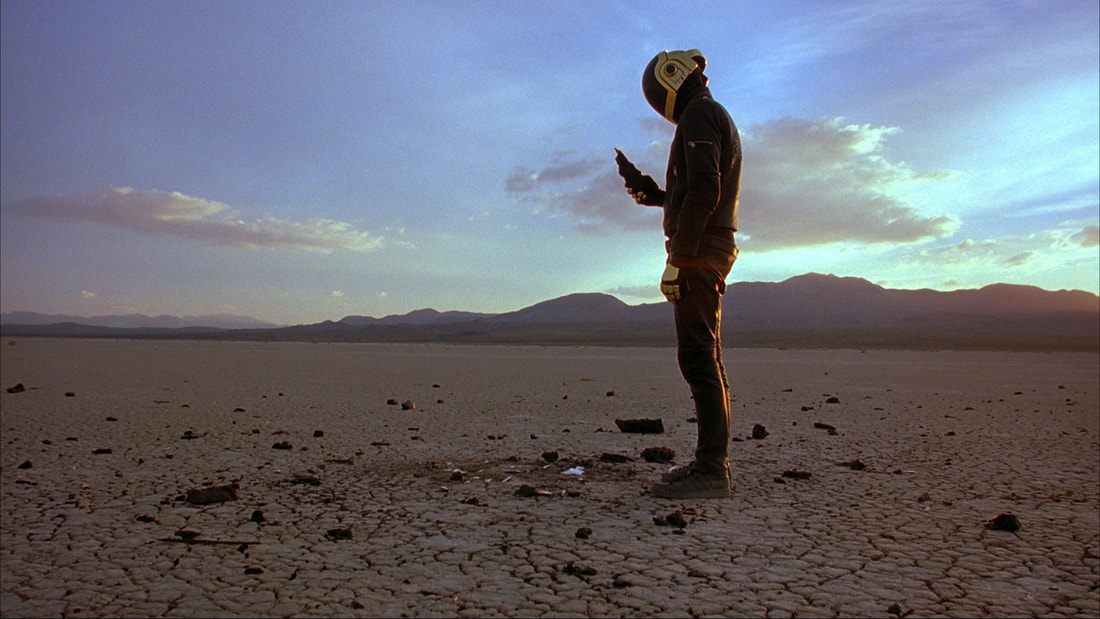
The plot and meaning of the film is up for interpretation because Daft Punk made sure to keep it ambiguous enough to let audiences project their own meaning onto the film. The film also contains no dialogue so viewers can only make sense of what is shown and the music that Daft Punk curated for the soundtrack. What we do see is a pair of robots (Hero Robots No. 1 and 2) who drive into a town also filled with robots. They then arrive at their destination, a brightly lit and high-tech facility where they undergo cosmetic surgery to appear human. They leave the facility and walk into town only to have their faces melt from the sun and then be pursued by the townspeople...er townsrobots? Hero Robots No. 1 and 2 escape their pursuers and then remove the remnants of their melted faces. They then walk into the desert for an unspecified amount of time. After a while, Hero Robot No. 2 stops and removes their black leather jacket to reveal a self destruct switch in the middle of their back, which they have Hero Robot No. 1 press for them as it cannot be reached on one’s own. A timer starts beeping and counting down so Hero Robot No. 2 walks away from Hero Robot No. 1 and then explodes into thousands of pieces. Hero Robot No. 1 picks up the pieces of Hero Robot No. 2, places them neatly into a pile, then continues to walk into the desert for an unspecified amount of time. After a while Hero Robot No. 1 stops and removes their leather jacket in an attempt to hit their own self destruct switch but is unable to reach it. They then remove their robot helmet...er...face?...which reveals circuit boards underneath. Hero Robot No. 1 then smashes their helmet into the ground until it breaks into pieces. They take one of the shards of glass from the visor of the helmet and use it as a magnifying glass to focus the sun's rays and ignite their hand on fire. The film ends with an extended shot of Hero Robot No. 1 walking through the desert at night while fully engulfed in flames.
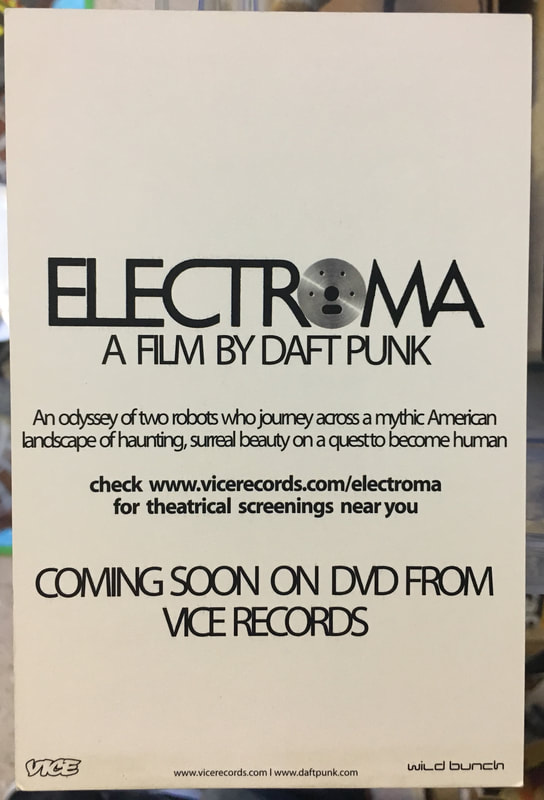
The odd nature of the film (being without dialogue or Daft Punk music, no real faces to convey emotion, and with extremely slow pacing and lengthy shots) left viewers and critics with mixed reactions. During the film’s premier at the 2006 Cannes Film Festival, some audience members walked out in the middle of the extended desert sequence. Regardless of the unconventionalness of the film and the criticism it brought, it became a cult hit in Paris (where it would screen at midnight every Saturday for six months starting in March of 2007) and the UK (where it screened late at night on weekends from June, 2007 to January, 2008). Throughout 2007 various festivals and art institutes around the world held screenings of their film. Electroma ended up being shown in France, Canada, Australia, the UK, Germany, and the USA. The film was first released on DVD in June of 2007 in Australia and would see various other releases for different regions until July of 2008 where North America was the last to receive a DVD release. Electroma was never meant to be a mainstream theatrical success, Daft Punk always intended it to be an underground cult cinema experience like The Rocky Horror Picture Show or Phantom of the Paradise which they saw over 20 times together as children in Paris. In that sense, Electroma was an immense success for Daft Punk.
        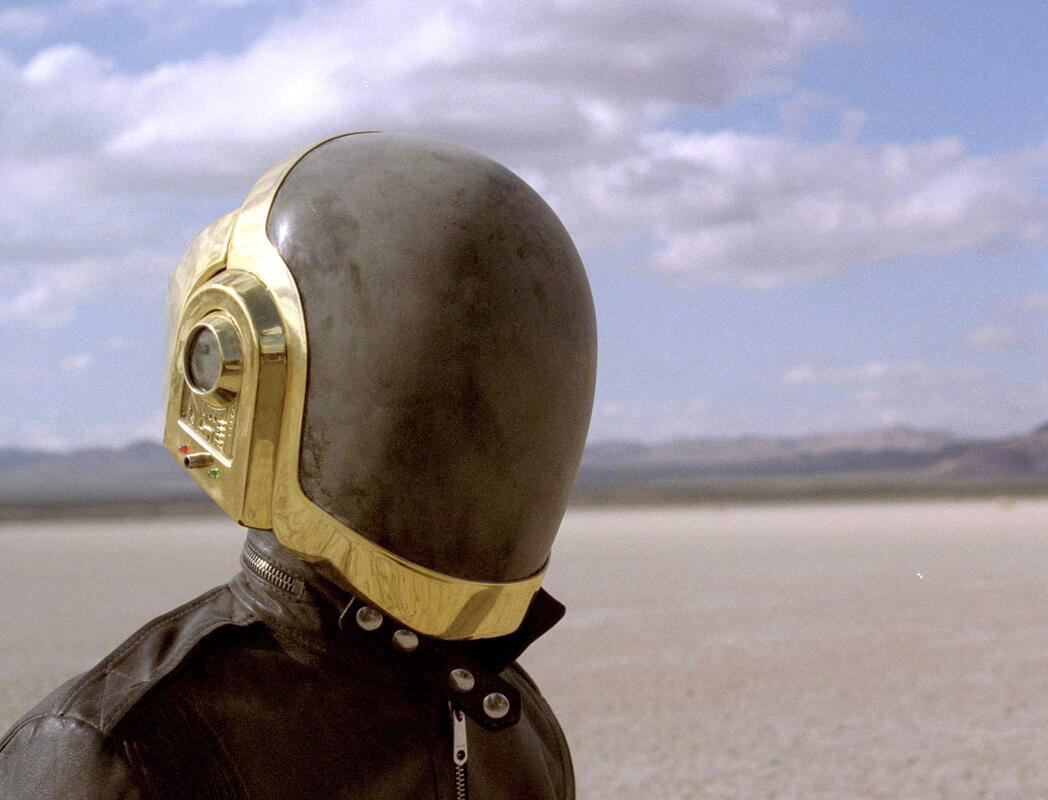 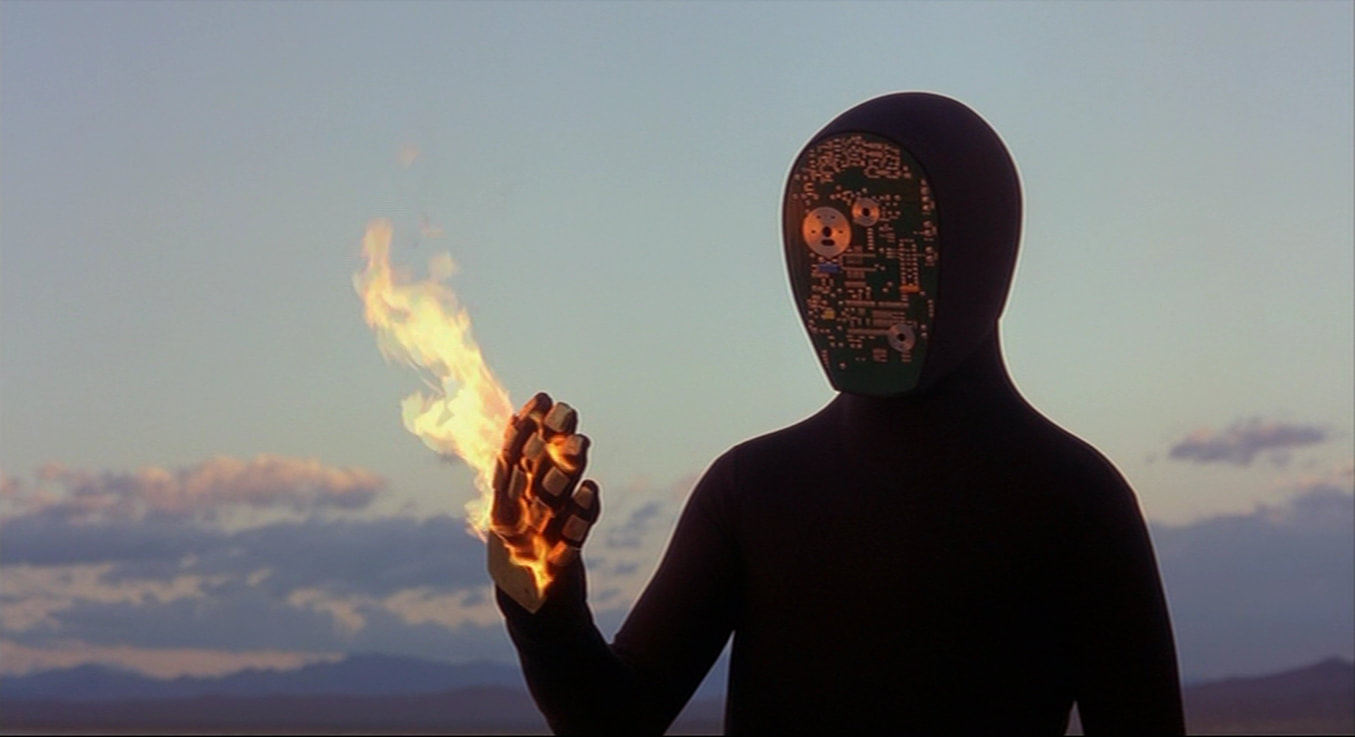  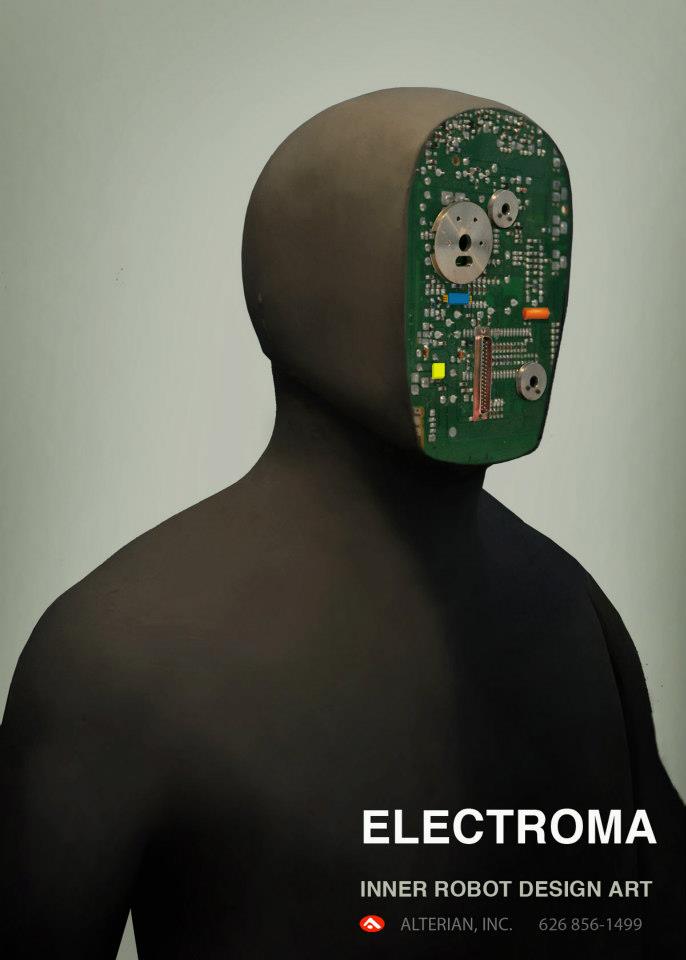 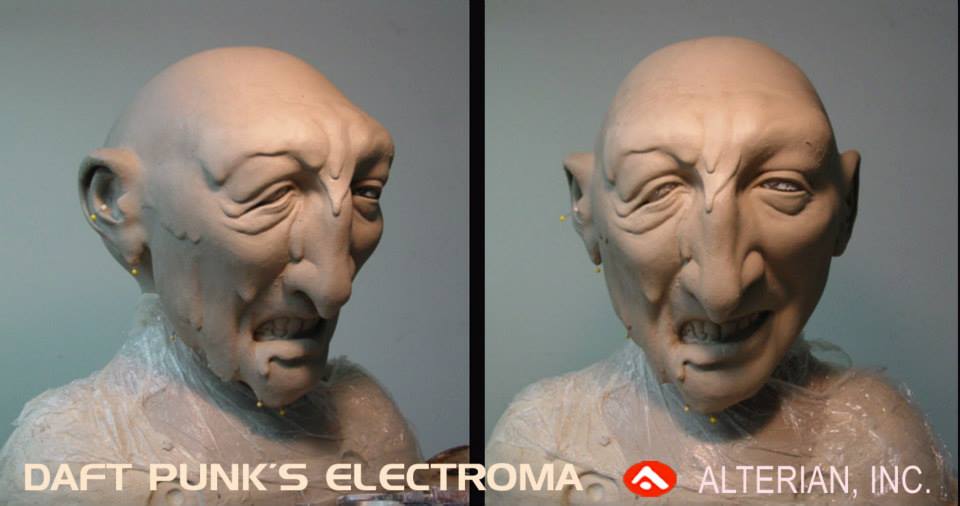        |
|
Coachella + Alive Tours (2006-2007)
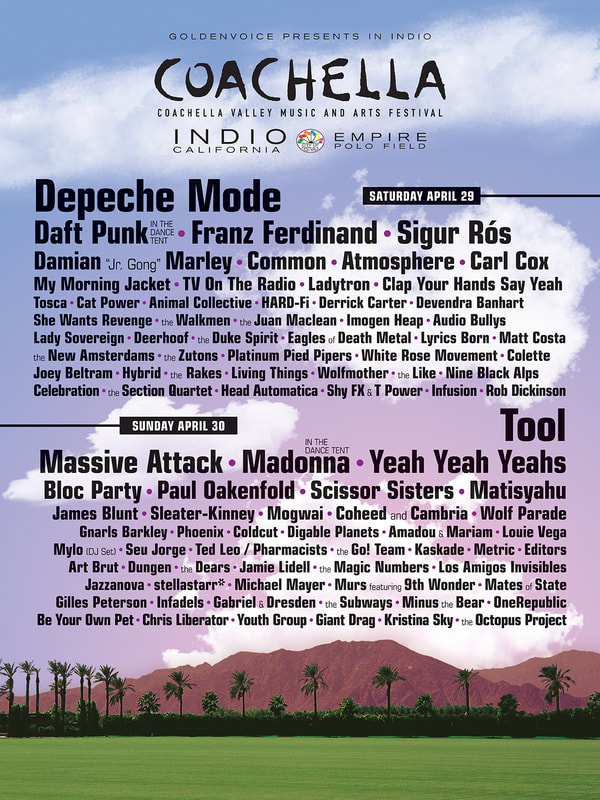
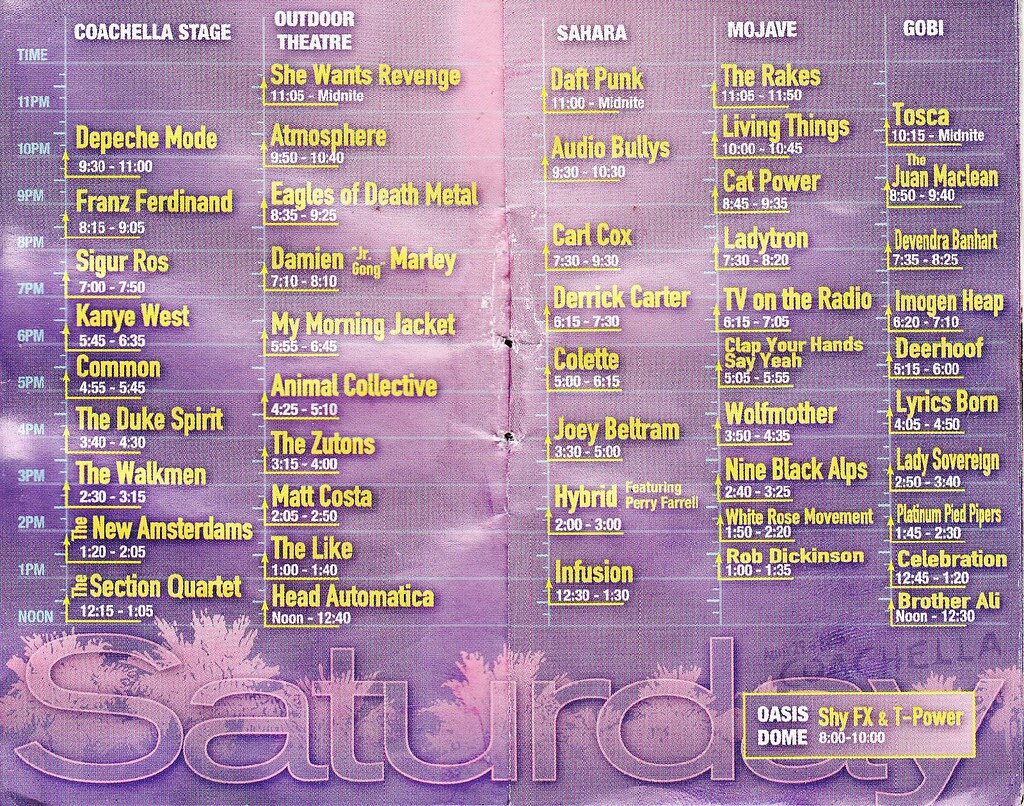
Daft Punk had been approached to perform at the Coachella Valley Music and Arts Festival for years and had been offered large sums of money but had turned it down every year. As always, their decision was never about the money but whether or not they felt they could challenge themselves artistically. It was not until 2006 that Daft Punk finally agreed to play at Coachella but only because they had an idea for a live show that would challenge them and bring something new to the table that had never been done before. They demanded that they get their money up front so that they could build their set. Coachella agreed even though Daft Punk told no one what they were building except for their crew and tech people helping to build it. Daft Punk’s assistant manager Pedro Winter did not even know what they were doing with their Coachella money until their dress rehearsal.
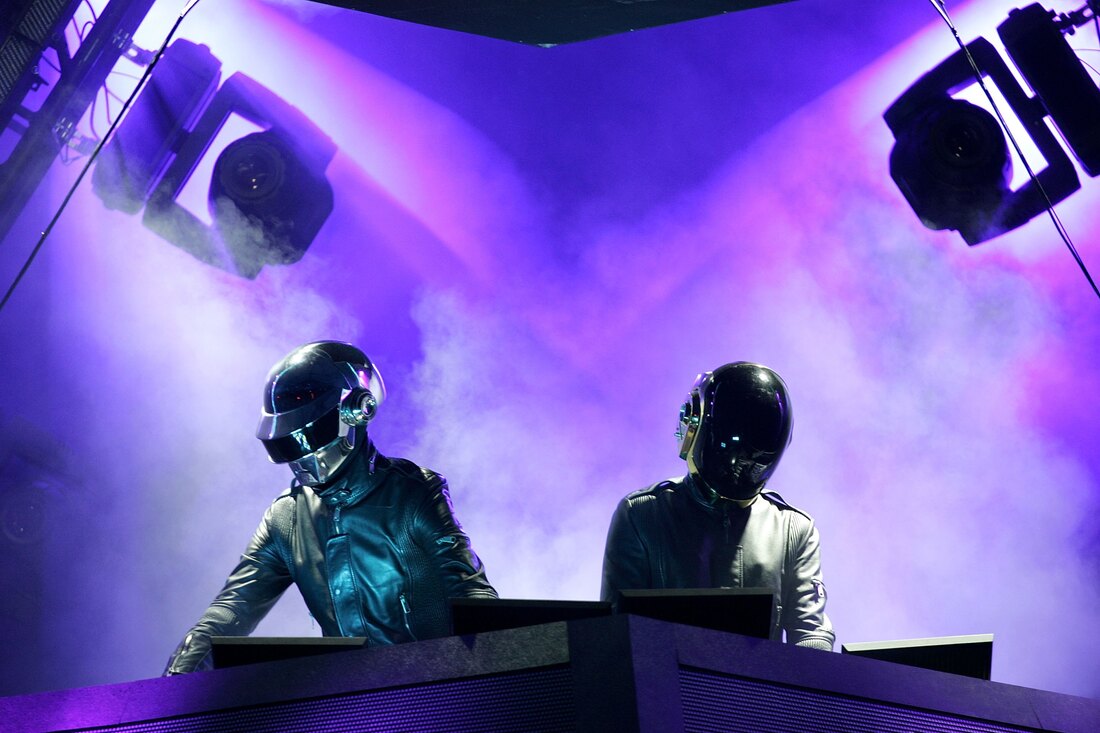
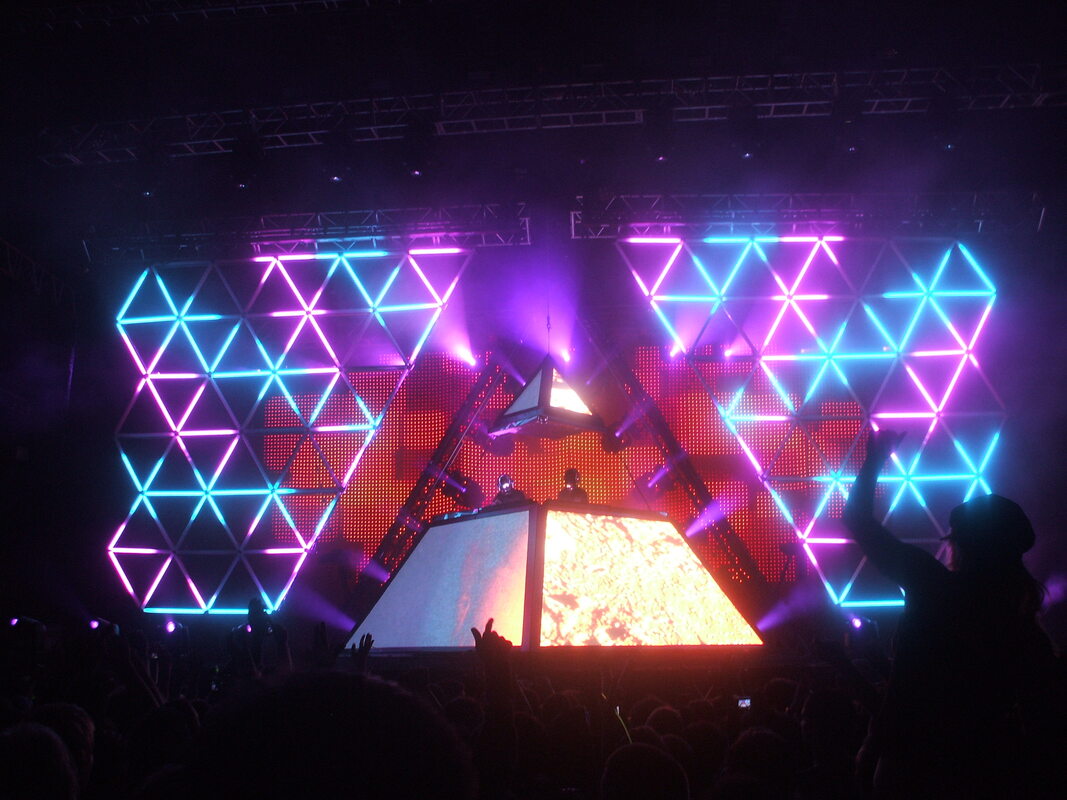
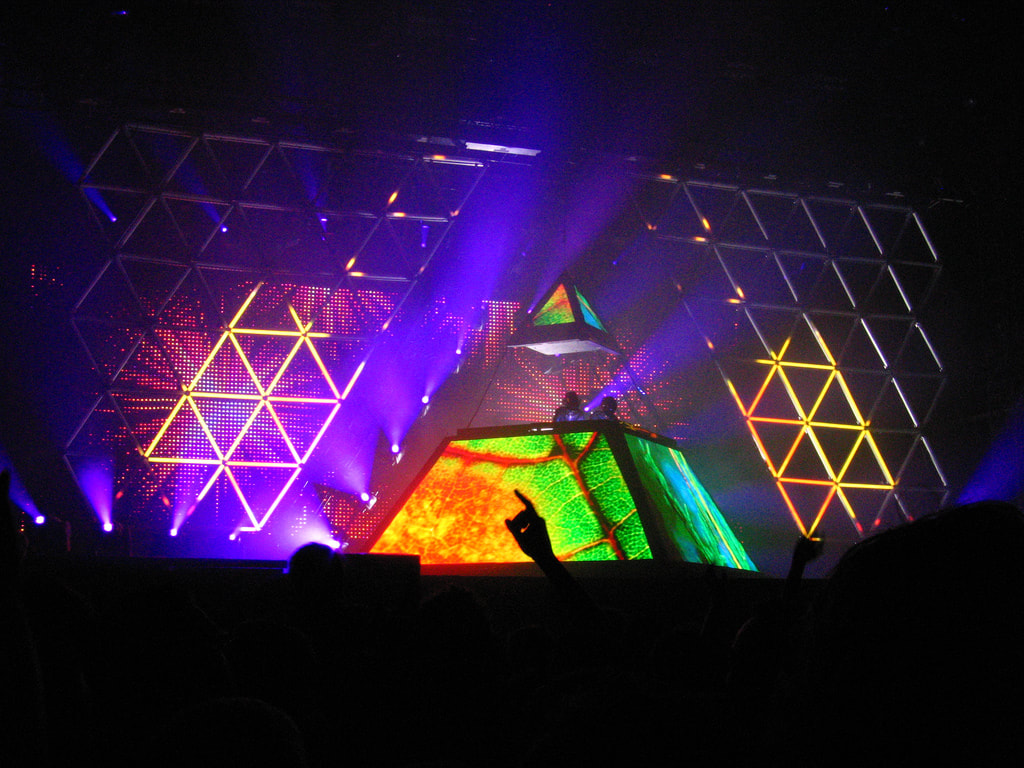
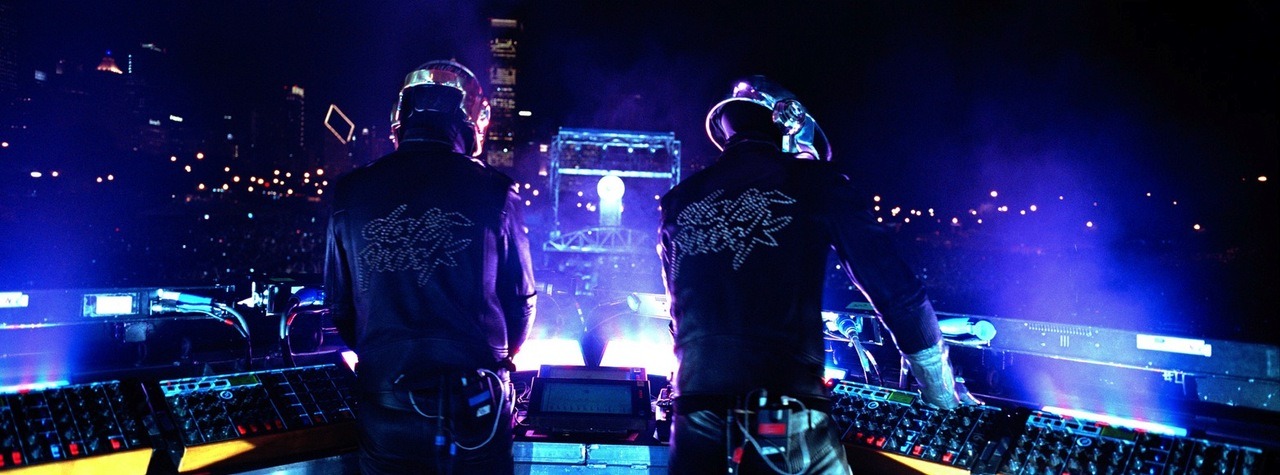
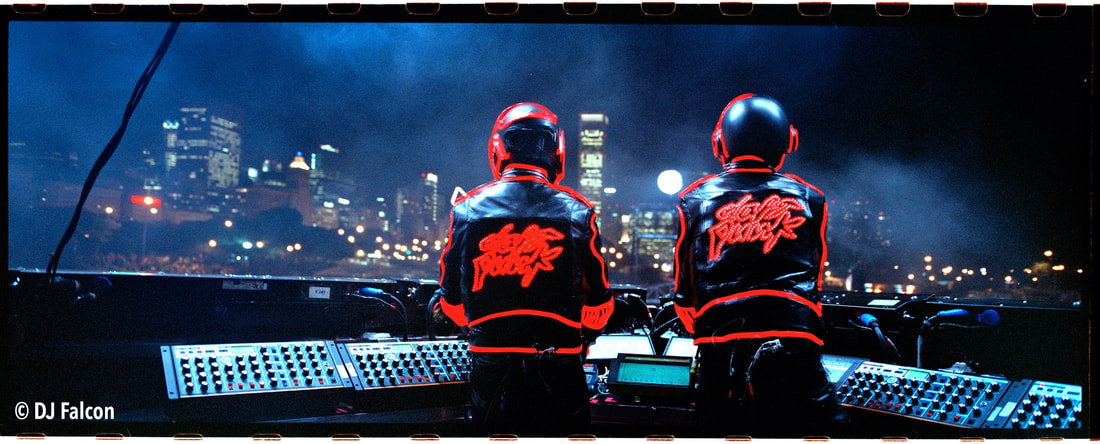
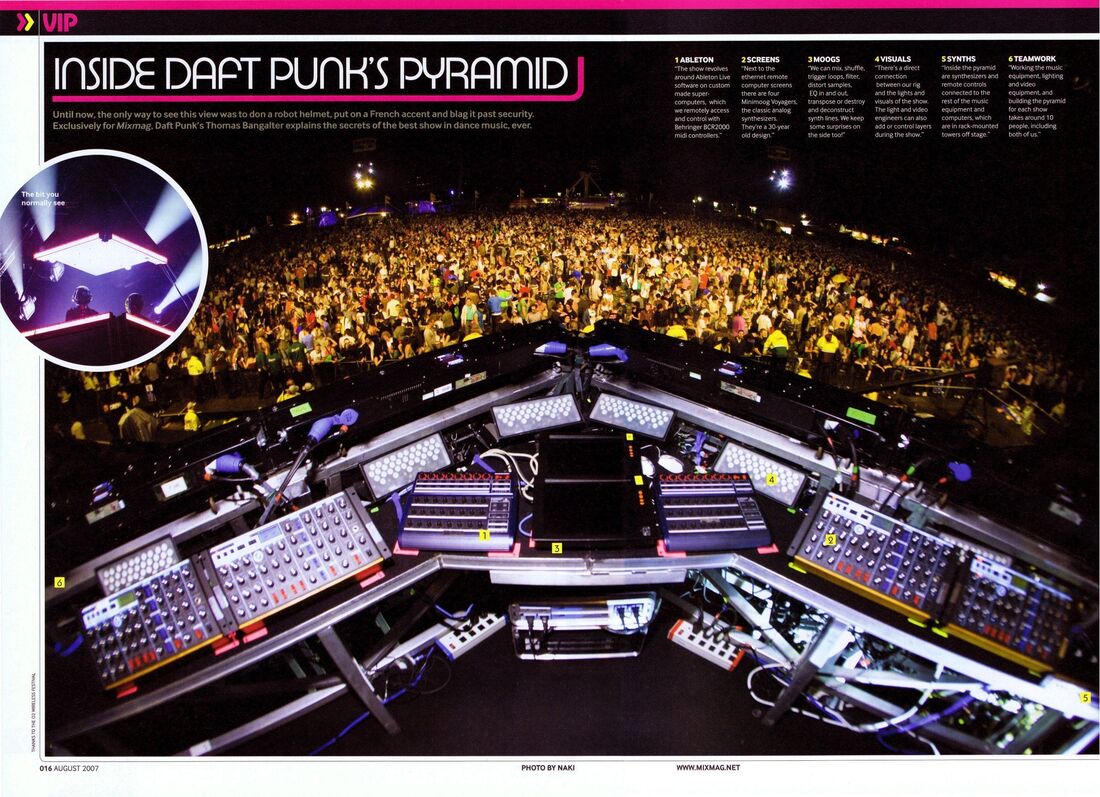
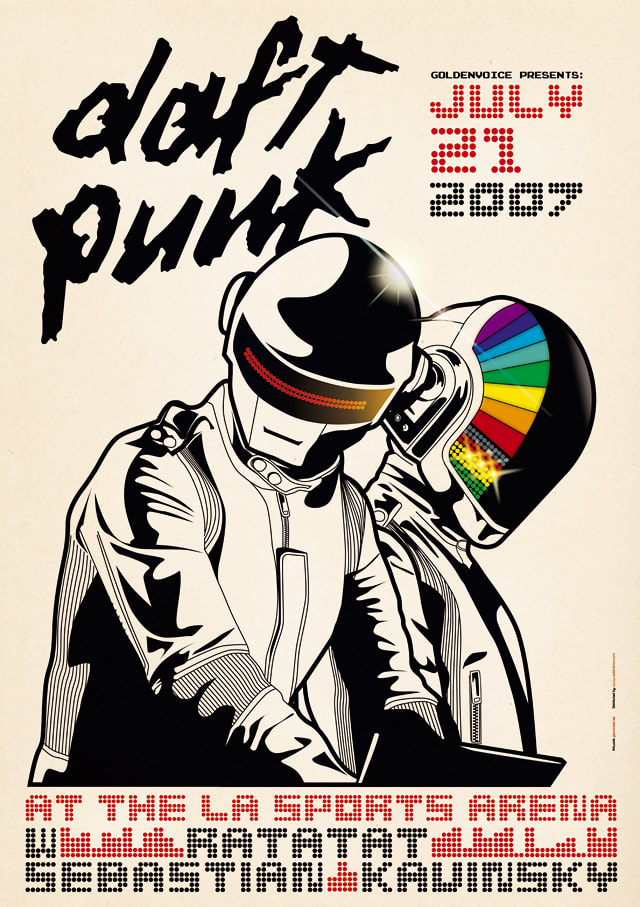
Daft Punk were slated to perform in the Sahara Dance Tent to close out the first night of the festival. Their performance was shrouded in mystery because they had never performed in their robot garb before and it was their first major U.S. performance since 1997 so people did not know what to expect. They did not tour Discovery or Human After All so how they would incorporate these tracks into their live set was a mystery. When the time finally came, Daft Punk from behind the curtains played an audio snippet from the climax of the film Close Encounters of the Third Kind, where they finally make contact with the alien mothership and play a series of notes in an attempt to communicate with it. After the notes established communication, as they did in the film, the black curtains separated and revealed Daft Punk’s custom built stage: A pyramid covered in LEDs, large triangular light fixtures flanking each side of the pyramid, and a huge LED screen as the backdrop. Daft Punk (in full robot garb) stood inside the pyramid almost as if they were piloting a spaceship. Inside the pyramid they had a myriad of controls for both mixing the music and the lights. After the reveal of the stage, a drawn out and robotic voice chanting “robot...human...robot...human…” started playing progressively faster as the lights interchangeably illuminated the crowd then the robots respective to the voice. After a few minutes of build-up, the chant exploded into a live version of “Robot Rock” from their album Human After All. The entire show ended up being a mix of tracks from all three of their albums and was an immense hit with the crowd. Furthermore, the state-of-the-art LED covered stage which danced to the music was also a hit with the crowd. It is reported that Daft Punk exhausted the entire United States supply of LEDs in order to build their stage so this amount of LED had never been put to this sort of use before. Billboard critics and coachella.com fans to this day name it the best show in Coachella history and every year there are rumors that they will return.
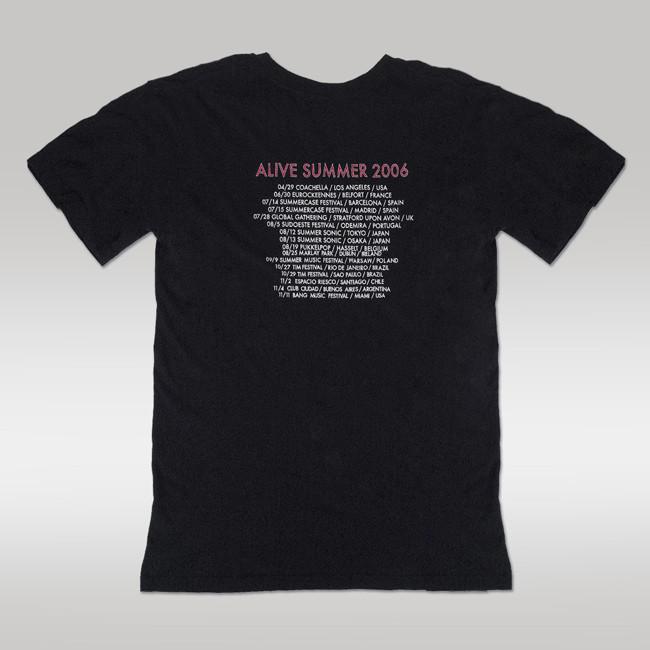
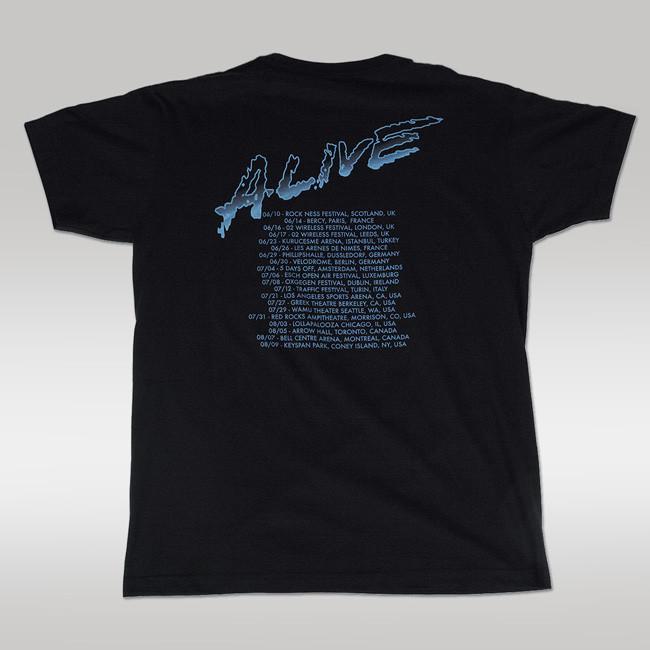
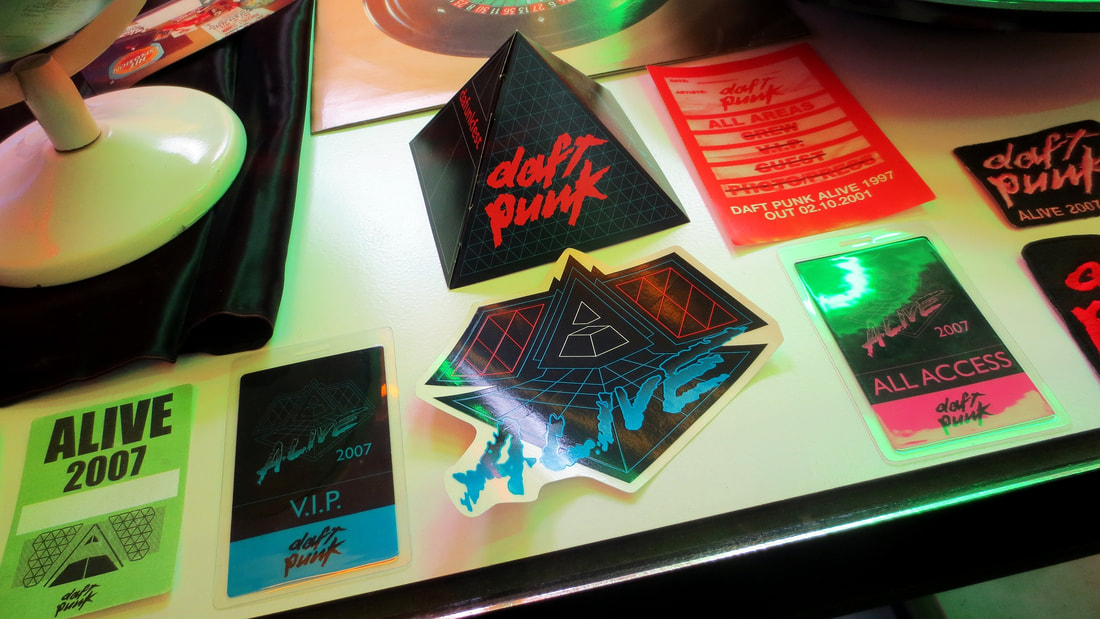
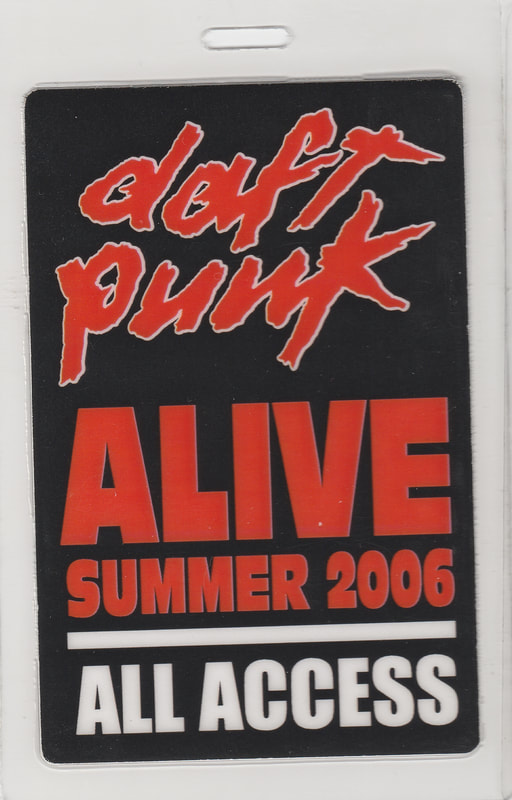
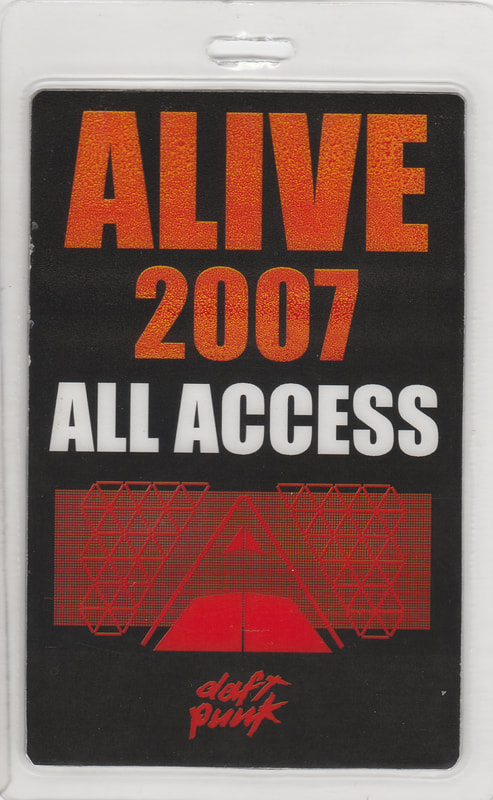
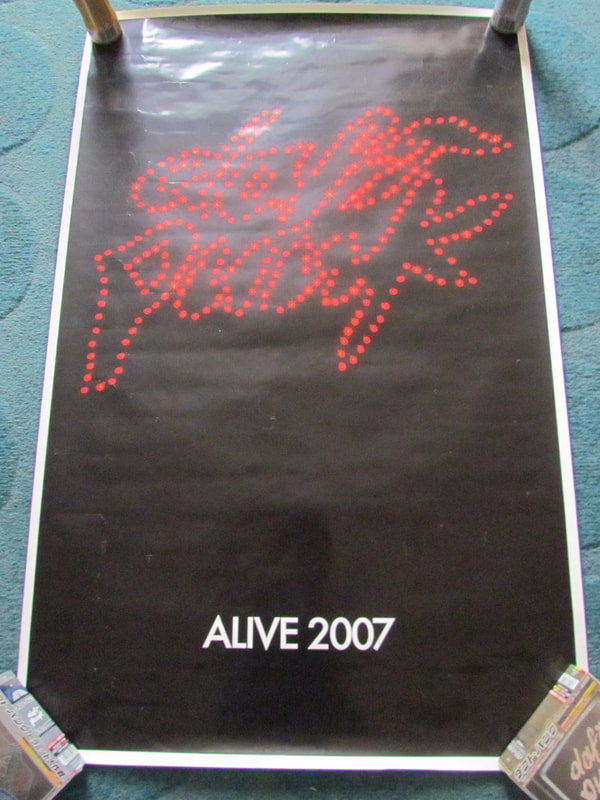
This incredibly successful performance at Coachella was the launching point for a world tour they called “Alive Summer 2006” in which they would play 16 shows. Shows on this tour would use the same tracks in the same order but each time it was slightly different due to the fact that Daft Punk were still controlling the mix live. “We can mix, shuffle, trigger loops, filter, distort samples, EQ in and out, transpose or destroy and deconstruct synth lines.” In total it took around ten people to build and then control everything during the show so it was not a simple two man task as many might believe it to be. As Daft Punk put it, “we compare it to a Broadway musical. There’s a lot of people involved, and every night is a different performance, even though it’s the same music and the same show.” The lights were also subject to these slight show to show variations. “There’s a direct connection between our rig and the lights and visual of the show, The light and video engineers can also add or control layers during the show.”
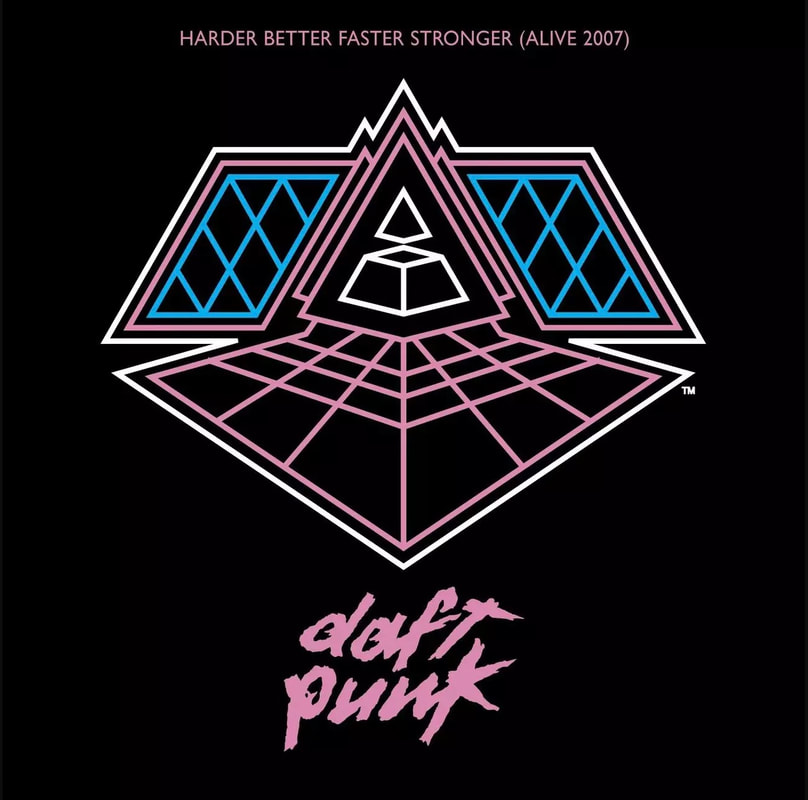
The tour was wildly successful and demand was high so the next year Daft Punk returned on tour, this time calling it “Alive 2007” with a slightly modified tracklist and lightshow. On this tour they played a total of 32 shows and even recorded a live album of their performance in Paris, France. This live album aptly titled Alive 2007 would win two Grammy Awards in 2009, one for Best Electronic/Dance Album and another for Best Dance Recording for their single “Harder Better Faster Stronger (Alive 2007)” which beat out Lady Gaga’s “Just Dance”, Madonna’s “Give It 2 Me”, and Rihanna’s “Disturbia.” Overall Daft Punk’s Coachella performance and subsequent tours triggered an audio-visual revolution in electronic music which continues to this day. Nowadays it is commonplace to have absurdly huge LED light shows at EDM festivals but it was truly Daft Punk who innovated that type of show.
                    |
|
Tron: Legacy (2008-2011)
While Daft Punk were touring in 2007, they were contacted by Disney with a unique offer to produce an original score for an as of yet unnamed Tron sequel. Daft Punk were busy touring so they initially declined but showed interest in the project. In 2008 upon finishing their Grammy Award winning world tour, they were once again contacted about working on the music for the Tron sequel. They ultimately accepted the offer because they believed it would be an artistically satisfying challenge as well as the fact that they were huge fans of the original cult classic film and the score that electronic music pioneer Wendy Carlos had produced in 1982. One thing that seriously worried Daft Punk though, was the fact that they would be working for one of the biggest corporations in the world, The Walt Disney Company. Their whole career had been spent working autonomously so working for Disney was a scary prospect but they were assured that they would maintain their autonomy and the two parties were able to come to an agreement.
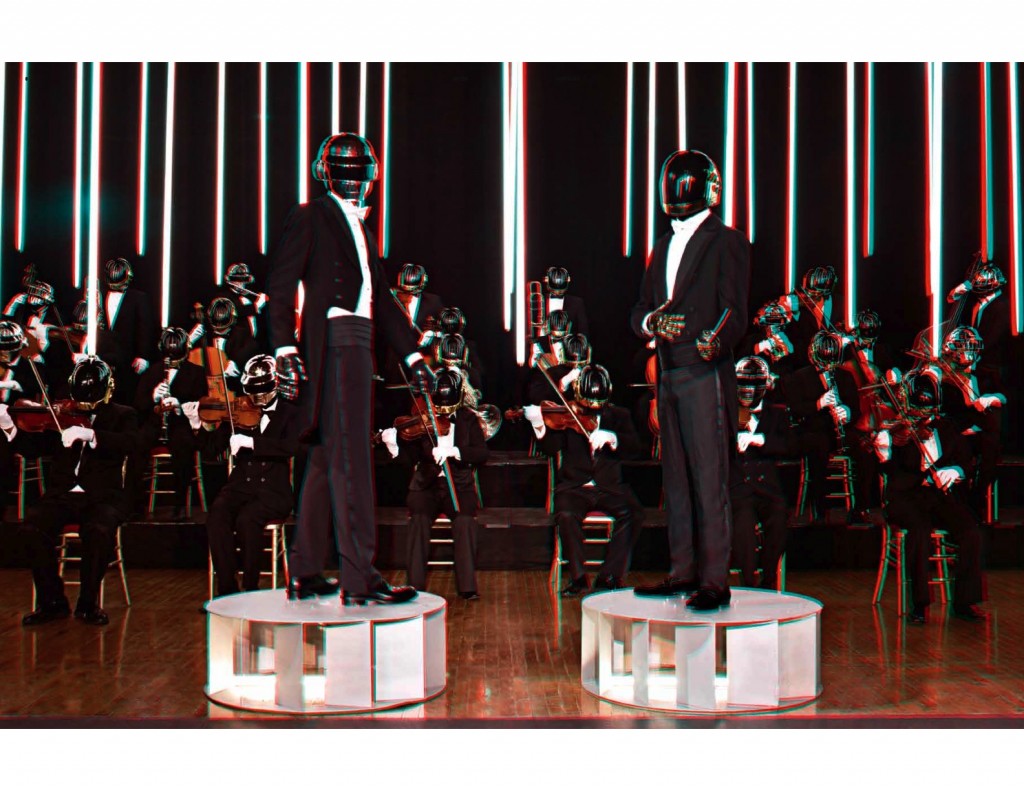
Initially Daft Punk was going to be working alongside another more established film score composer but after having a few meetings with composers such as Hans Zimmer, John Powell, Harry Gregson-Williams, and Christophe Beck they decided that they could take on the project on their own. The score for the film was a blend of both electronic and orchestral music, making use of a 90 piece orchestra and modern electronic music equipment. Although the use of an orchestra was an immense departure from their regular electronic music background, Daft Punk claim, "this is what Daft Punk would have done in 1700… we knew from the start that there was no way we were going to do this [soundtrack] with two synthesizers and a drum machine… a cello was there 400 years ago and will still be here in 400 years. But synthesizers that were invented 20 years ago will probably be gone in the next 20." As far as difficulty goes, Daft Punk state, “this project is by far the most challenging and complex thing we have ever been involved with."
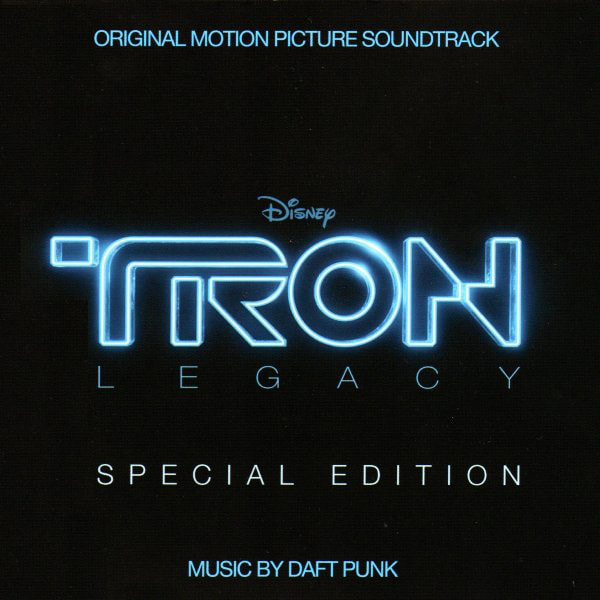
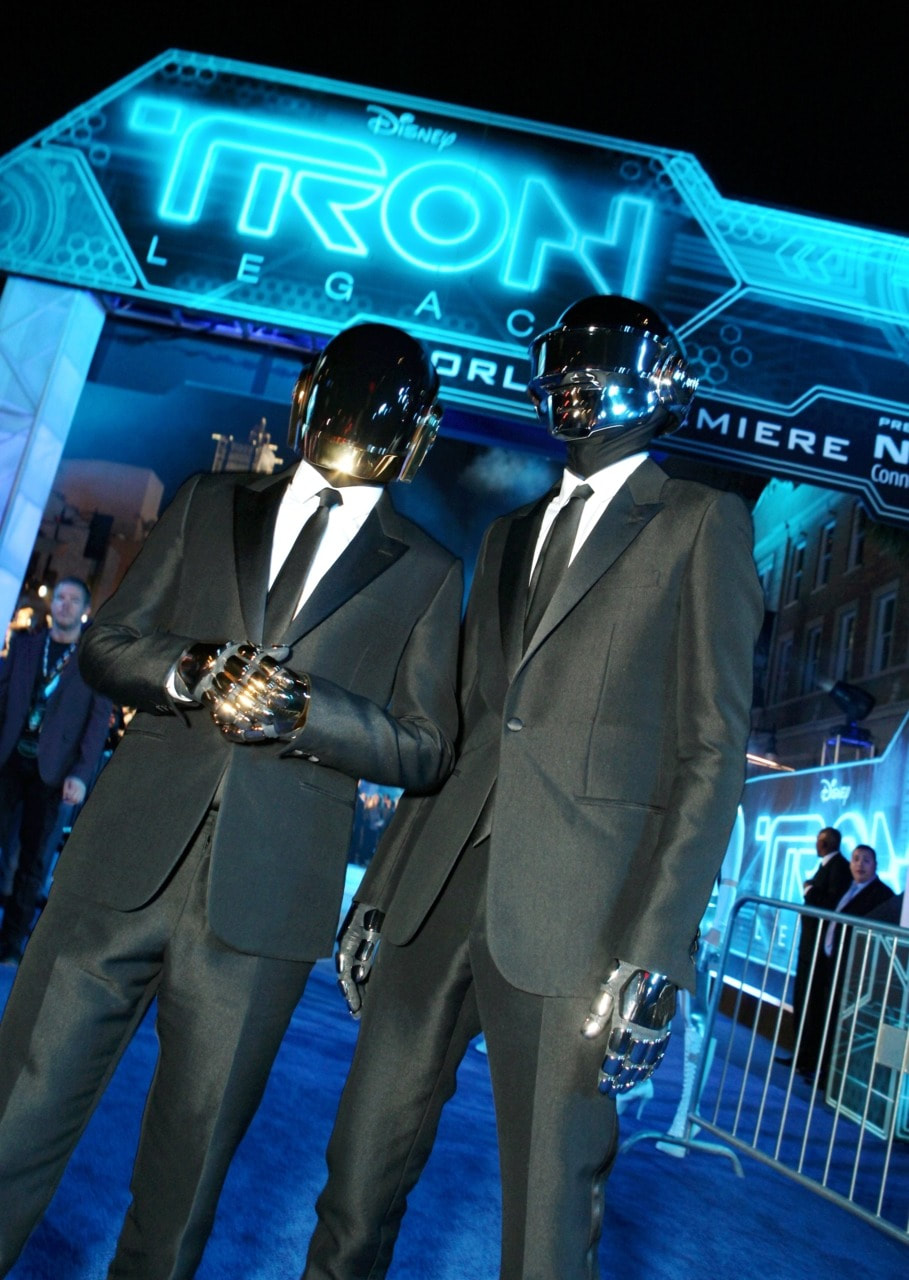
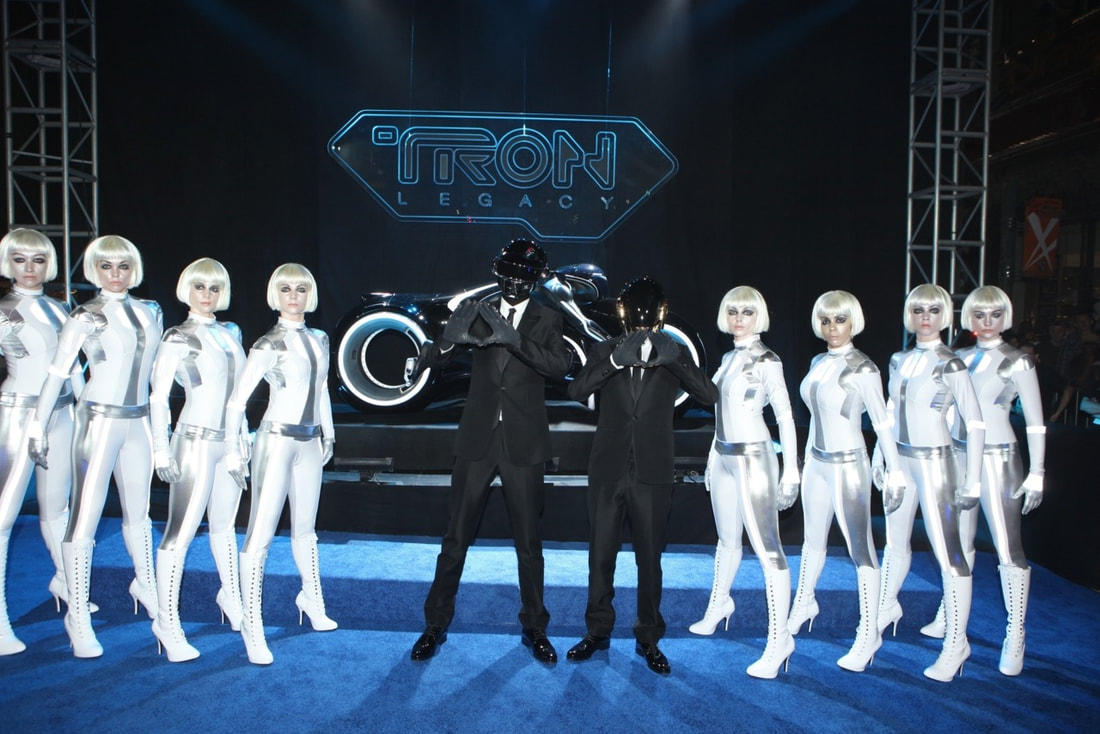
The actual production of the music coincided with the filming of the movie as opposed to being done so afterwards, which is often the case. Director Joseph Kosinski preferred to have the music on hand while filming so that the actors could get a better sense of the tone of the scene and how it would be perceived in theatres. Some minor changes were made to certain sections of music to better fit some scenes but for the most part, the score was completed alongside the principal photography in 2009 then mixed and mastered in the months afterwards. Mastering the score proved to be a grueling undertaking because never before had this level of electronic and orchestral elements been mixed together. The film Tron: Legacy was released on December 17th, 2010 with Daft Punk’s soundtrack album of the same name being released two weeks earlier. The finished product ended up being a 22+ track masterpiece totaling around one hour. Various bonus tracks were available on different platforms but the vanilla soundtrack album was 22 tracks long. A collaboration between Daft Punk and Jay-Z was recorded and was intended to be the track played over the end credits but it was ultimately scrapped because it didn’t quite fit the tone of the film. While the original score and soundtrack album Daft Punk produced was praised for its unique blend of electronic and orchestral elements, the film was not as well received, largely due to its lackluster script. Overall Daft Punk’s involvement with the film was an overwhelming positive one and it gave them more experience working with live instruments and collaborating with others.
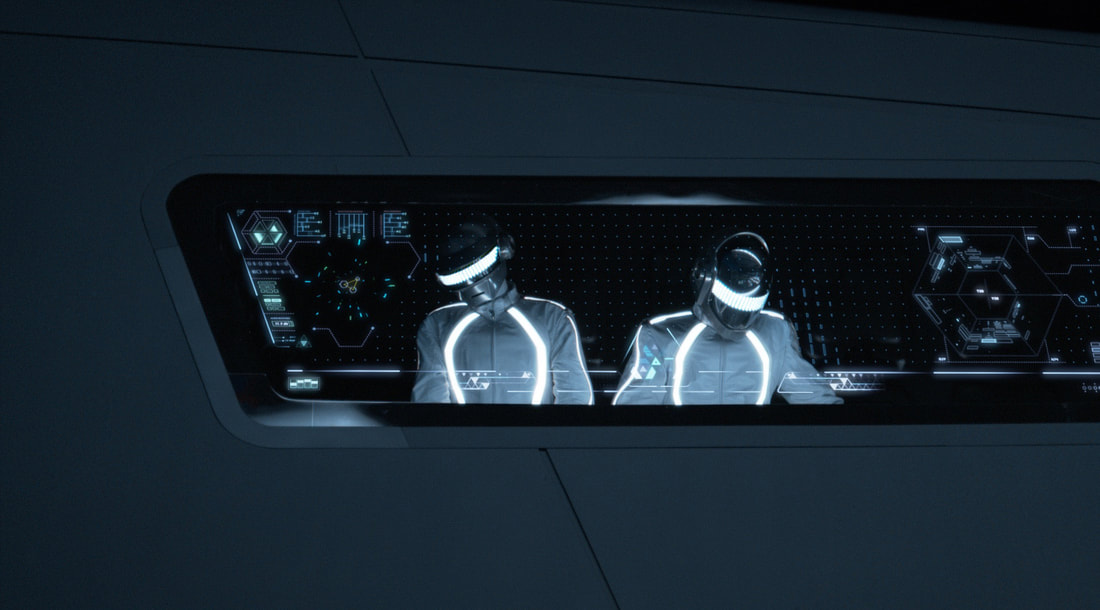
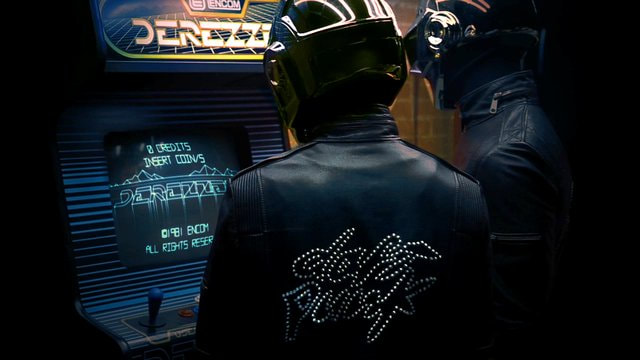
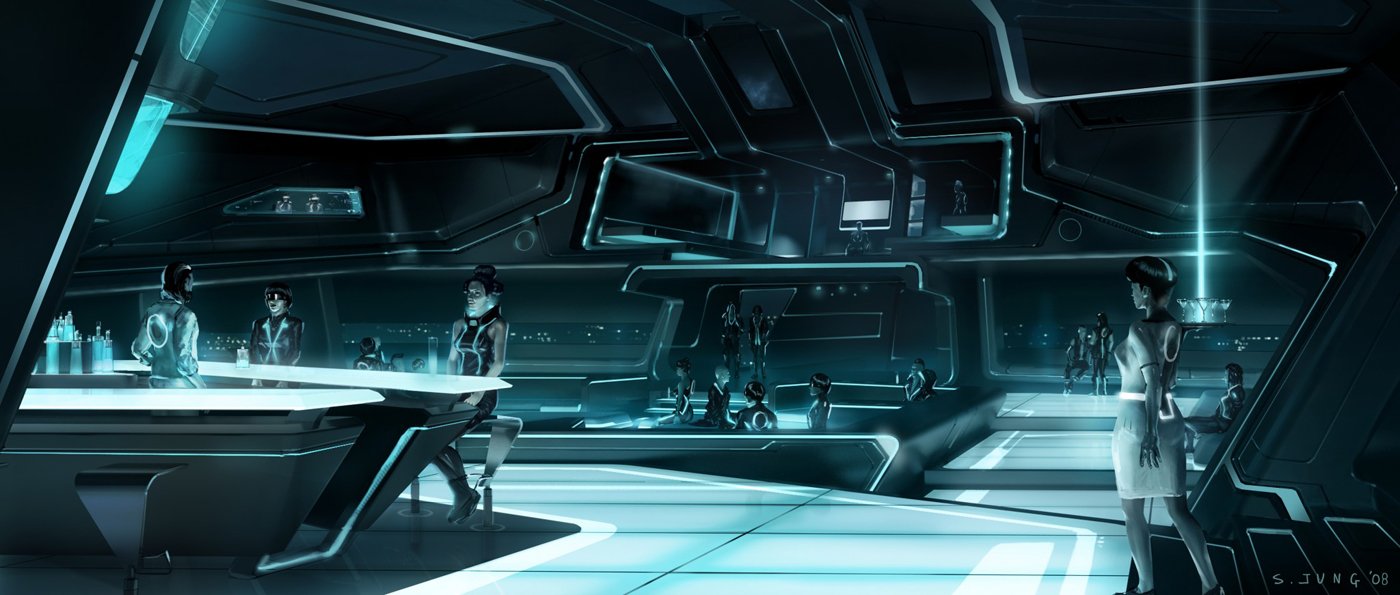
Fun fact: Daft Punk also make a cameo in the film as DJs.
Fun fact: Daft Punk also make a cameo in the film as DJs.
                    |
|
Random Access Memories (2008-2014)
In 2008 after finishing their “Alive 2007” tour and before they had begun working on the Tron: Legacy film score, Daft Punk decided they wanted to go into professional studios and experiment with different recording techniques. They recorded some demos and attempted to find which recording techniques produced the most authentic sounds without losing any dynamic range. However a few months into their experiments is when they said yes to working on the Tron: Legacy film score. Daft Punk set aside their audio experiments and began work on the film score. Part of the deal Daft Punk made with Disney in order for them to work on the film was that Disney would build Daft Punk a proper recording studio in Henson Studios. Disney happily obliged and built Daft Punk their studio. The studio is described by Mitchell Leib, President, Music and Soundtracks for Walt Disney Records as being “just a funky little room...by no means was it a normal recording studio. It was like a giant closet. It had no windows and it had no control room and it basically looked like you had just walked into the small brain of the starship Enterprise. There was gadgetry everywhere.” This was important because Daft Punk were planning to use the studio in the production of their next album, which was still on hold until they finished the film score.
Upon finishing the film score in 2009, Daft Punk once again returned to the studio to work on their next album. The 19 months they had spent working on the score had influenced them greatly. They had learned so much more about recording live instruments and working with orchestras and creating emotion with those tools. Previously they had collaborated very little but for the past 19 months all they did was collaborate. It only made sense to incorporate their new knowledge gained from the experience into their next album which was going to make use of live instrumentation anyways. Daft Punk were also unhappy with how “formulaic” and “soulless” electronic music had become in the past few years. EDM had become so big and accessible and commercialized and it was starting to forget where it came from. Below are some quotes regarding Daft Punk’s opinion on the EDM scene in the 2010’s:
“Dance music is almost exclusively made today with laptop computers, on the same software, with the same virtual instruments, and a lot of the same drum sounds. Computers, as music instruments, are making it difficult for musicians to have their distinctive sonic personality, and a lot of dance records are starting to sound the same, in a very formatted way.”
“Electronic music is in its comfort zone, and it’s not moving one inch. That’s not what artists are supposed to do.”
“It’s very strange how electronic music formatted itself and forgot that its roots are about the surprise, freedom, and the acceptance of every race, gender, and style of music into this big party”
“Artists are overcompensating with this aggressive, energetic, hyperstimulating music - it's like someone shaking you. But it can't move people on an emotional level.”
“Everyone making electronic music has the same tool kits and templates. You listen, and you feel like it can be done on an iPad. If everybody knows all the tricks, it's no more magic.”
“Technology has made music accessible in a philosophically interesting way, which is great. But on the other hand, when everybody has the ability to make magic, it's like there's no more magic - if the audience can just do it themselves, why are they going to bother?”
“Computers were never designed in the first place to become musical instruments. Within a computer, everything is sterile - there's no sound, there's no air. It's totally code. Like with computer-generated effects in movies, you can create wonders. But it's really hard to create emotion.”
“When we started to do Homework [samplers] could only have like 15 seconds of sound or memory on it. Memory, which was very cherished, is now very cheap and completely available. It is that you have this endless limits and I think on some level it has helped people but on some level it has created a very poor creative context because there are no limits.”
“Electronic music is in its comfort zone, and it’s not moving one inch. That’s not what artists are supposed to do.”
“It’s very strange how electronic music formatted itself and forgot that its roots are about the surprise, freedom, and the acceptance of every race, gender, and style of music into this big party”
“Artists are overcompensating with this aggressive, energetic, hyperstimulating music - it's like someone shaking you. But it can't move people on an emotional level.”
“Everyone making electronic music has the same tool kits and templates. You listen, and you feel like it can be done on an iPad. If everybody knows all the tricks, it's no more magic.”
“Technology has made music accessible in a philosophically interesting way, which is great. But on the other hand, when everybody has the ability to make magic, it's like there's no more magic - if the audience can just do it themselves, why are they going to bother?”
“Computers were never designed in the first place to become musical instruments. Within a computer, everything is sterile - there's no sound, there's no air. It's totally code. Like with computer-generated effects in movies, you can create wonders. But it's really hard to create emotion.”
“When we started to do Homework [samplers] could only have like 15 seconds of sound or memory on it. Memory, which was very cherished, is now very cheap and completely available. It is that you have this endless limits and I think on some level it has helped people but on some level it has created a very poor creative context because there are no limits.”
Obviously Daft Punk had some strong opinions on electronic music which is why they decided to go in a more vintage route for their next album. To achieve this they wanted to collaborate with artists that were around in the Golden Age of Music Recordings as well as modern artists. As always Daft Punk wanted to create something timeless so that a listener could not tell when it was recorded. The personnel Daft Punk ended up working with include: Pharrell Williams (vocals), Nile Rodgers (guitar), Julian Casablancas (vocals), Paul Williams (vocals), Giorgio Moroder (vocals), Todd Edwards (vocals / co-producer), DJ Falcon (synthesizer / co-producer), Panda Bear (vocals / writing), Chilly Gonzales (keyboard / piano / writing), Warren Fu (art direction / illustration), Cédric Hervet (art direction / creative director), Chris Caswell (keyboard / writing / arrangements / orchestral coordinator), Nathan East (bass), John “JR” Robinson (drums), Paul Jackson Jr. (guitar), Greg Leisz (pedal steel guitar / lap steel guitar), Quinn (percussion / drums), James Genus (bass), Omar Hakim (drums / percussion), Thomas Bloch (ondes martenot / glass harmonica), Angie Jaree (choir conductor), Chab (mastering / lacquer cutting), Bob Ludwig (mastering), Mick Guzauski (mixing), Peter Franco (mixing), Seth Waldmann (mixing), an orchestra, and a choir. Daft Punk worked with these artists and audio engineers from 2009 - 2013, constantly recording demos and experimenting with the material. It was only in the final months that the album took shape but Daft Punk had been working on some tracks for over 2 and a half years at that point. With help from pianist and music mathematician Chilly Gonzales, Daft Punk formatted their album in a way that squeezed the most emotion out of listeners by playing with different key changes between songs and creating a musical journey as opposed to a collection of unrelated singles as most albums are today.
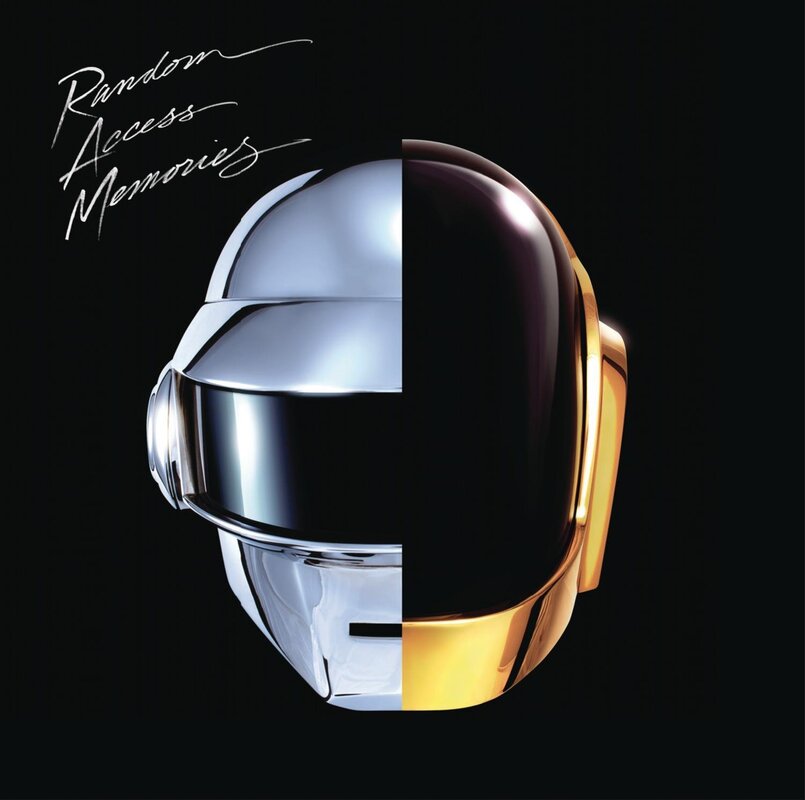
They chose the name Random Access Memories for the album because it is a clever play on words that expresses their feelings on the relationship between humans and machines. Random-access memory or “RAM” is a form of computer memory. Daft Punk believed that replacing “memory” with “memories” would essentially humanize the term which is usually only associated with computer memory. So the title is an amalgamation of machine and human, just like the Daft Punk robots are in their lore. The album itself thematically is looking at technology moving towards humanity as opposed to their previous albums where humanity was moving more towards technology.
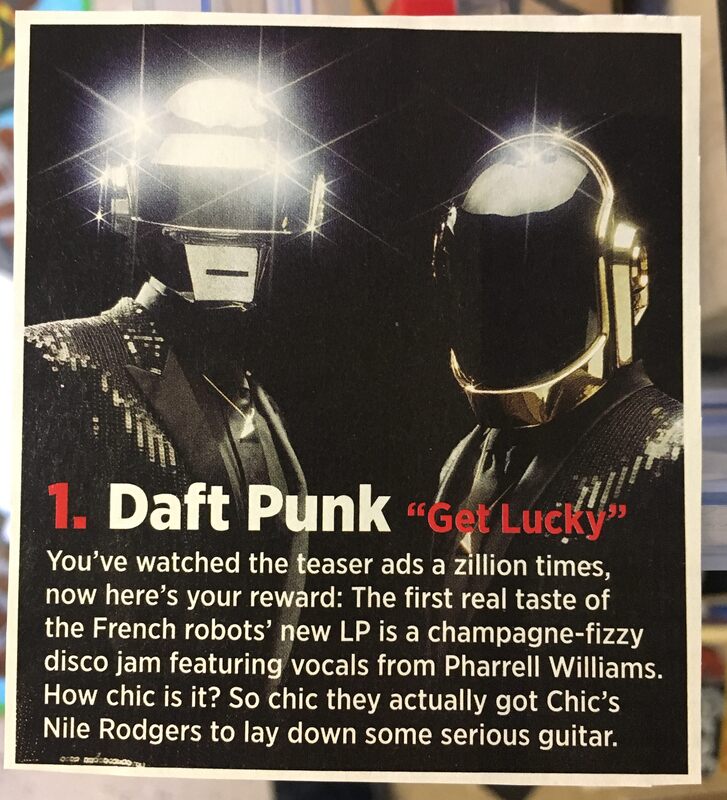
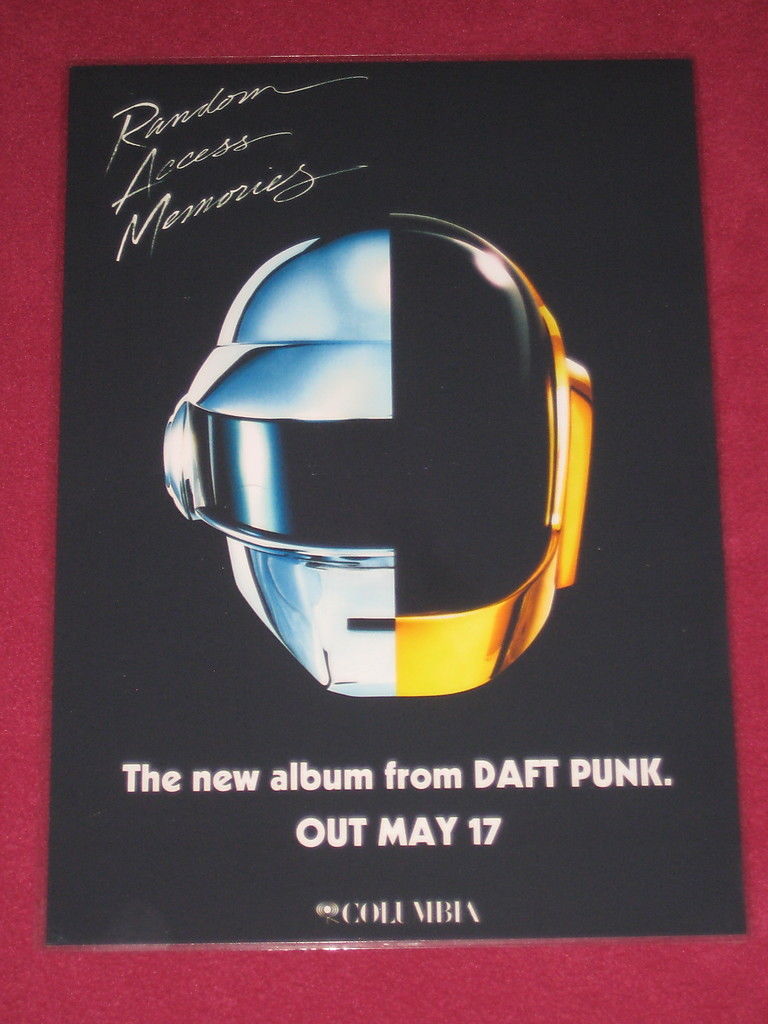
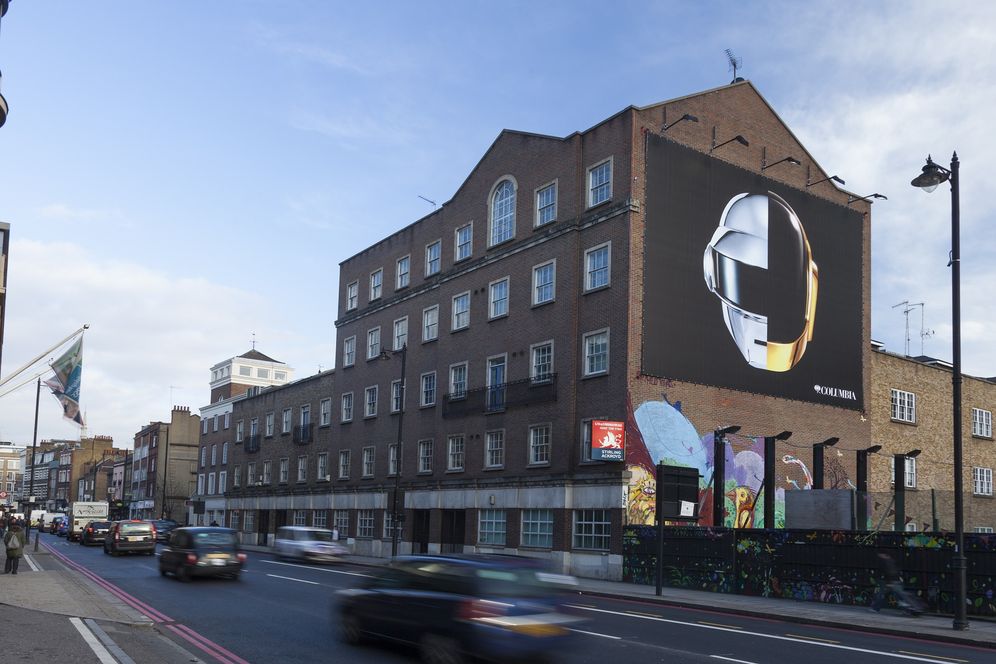
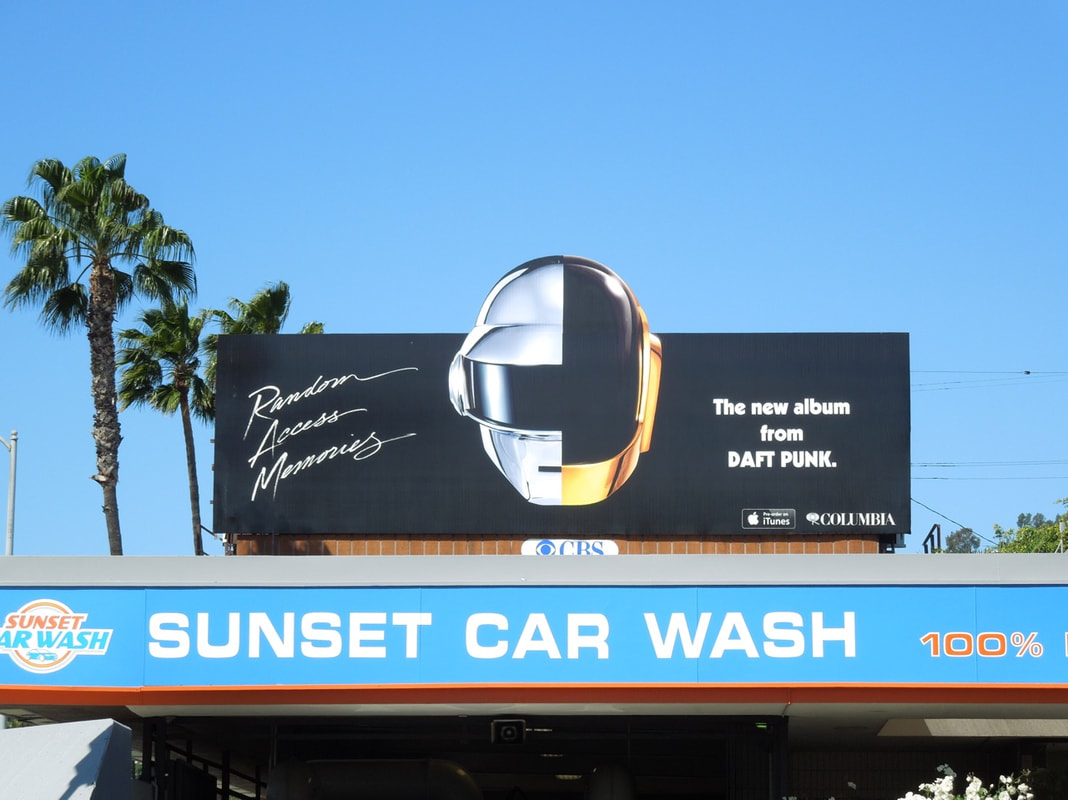
Daft Punk wanted the release of the album to be just as vintage as the music itself, so they took to researching old forms advertising and found an old book on the topic of music billboards on the Hollywood Sunset Blvd. Daft Punk, having partially lived in Los Angeles for almost ten years at this point, knew this would be a great method of advertising and that it hadn’t been done in ages. Furthermore they knew they wanted as many in person experiences as possible, which included lots of promotional items and events. Daft Punk didn’t just want people to hear about the album by seeing a post on social media, they wanted people to experience the album advertisement in a profound way. To accomplish this, Daft Punk signed a one album deal with Columbia Records where once again Daft Punk would own their recordings through their own label and license it to Columbia for distribution. Columbia would also help with advertising and promotion of the album which was a big part of the album experience. The way the Daft Punk team put it to Columbia was that, “we have this signal, and you guys are the amplifier to broadcast it to the world.” An in depth article about the rollout of the album is linked HERE but I will summarize the most exciting parts.
SNL is one of the most watched live shows in the U.S. so Daft Punk knew it would make a good live experience despite it being through a tv. Paul Hahn, Daft Punk’s assistant manager, said this about advertising on SNL, “putting the teaser there pointed back to the pre-MTV era of marketing. People forgot labels used to advertise on TV: there was something weird, wonderful, and avant-garde about those spots, like when Pink Floyd flew a big pig over London. After the fifteen-second teaser appeared on SNL, our website crashed in literally four seconds. I can’t even tell you how many hits we got because all those giant, robust servers went down immediately.” Daft Punk had captured the zeitgeist. They rolled out this type of television ad campaign around the world for whatever that country's respective top pop-culture show was.
Daft Punk also decided to capitalize on the growing Coachella hype. At Coachella they premiered the full album announcement including a list of all the collaborators. Paul Hahn had this to say about their Coachella teaser, “When Daft Punk played Coachella in 2006, it was inspiring to us. Rolling out the teaser there was our way of tipping our hat to that audience. We’d planned to air the spot on SNL the following Saturday, so we thought, ‘How cool would it be to share it first with the audience that supported us and set this in motion?’ Guy-Man, Thomas, and I were all there, watching from the audience -- we didn’t want to miss feeling that energy.” Numerous people recorded the ad and uploaded it to YouTube where word quickly spread about the unique cast of characters that would be appearing on the album.
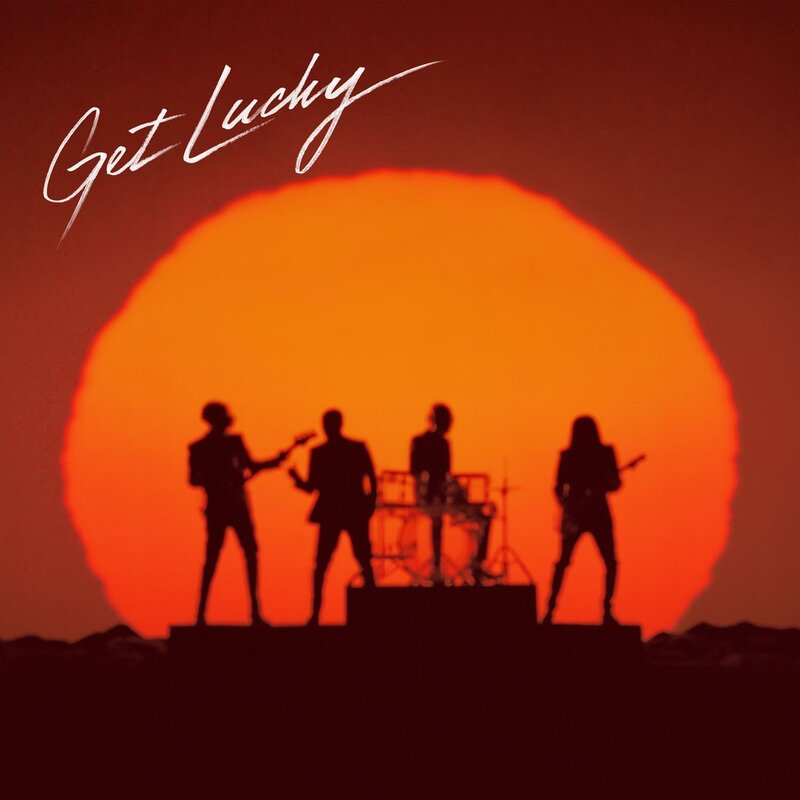
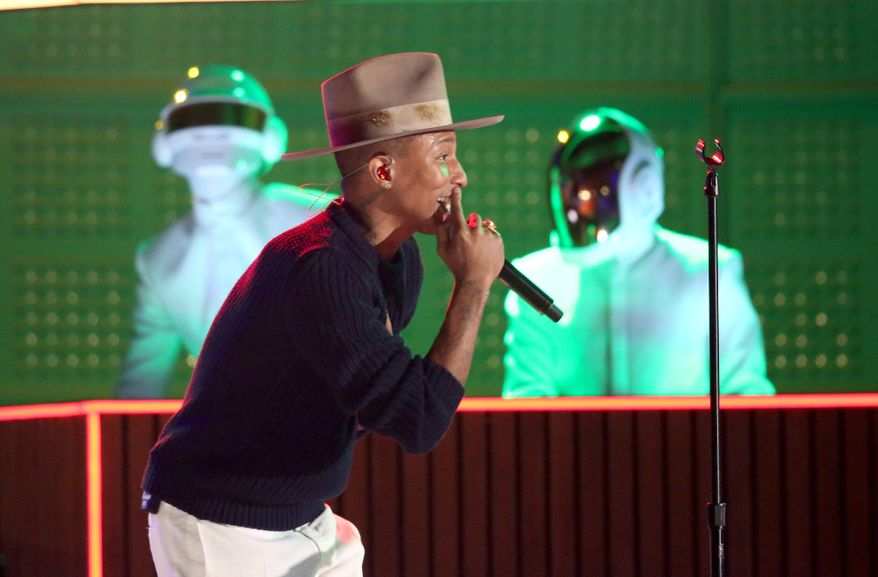
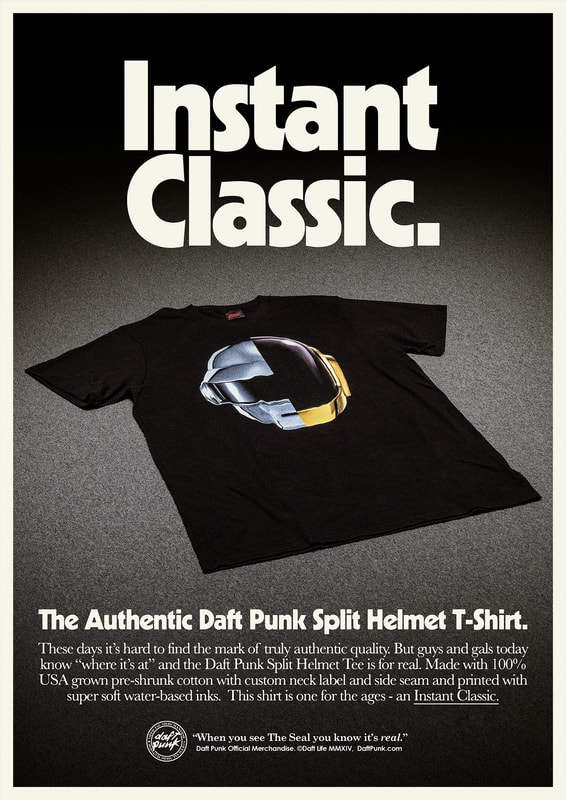
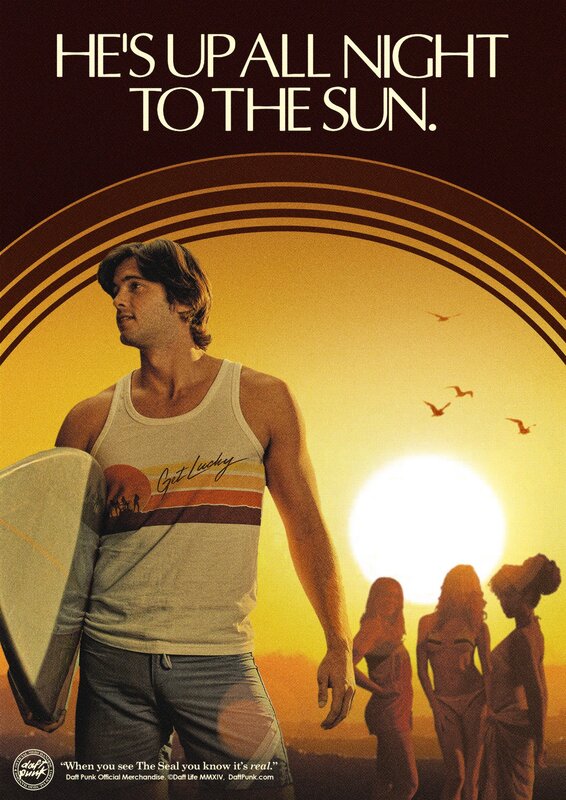
Fast forward to the release of the album in May and Daft Punk’s five year long project was finally complete and out to the public. The album topped many charts upon release and was praised for its cinematic experience and high-fidelity audio. The songs which ended up being the most successful were “Get Lucky” (which had already been released as the lead single), “Lose Yourself to Dance”, and “Instant Crush”. Daft Punk promoted the album in every which way including billboards, sponsoring an F1 vehicle, promotional paper masks, magazine spreads, radio interviews, and releasing official merchandise on their website (which was a big deal to fans because merchandise up to that point was hard to come by). Overall the album sold over 3.2 million copies by 2014, many of which were on vinyl. The album was so well mastered that vinyl enthusiasts and audiophiles often use Random Access Memories to test the quality of a record player or speaker setup. In 2014 the album won Grammy Awards for Best Engineered Album, Non-Classical, Album of the Year, Best Dance/Electronica Album, Record of the Year (for “Get Lucky”), and Best Pop Duo/Group Performance (for “Get Lucky”). While the album won 5 Grammy Awards, only 4 are credited to Daft Punk because they were not credited as engineers on the album. These 4 Grammy Awards brought their total to 6. They also performed at the Grammys alongside Nile Rodgers, Pharrell Williams, and Stevie Wonder among many of the session musicians who helped record the album. After sweeping the 56th Annual Grammy Awards, Daft Punk essentially fell off the face of the Earth, refusing to do interviews or release new material on their own.
               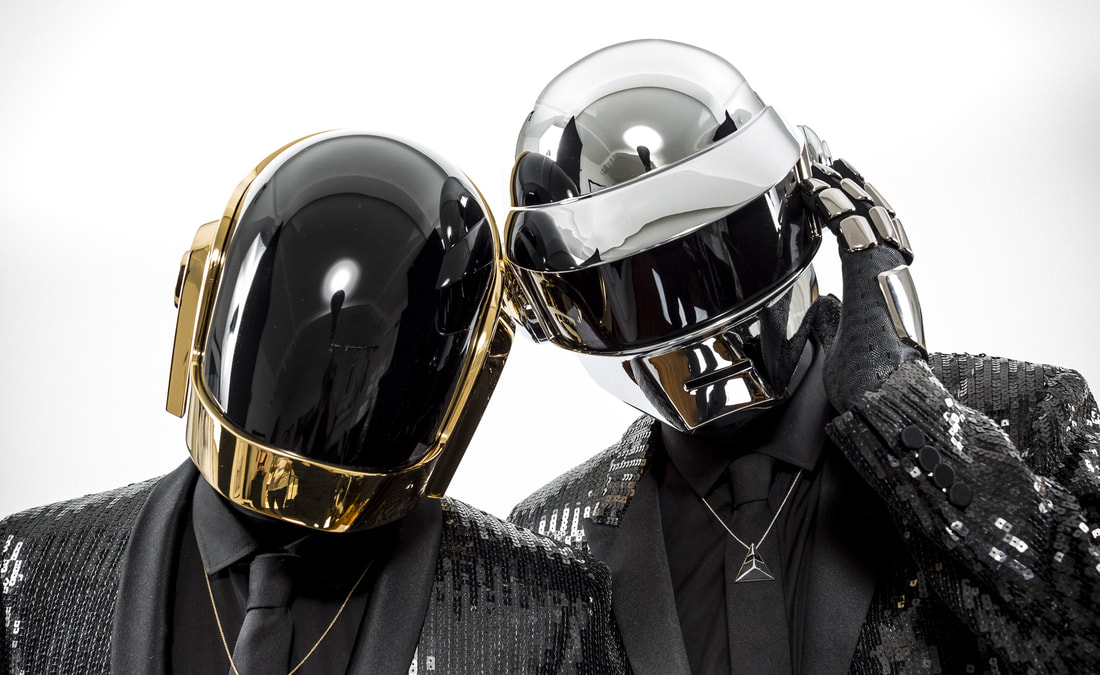 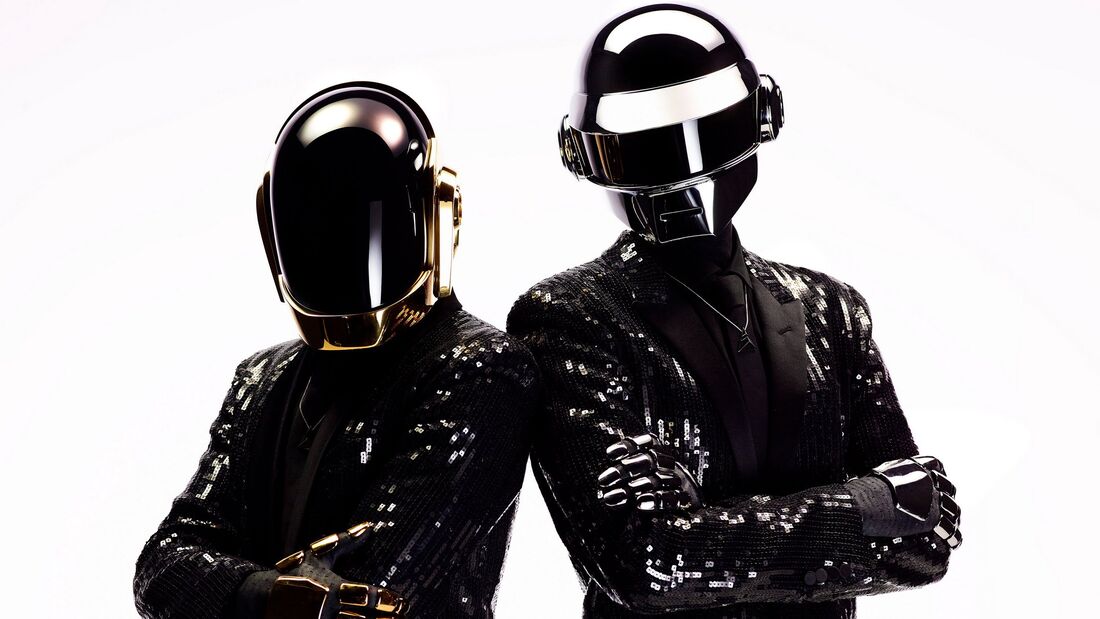 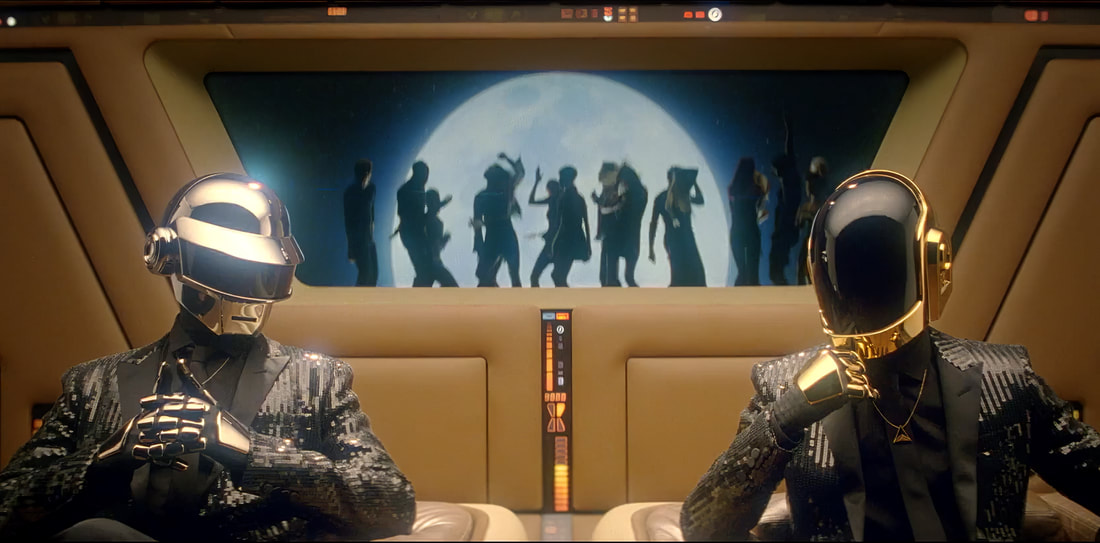 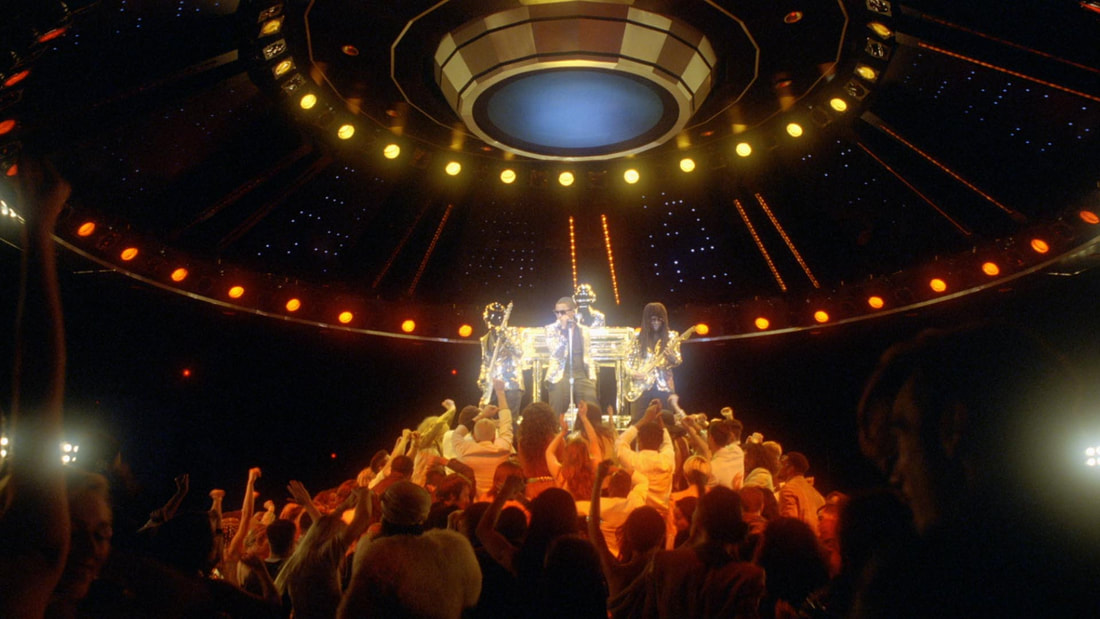            |
|
Collaboration Era (2013-2021)
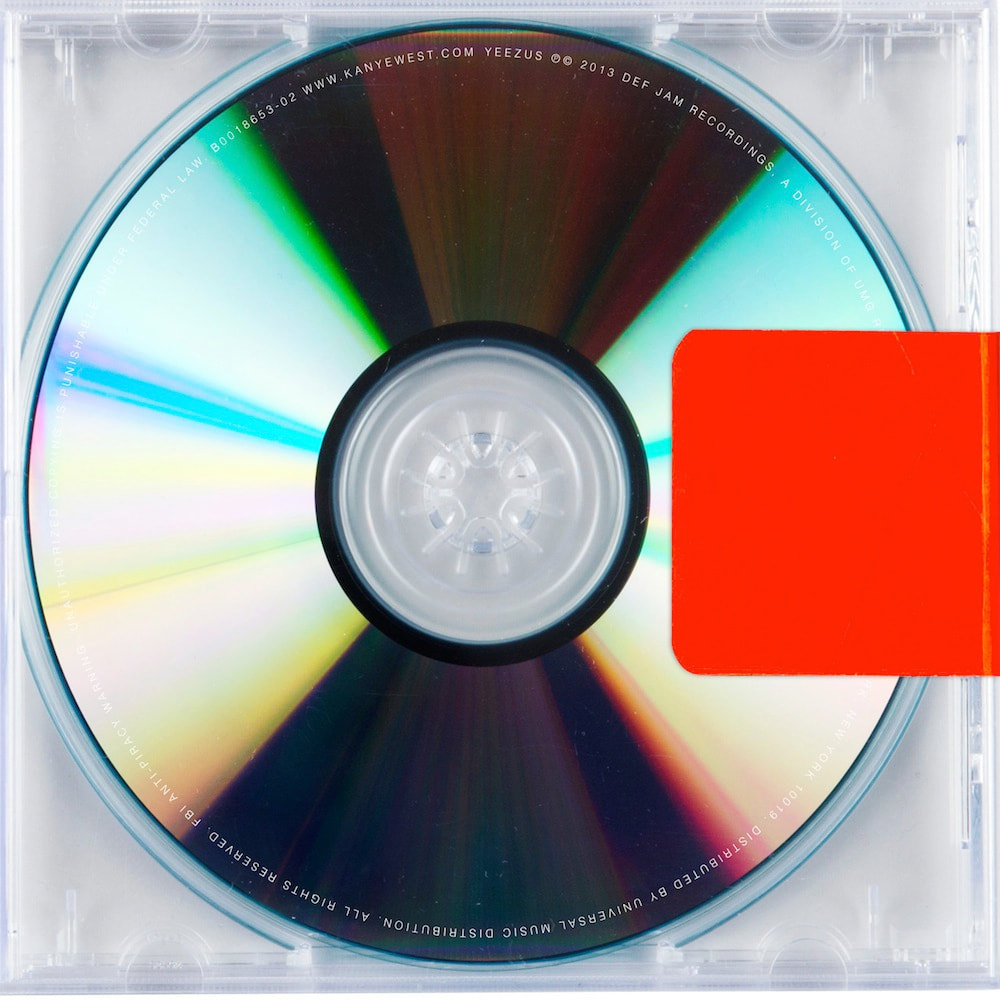
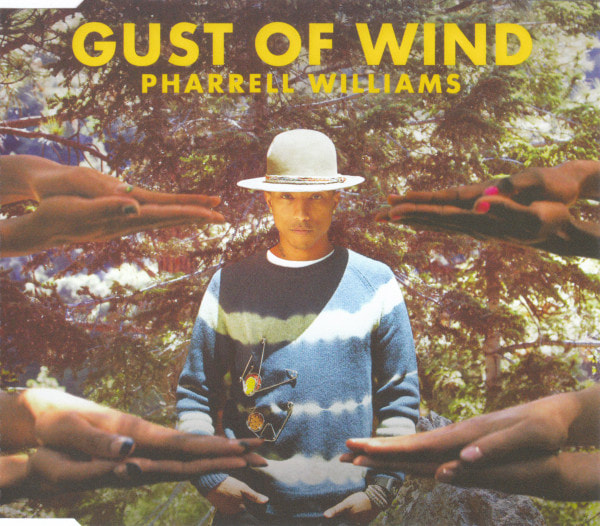
Daft Punk collaborated with a flurry of musicians after recording/releasing RAM. The first post-RAM collaboration to come out was Kanye West's 2013 album Yeezus which included four songs that Daft Punk helped produce; "On Sight", "Black Skinhead", "I Am A God", and "Send It Up." Next, Daft Punk collaborated once again with Pharrell Williams when they co-wrote and lent vocals to the 2014 song "Gust of Wind." In 2015 Daft Punk joined many fellow artists in supporting the launch of Hi-Fi music streaming service, Tidal. They would not produce anything musically for this but their support of the streaming service was one of the last times we heard the duo speak about anything. They have not participated in any interviews since then.
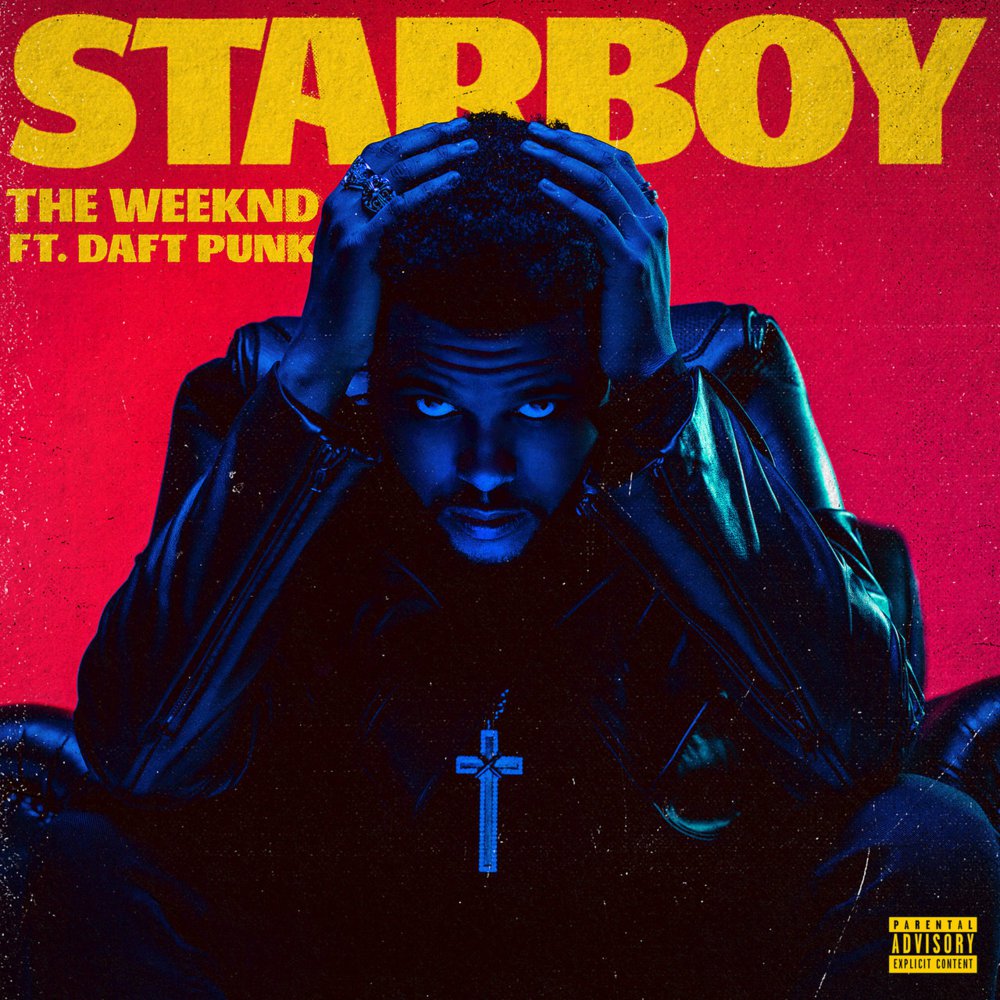
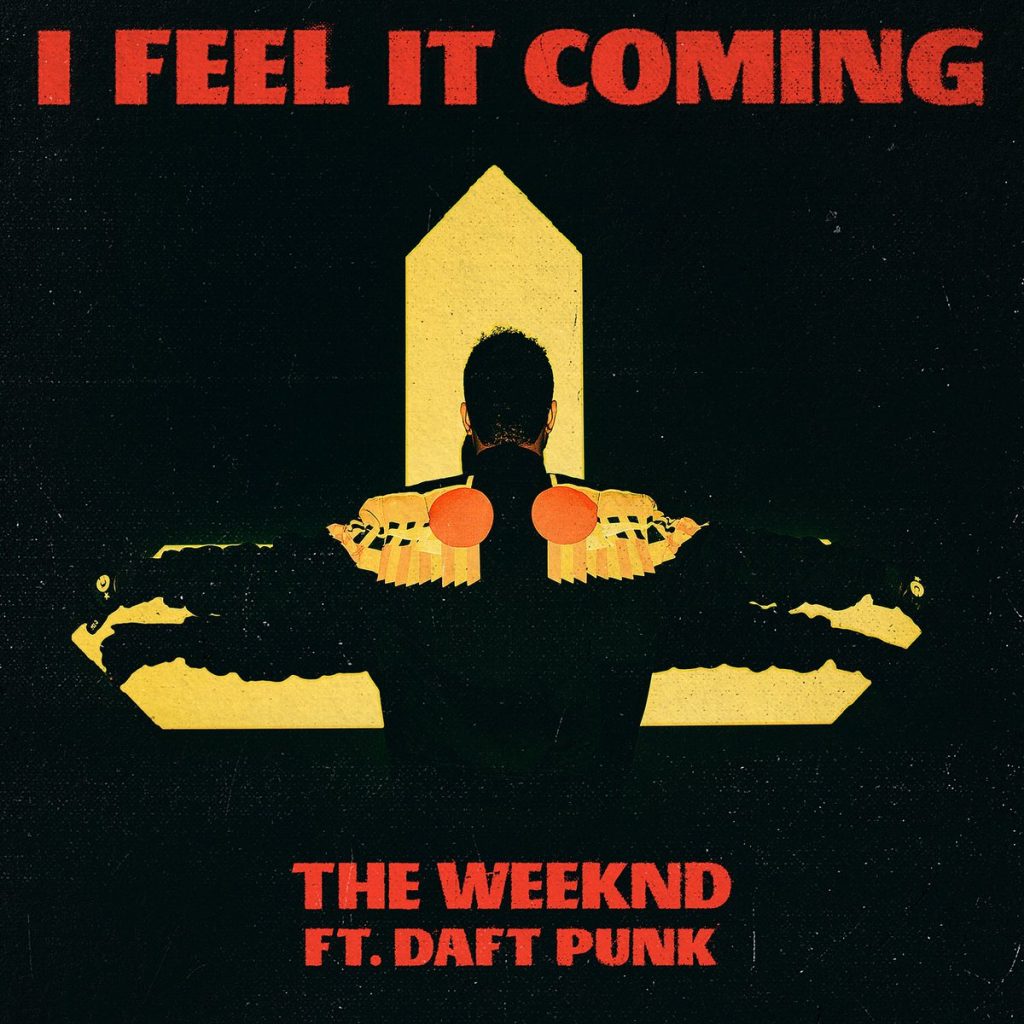
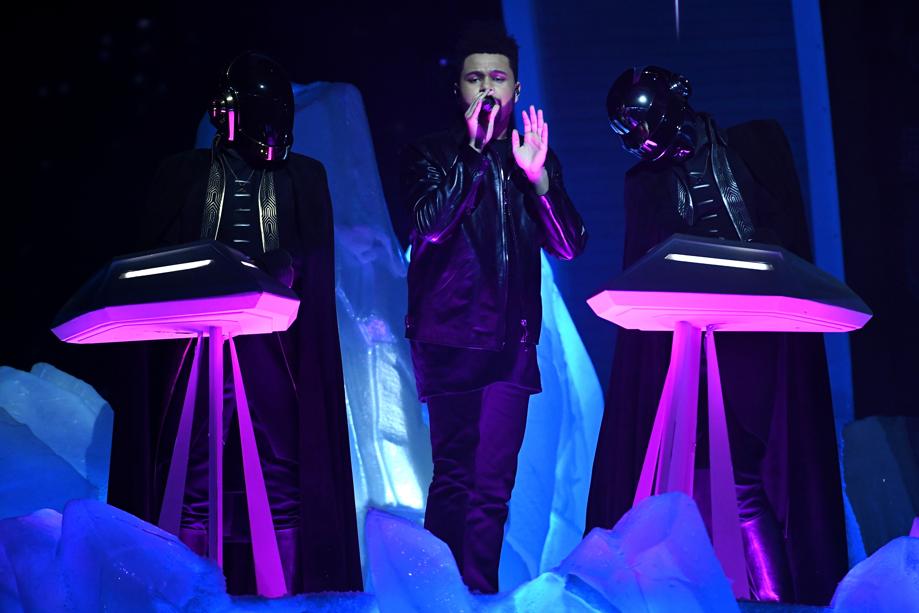
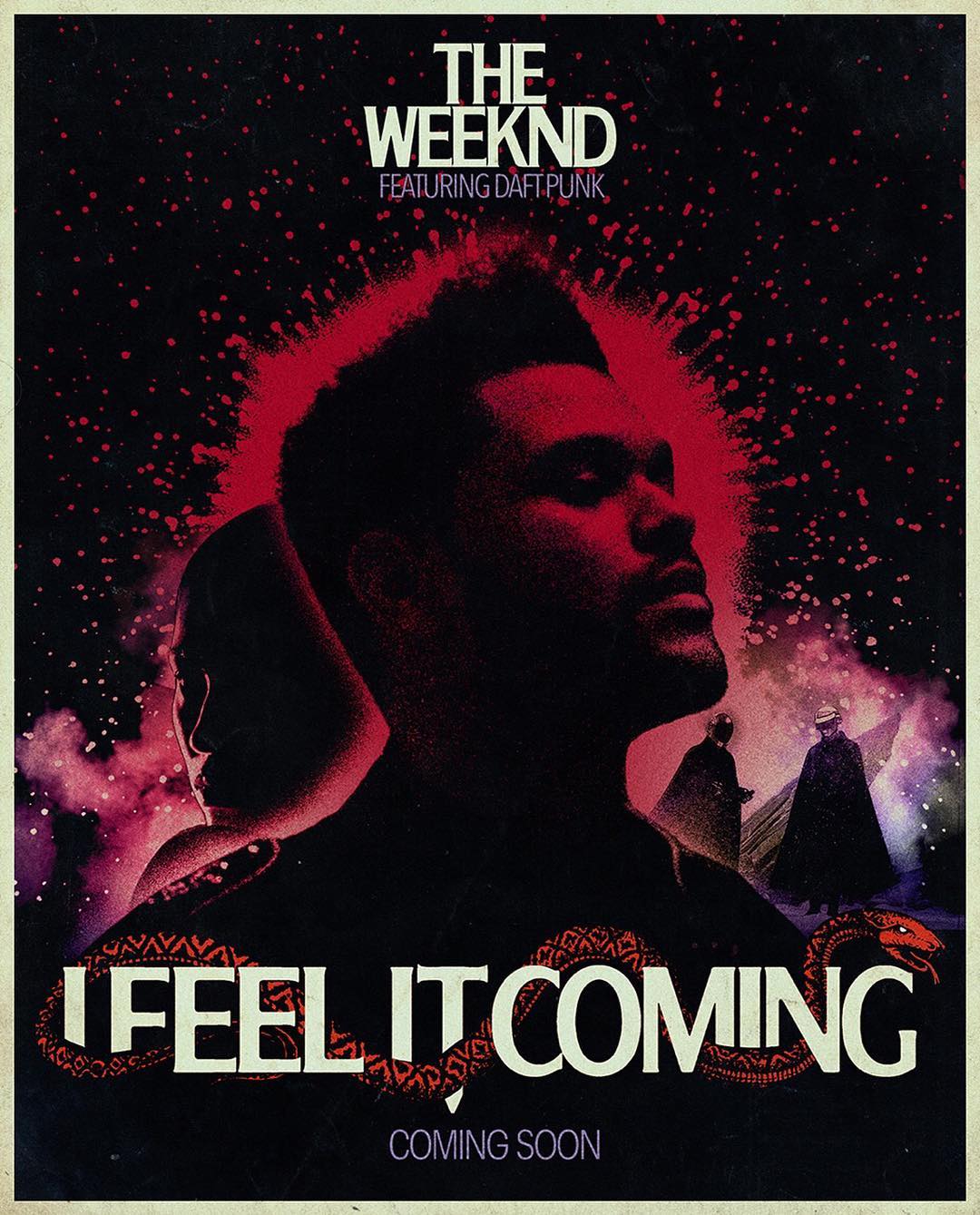
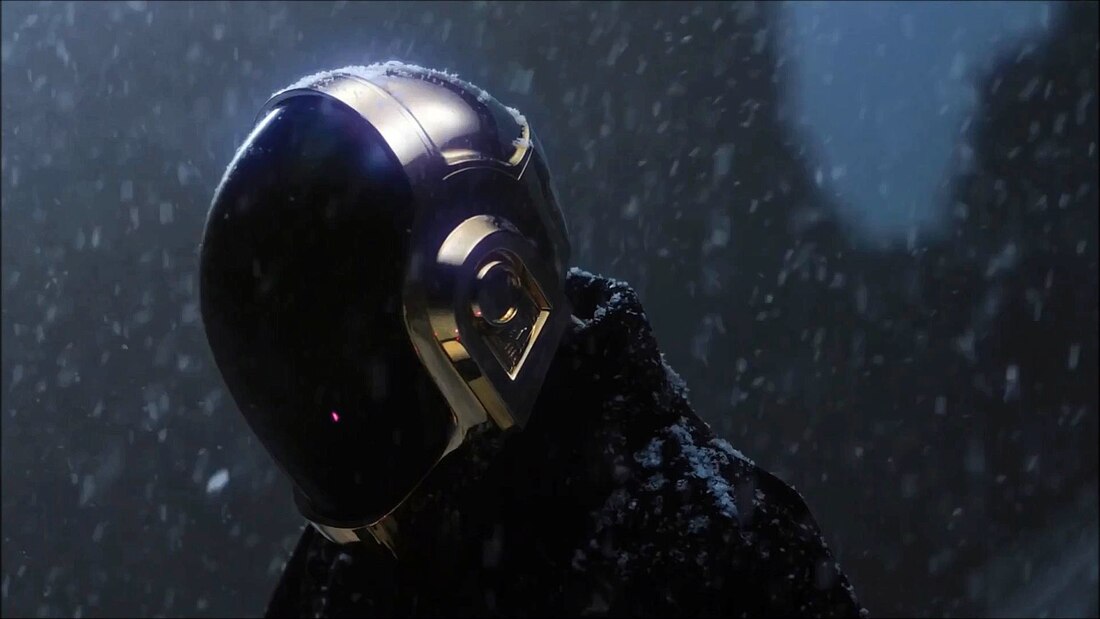
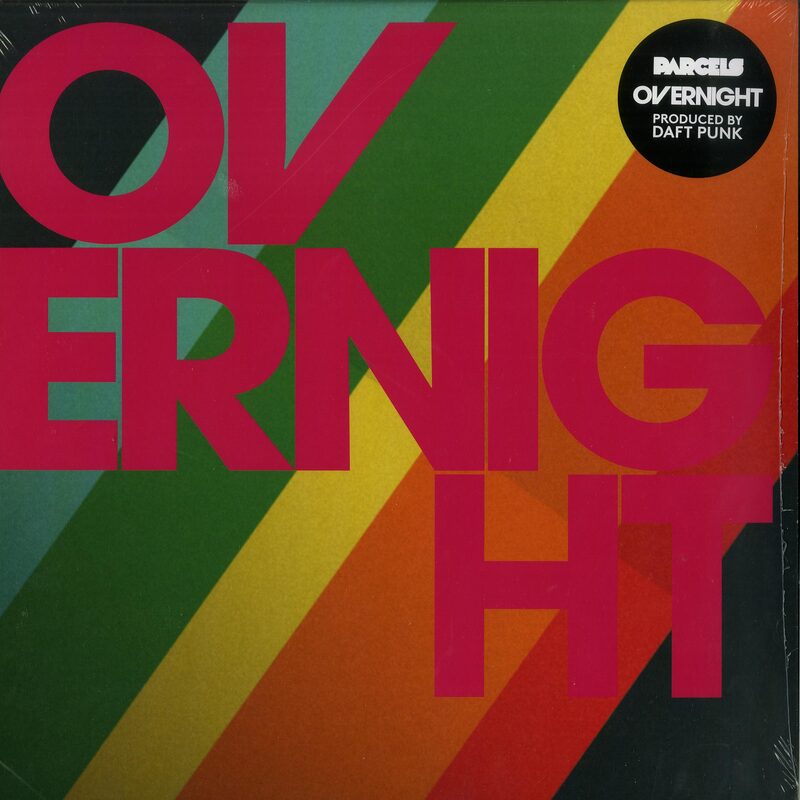
The following year in 2016 Daft Punk would collaborate on two songs with The Weeknd; "Starboy" and "I Feel It Coming." The single "Starboy" would be the first song of Daft Punk's career to hit #1 on the US Billboard Hot 100. At the 2017 Grammy Awards Daft Punk and The Weeknd would perform "I Feel It Coming" together. In June of 2017 came Daft Punk's most unexpected collaboration when Australian band Parcels released their single "Overnight" which was produced by Daft Punk. The song had been in the works since April of 2016 but was released just in time for the 2017 summer season. Parcels was a relatively unknown band whose members were only nineteen years old which is why this collaboration was so unexpected but it just goes to show that Daft Punk did not have egos about how big they were and happily approached the band to collaborate. "Overnight" is the last track in the Daft Punk discography however they also did many notable solo collaborations with other artists since 2013. In 2017 Thomas produced four songs with Arcade Fire for their Grammy nominated album "Everything Now" and in 2018 Guy-Man co-produced the track "Hurt You" for The Weeknd.
            |
|
The End of Daft Punk
In 2017 (in conjunction with their Grammy performance) Daft Punk put together a Pop-Up Shop / museum which sold exclusive merchandise and displayed various items from throughout their career. At the time it was a fantastic look into their career "so far" but as it turned out, Daft Punk's career was all but over and the Pop-Up Shop proved to be, more than anything, a look back on on their esteemed career as they approached the end of the Daft Punk project. After 2017, Daft Punk was effectively no more. A deafening silence fell upon the world of Daft Punk. Thomas and Guy-Man each respectively collaborated with various artists but no more music came from Daft Punk. In the background of things Daft Arts was dissolved, Thomas took control of Daft Trax, and Guy-Man took control of Daft Music. In 2019 Daft Punk participated in "Electro: From Kraftwerk to Daft Punk" a French exhibit exploring the history of electronic music. Daft Punk created "Technologic Redux (2019)" for the exhibit which was a recreation of the Technologic music video set. This was yet another sign that their time as Daft Punk was coming to an end and that they were looking back on their career more than forward. Ultimately, on February 22nd, 2021 Daft Punk announced the end of the Daft Punk project via a YouTube video titled "Epilogue" featuring scenes from their 2006 film Electroma. No reason was given as to why they decided to end the project but their publicist confirmed that Daft Punk was indeed defunct. Daft Punk's disbandment was met with near universal praise and sorrow from those who are fans of the duo. It's undeniable that Daft Punk is, and always will be, one of the most influential music projects to ever exist in the world of music.
